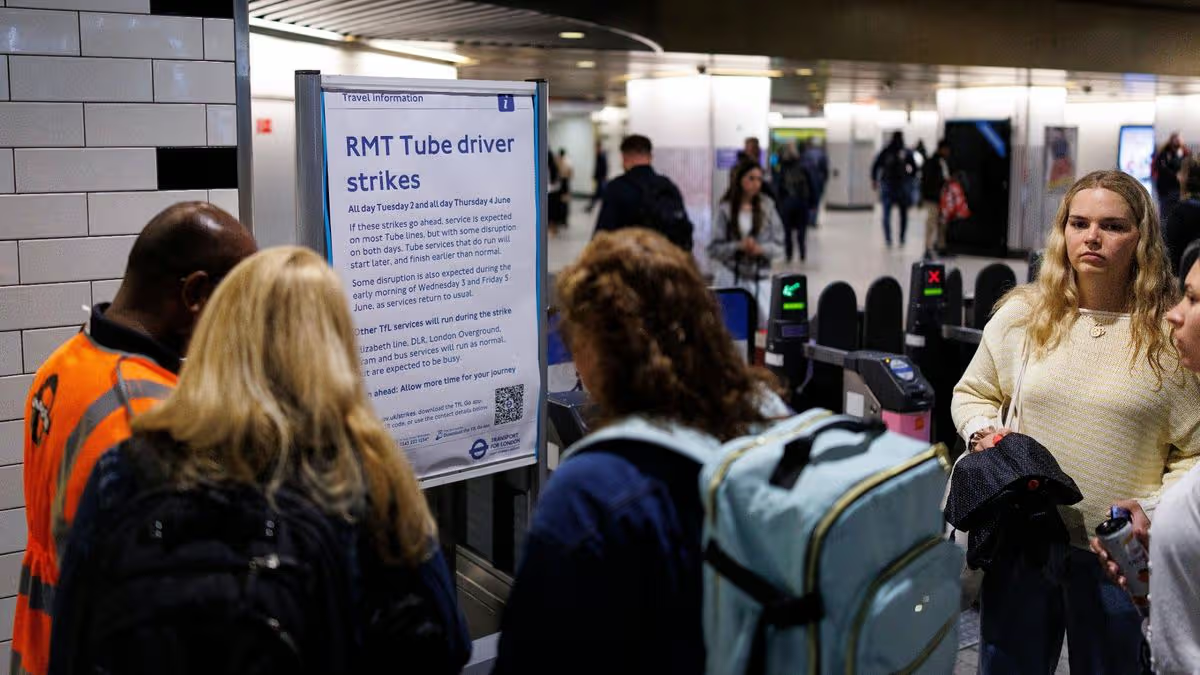




The morning commute across London has descended into chaos today as a major strike by Transport for London (TFL) staff brings large parts of the Underground network to a grinding halt. What should be a routine journey to work has become an exercise in frustration and lengthy improvisation for millions. The industrial action, which began just after midnight, is set to last for the entirety of today, promising a full 24 hours of severe disruption. This isn’t just a few minor hiccups; the walkout has triggered a cascade of suspensions and delays, crippling key arteries of the city and forcing commuters to seek out overcrowded alternatives or reconsider their travel plans entirely. The timing, hitting the heart of the weekday rush hour, maximizes the impact, leaving little room for error in planning an alternative route.
The disruption is most starkly visible in the complete shutdown of two entire lines. The Circle Line, a vital orbital route connecting major hubs like King’s Cross, Victoria, and Paddington, is suspended in its entirety. Similarly, the short but critically important Waterloo & City line, the essential link ferrying countless finance workers from Waterloo to the Bank and City district, is also completely out of service. These suspensions alone create significant gaps in the network’s coverage, severing direct connections that many rely upon for efficient cross-city travel. The absence of these lines immediately funnels more passengers onto already strained alternative routes, setting the stage for a domino effect of congestion across the network.
Beyond the full suspensions, the ripple effects are severe and widespread. Four major lines are buckling under “severe delays”: the Northern, Piccadilly, District, and Bakerloo lines. For the Northern Line, a backbone of the network serving both the City and South London, this means erratic, infrequent, and overwhelmingly crowded services. The Piccadilly Line’s troubles are particularly complex, with severe delays on its eastern leg and a partial suspension on the extensive western branches to Uxbridge and Heathrow Airport. This not only disrupts commuters but also threatens the travel plans of air passengers relying on this crucial airport link. The District and Bakerloo lines, both workhorse routes, are similarly plagued, with the latter also partially suspended in its outer northwestern section.
The disruption, however, extends even to lines not directly targeted by the strike action, illustrating the interconnected nature of the Tube. The Central, Hammersmith & City, Metropolitan, and Victoria lines are all reporting “minor delays,” a designation that in practice translates to longer-than-usual waits and packed carriages as they absorb the overflow from crippled lines. The Metropolitan Line is further hampered by a partial suspension on its central London stretch. This pervasive slowdown means there are truly no easy alternatives; every remaining route is operating under heightened pressure, turning what should be a simple transfer into a test of patience.
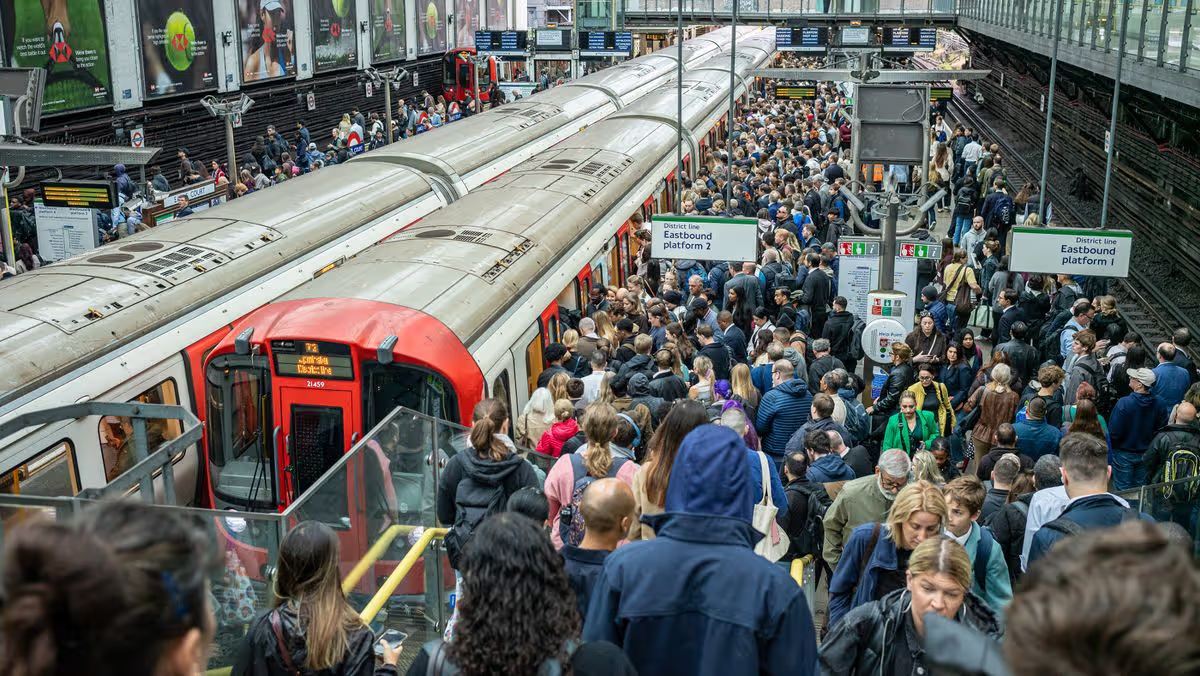
For the average Londoner, this translates into a morning of profound inconvenience. Platforms at major interchange stations like King’s Cross St. Pancras, Waterloo, and Victoria are becoming dangerously crowded, with TFL staff likely implementing crowd control measures such as temporary closures or queue systems. Buses are inundated, cycling routes are busier, and roads are more congested as some turn to taxis or private vehicles. The human impact is tangible: missed appointments, late arrivals at work, stressed passengers, and a significant loss of productivity for the city. The planned 24-hour duration of the strike means these challenges will persist through the evening rush hour, offering no respite and demanding commuters to carefully replan their journeys home as well.
In summary, today’s strike has plunged London’s transport network into a state of widespread dysfunction. With two lines fully suspended, four key routes suffering severe delays, and nearly all others experiencing knock-on minor delays, the system is operating at a fractured capacity. The disruption is not isolated but systemic, affecting every corner of the capital. Commuters are advised to allow substantial extra time for their journeys, to check live TFL updates continuously, and to consider working from home if possible. This 24-hour walkout serves as a stark reminder of the Underground’s vital role in the daily life of the city, and its vulnerability when industrial relations break down. The entirety of London is, quite literally, feeling the strain of standing still.