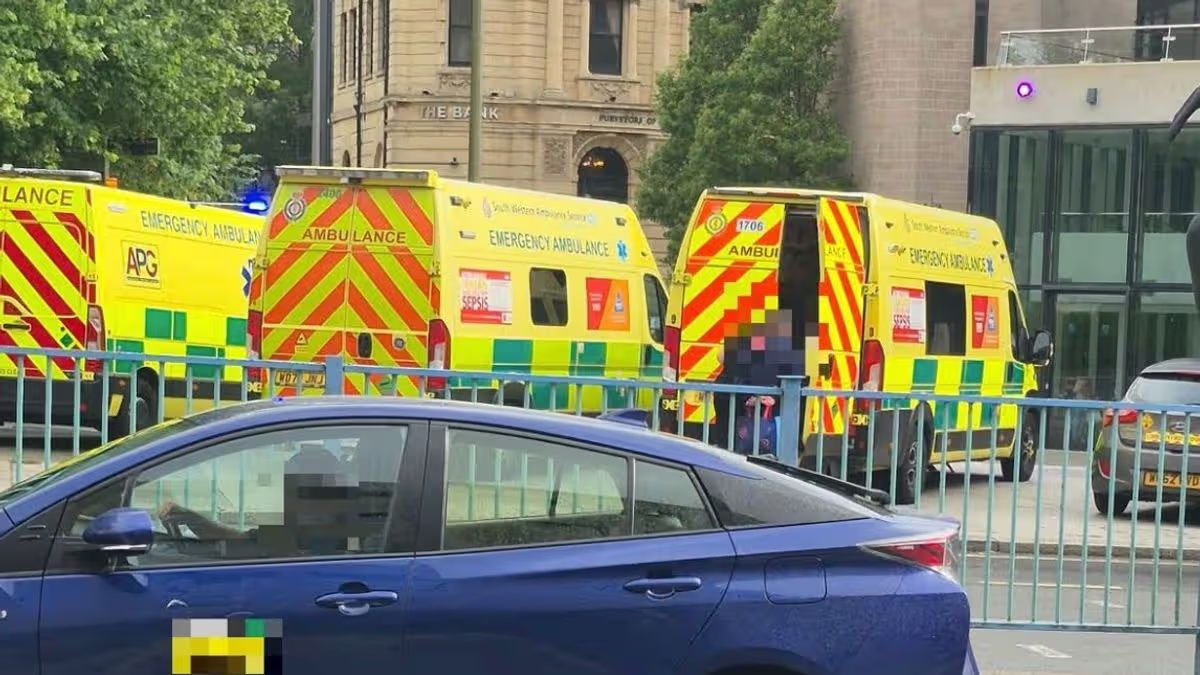



The story of Rafi Amer is a profound testament to the fragility of life, the resilience of the human spirit, and the enduring power of a family’ s love. In September 2023, a seemingly ordinary school day ended with seven-year-old Rafi being sent home after vomiting. To his father, Dean, it appeared to be nothing more than a common “sick bug,” and Rafi quickly seemed “right as rain.” However, this single symptom was the quiet, terrifying beginning of a medical odyssey that would push their family to the very brink. Over the following two weeks, Rafi developed severe stomach cramps, initially misdiagnosed by doctors as constipation and later as a stomach bug. It was only when Dean noticed blood in his son’s stool that the true emergency began. An ambulance rushed Rafi to the hospital, where his condition deteriorated with terrifying speed, escalating to stage four kidney failure. The situation grew even more dire when he was transferred to a specialist unit, his little body besieged by multiple seizures, a brain injury, and three cardiac arrests—one so major his heart stopped for 23 minutes.
In the sterile, high-stakes environment of the intensive care unit, Rafi’s family faced a nightmare no parent should ever endure. Doctors managed to resuscitate him, but he was placed on life support, his survival hanging by a thread. Dean, his wife Laura, and their daughter Sienna were urged to say their goodbyes to the boy they feared they had lost. Rafi was diagnosed with an extraordinarily rare and severe strain of Shiga-toxin producing E.coli, which had triggered Haemolytic Uraemic Syndrome (STEC-HUS), a condition that attacks the kidneys and is most common in children under five. The sight of their son on advanced machines—dialysis and an ECMO machine to take over the work of his heart and lungs—was a shocking portrait of childhood innocence shattered. For two agonizing weeks, Rafi lay in a coma, his future a landscape of devastating uncertainty.
When Rafi finally opened his eyes, the relief was tempered by a new, heartbreaking reality. He had emerged into a state of minimal consciousness, what Dean describes as “one stage worse than death.” Rafi could open his eyes and sleep, but showed no awareness of the world or his loved ones surrounding him. He had, in his father’s words, “lost the ability to do everything and anything.” The path ahead was not a sprint to recovery but a grueling, inch-by-inch marathon. For six long months, his family maintained a vigil, clinging to the smallest signs of life. A pivotal moment of hope came when Rafi began to produce urine again, a signal that his kidneys were beginning to heal. Then, the first flickers of cognitive return: a deliberate blink, a tentative tracking of eyes across a room. Dean, tirelessly seeking a connection, would hold up an iPad with pictures of Rafi’s sister, Sienna. The day Rafi’s eyes finally followed Sienna’s image was the day the family felt they had “the beginnings of life again.”
The physical and emotional toll of this journey was immense, stretching over nine months in a high-dependency unit. To stay close, Dean, Laura, and Sienna moved into a Ronald McDonald House in Southampton, living just steps away from the hospital for 186 nights. This support was a lifeline, eliminating the crushing burden of a 110-mile round trip from their home in Berkshire and allowing them to pour every ounce of their energy into Rafi’s care. Their window looked onto his, a constant, tangible reminder of their unwavering presence. This period highlights the critical, often overlooked role such charities play, providing a sanctuary of normalcy and proximity for families in the throes of medical crises, a point underscored by celebrity supporter Pixie Lott’s involvement in raising awareness for Ronald McDonald House UK.
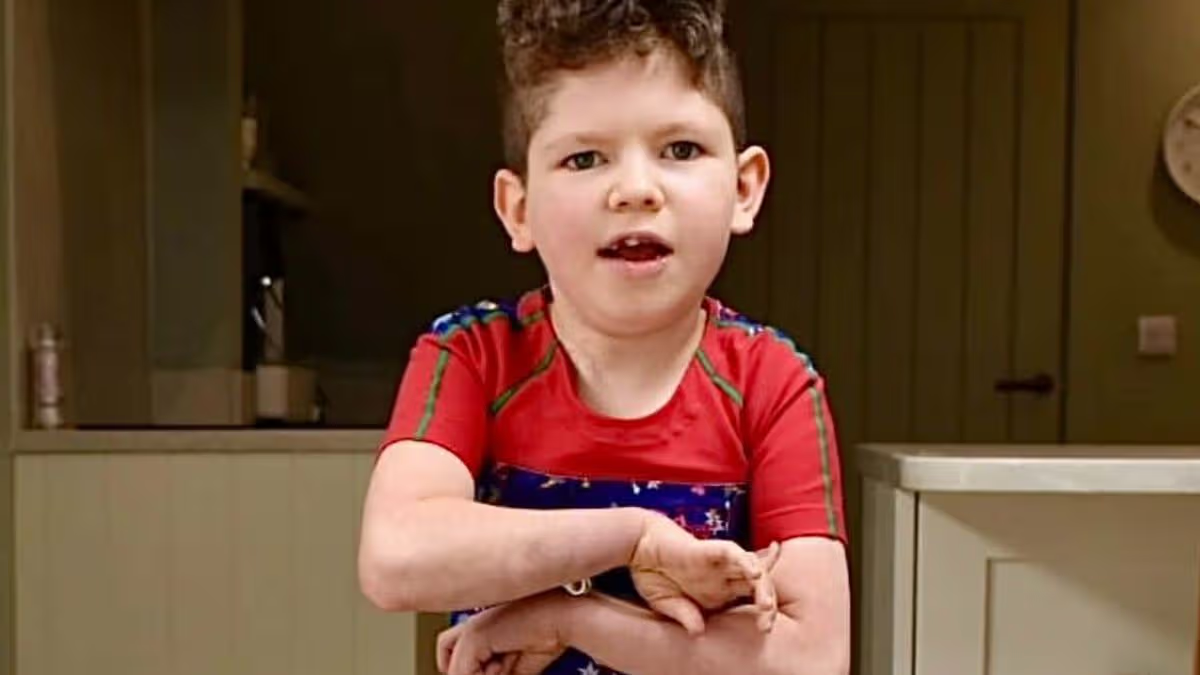
Today, almost three years after that fateful illness, Rafi’s story is one of incredible, hard-won progress. After intensive brain rehabilitation, he has returned home. The boy who once could not respond now fills the house with his voice—he can talk, eat, and sit up. In a milestone that symbolizes his relentless fight, he learned to stand independently just this week. His father describes him as the “most intelligent boy—so witty and so funny,” possessing a depth of resilience that inspires awe. While the recovery has been painstakingly slow and the future will involve continuous work to regain his basic functions, the trajectory is undeniably upward. Dean speaks with determined optimism, believing they will not stop until Rafi reclaims his independence, and is confident that his son will be able to do whatever he wants within reason.
At the heart of this saga is not just a medical miracle, but a profound lesson in happiness and perspective. Dean reflects that Rafi is “the happiest, most content boy you’ll ever meet,” finding joy in his present achievements and the constant love of his family. This contentment amidst such tremendous challenge is what makes Rafi uniquely inspirational. His journey underscores the devastating speed at which a common childhood illness can spiral into a life-threatening catastrophe, the importance of medical advocacy, and the transformative power of familial love and specialist support. Rafi Amer’s ongoing recovery is a beacon, reminding us that even from the deepest darkness, a slow, steady light can return, guided by resilience, hope, and an unbreakable will to live fully.