


A flight destined for a simple journey from Manchester to Nantes on Wednesday transformed into an ordeal of frustration, confusion, and significant personal cost for its passengers. The Ryanair service, already delayed on departure, proceeded towards its French destination only to enter a holding pattern above Nantes Airport. For approximately thirty minutes, the aircraft circled as passengers watched the landscape below, unaware of the disruptive hours that lay ahead. The pilot ultimately announced that due to unsafe weather conditions, a diversion was necessary. The chosen alternate airport was not a nearby facility, but Tours Val de Loire Airport—a road journey of roughly two hours from their intended destination. This decision, framed as a safety necessity, marked the beginning of a protracted logistical failure that would leave nearly 170 travellers, including children and individuals with disabilities, feeling abandoned.
Upon landing in Tours in the mid-afternoon, passengers described a vacuum of information and responsibility. Sharon Norton, travelling with her husband, recounted a scene of growing desperation as hours ticked by with no Ryanair representation or clear guidance. From 3:15 PM until nearly 9:00 PM, people were left stranded in the airport. The lack of communication was a primary source of distress, with individuals left to speculate about their fate. While safety-critical decisions like diversions are understood and accepted, the subsequent ground handling—a core airline responsibility—was conspicuously absent. Passengers were forced to become their own customer service agents, desperately searching for answers about onward travel, accommodations, and the fate of pre-paid arrangements at their final destination.
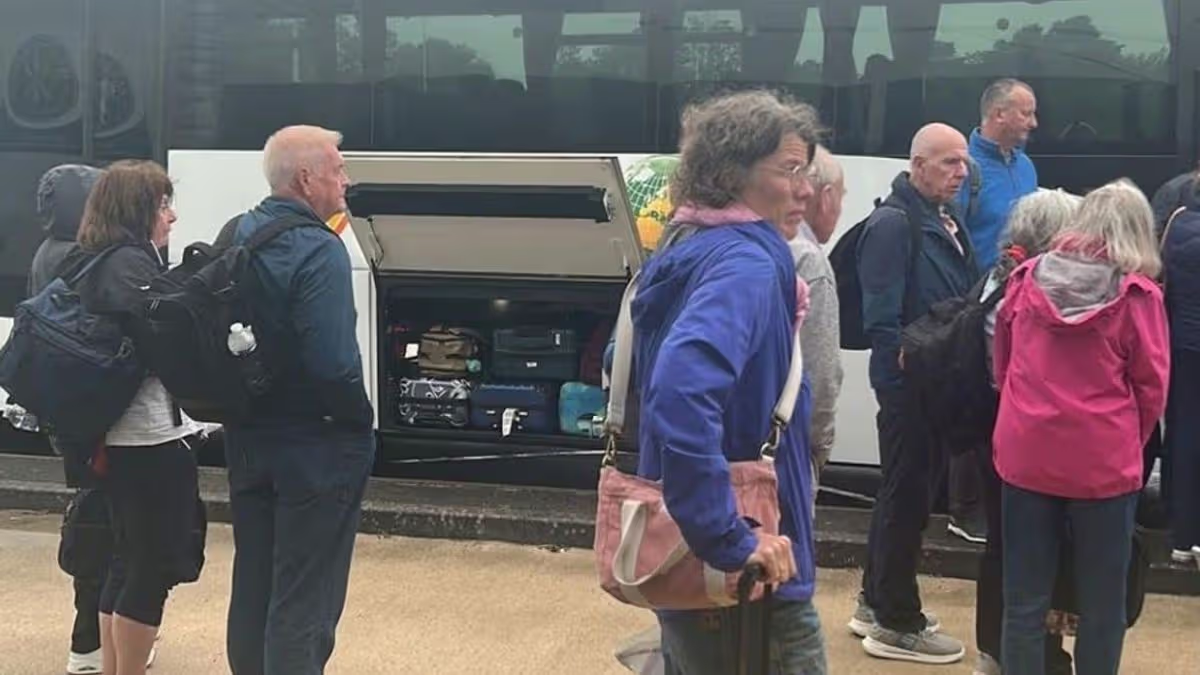
The situation escalated from one of inconvenience to genuine hardship as the human and financial toll became clear. After the lengthy wait, the sole solution provided was the organization of coach transport to Nantes. However, this meant arriving in Nantes many hours past midnight, long after original itineraries had imploded. For many, the domino effect was severe. Travellers like Alex Logen had arranged hire cars for onward journeys, but the rental kiosks would be closed upon their delayed arrival. With no vehicle and no means to continue their trips, they were effectively stranded at Nantes Airport in the dead of night. Compounding this, the late-hour influx of stranded passengers overwhelmed local accommodation, with reports indicating all nearby hotels were fully booked, leaving people with literally nowhere to go.
The personal narratives emerging from this incident highlight a stark failure of duty of care. Sharon Norton noted that despite the pilot initially citing weather, he later mentioned conditions in Nantes were “the same,” leading to questions about the timing and management of the diversion decision. More critically, the absence of support on the ground was damning. Norton acknowledged one apologetic airport employee tried to assist, but there was no formal Ryanair presence to manage the crisis. Passengers received no meal vouchers despite the extended wait, no assistance with accommodation, and no proactive communication to help mitigate their losses. People were left to frantically call and book what they could via their mobile phones, often to no avail, watching pre-paid bookings for lodgings and transport evaporate.
The culmination of these failures left individuals facing dire and unsafe prospects. Alex Logen’s stark summary that the plan appeared to be “rough sleeping” underscored the utter breakdown in the airline’s obligation to its customers. This was not merely about a delayed flight; it was about passengers being left in a foreign country without shelter, transportation, or actionable support. The financial losses from forfeited car hires and accommodations were significant, but the emotional and physical strain of being left in limbo was the greater injury. The incident exposes a chasm between operational decisions made for safety or logistics and the humanitarian protocol required when those decisions dramatically disrupt passengers’ lives.
In the aftermath, the silence from the airline speaks volumes. The lack of an immediate, on-the-ground response was mirrored by a lack of prompt public commentary or resolution. For the passengers, the experience was a brutal lesson in vulnerability when travelling with a carrier perceived to prioritise operational efficiency over passenger welfare. The journey from Manchester, tracked on flight radar as a simple arc over the Channel, became a tortuous circle over Nantes and a disheartening detour to Tours. Ultimately, it concluded not with the bustle of a reached destination, but with the bleak uncertainty of a dark coach park in Nantes, symbolizing a journey that ended long after the travel itself had stopped, leaving only frustration and a demand for accountability in its wake.