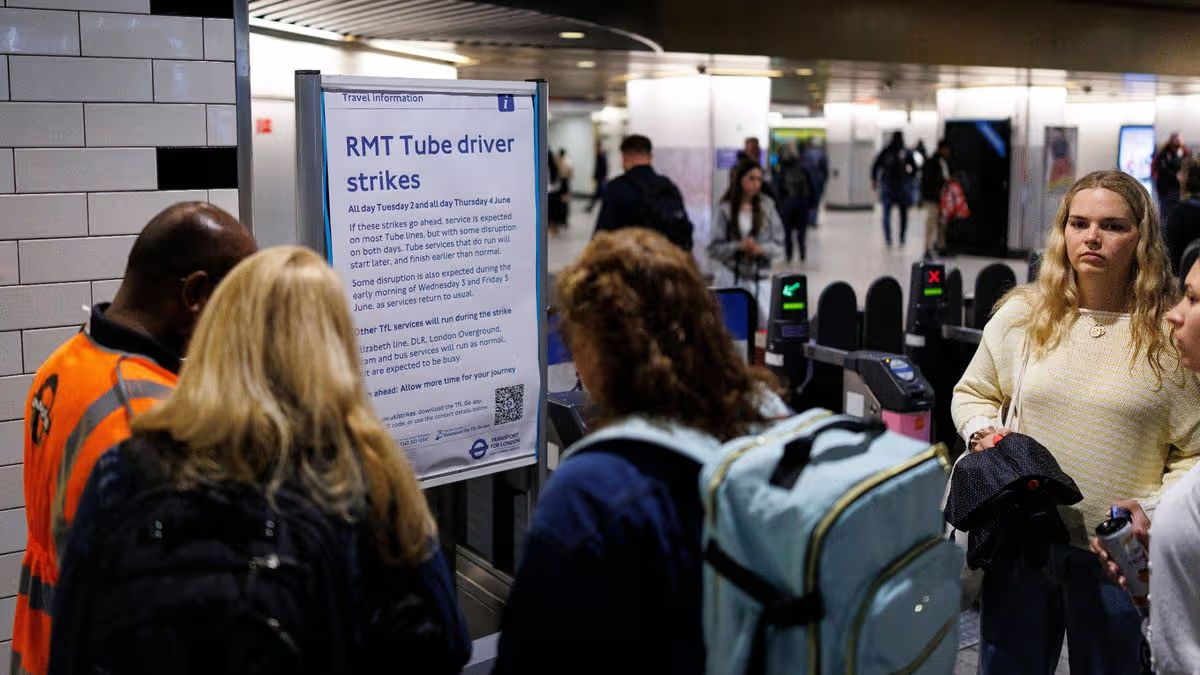




The heart of London is beating irregularly this morning, as a major Tube strike plunges the city’s underground network into widespread chaos just as the working week begins. The walkout, which commenced in the early minutes of Monday, is set to last a full 24 hours, creating a perfect storm of disruption for millions of commuters, tourists, and residents. Already, the morning rush hour is feeling the acute effects, with severe delays crippling key lines and entire sections of the network grinding to a complete halt. This is not a minor inconvenience but a significant blow to the daily rhythm of one of the world’s busiest cities, forcing a stressful rethinking of journeys for anyone needing to travel across the capital today.
The scale of the disruption is immediately apparent, with two entire lines entirely out of service. The Circle Line, which loops through many of Central London’ s major hubs, is completely suspended, severing a vital orbital link. Similarly, the much shorter but critically important Waterloo & City line, the essential shuttle ferrying thousands of commuters from the mainline terminus into the financial district, is also shut down. These suspensions alone create substantial bottlenecks, displacing huge numbers of passengers onto already strained alternative routes and the surface streets above.
Beyond the full suspensions, a cluster of major arteries are experiencing severe delays, turning routine commutes into lengthy ordeals. The Northern Line, a backbone of the network running from the south to the north of the city, is severely delayed across its entire length. The Bakerloo Line is in a similar state, with the additional complication of a partial suspension on its northwestern stretch between Harrow & Wealdstone and Queen’s Park. The Piccadilly Line, a crucial route serving Heathrow Airport and north London, is also beset by severe delays on its core section, with further suspensions branching out to the airport terminals and Uxbridge. The District Line, another of London’s workhorse lines, is reporting severe delays throughout, compounding problems in west and east London.
While other lines are technically running, the ripple effects of the strike and the influx of displaced passengers are causing a cascade of slower services and crowded platforms. The Central, Hammersmith & City, Metropolitan, and Victoria lines are all reporting minor delays across their entire networks. The Metropolitan Line also faces a partial suspension on its central section between Baker Street and Aldgate. Even the smaller Overground service, the Mildmay route between Clapham Junction and Willesden Junction, is experiencing minor delays, showing how the disruption extends beyond the TfL-controlled Tube. This pervasive slowing across almost every line means that even where services are available, journeys will take significantly longer than usual under crowded and tense conditions.
For Londoners and visitors navigating the city today, the advice is unequivocal: allow substantial extra time for any journey and be prepared for last-minute changes and severe overcrowding. Many will be forced to seek alternatives, whether that be other rail services, buses, cycling, or walking. Road traffic is expected to be heavier than normal, and bus stops will see lengthy queues. The cumulative impact of this 24-hour strike extends far beyond mere inconvenience; it represents a serious economic and social disruption, affecting business operations, medical appointments, school runs, and travel plans, while also increasing stress and uncertainty for all involved.
As the city endures this widespread transport paralysis, the focus for thousands is simply on adapting and persevering through the day. The strike, ending just before midnight, means the disruption will encompass the entire business day, with the evening commute likely to be just as fraught as the morning’s. This event starkly highlights the Tube network’s indispensable role as the lifeblood of London. Its temporary fracturing today reminds everyone of the complex, fragile system upon which the smooth functioning of the metropolis depends, and the collective sigh of relief that will come with its restoration tomorrow.