
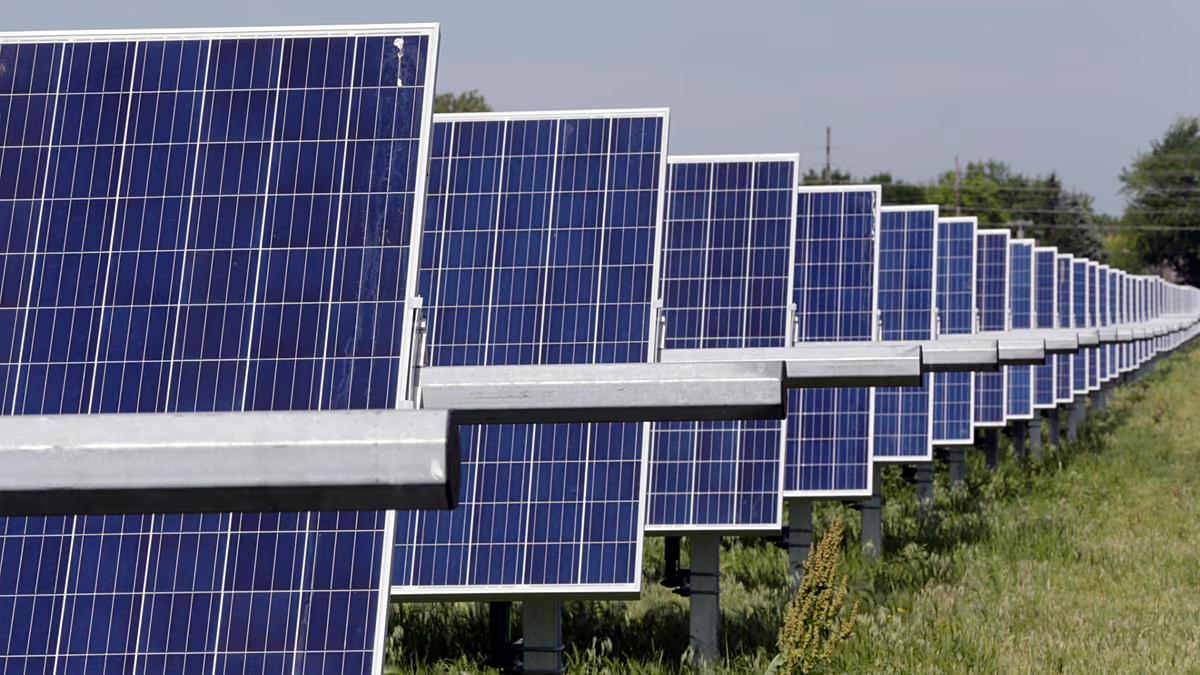


The European solar energy sector stands at a critical crossroads, caught between its remarkable success and emerging geopolitical tensions. Solar power, now generating 13.4 percent of the EU’s electricity, has become a cornerstone of the clean energy transition. At the heart of every solar installation is the inverter, a sophisticated device that acts as the system’s brain, converting the direct current from panels into the alternating current that powers our homes and industries. The reliability and security of these components are paramount, as they are increasingly connected to the internet for updates and maintenance, integrating deeply into the continent’s energy grid. This very integration has now sparked a significant policy shift, rooted in deep-seated concerns over national security and technological sovereignty, challenging the sector’s current foundations.
Driving this shift is a profound apprehension about over-reliance on Chinese technology. A staggering 61 percent of solar inverters imported into the EU originate from China, with a dominant 80 percent of newly installed systems relying on them. The European Commission, citing cybersecurity risks, has moved to ban EU financial institutions like the European Investment Bank from financing projects using Chinese components. The fear, as articulated by industry figures like Christoph Podewils of the European Solar Manufacturing Council, is not merely commercial. It is the alarming prospect that, through mandated software updates, a foreign state could theoretically gain control over hundreds of gigawatts of inverter capacity, potentially destabilizing the European power grid and triggering widespread blackouts. These concerns are amplified by cybersecurity studies pointing to Chinese-affiliated research into the vulnerabilities of foreign power grids, identifying solar systems as both critical assets and potential points of attack.
The immediate fallout from this policy is a sector thrown into disarray. Clean-energy developers across the bloc are scrambling to rewrite procurement contracts and halt construction. With roughly one-fifth of EU solar projects receiving EIB support, hundreds of installations, including major multi-billion euro portfolios in Southern Europe, face delays of six to twelve months as they seek alternative hardware. The mandate redirects procurement toward European manufacturers—such as Germany’s SMA, Austria’s Fronius, and Italy’s Fimer—or trusted allies like Japan and the United States. However, this rapid transition is creating significant logistical bottlenecks. The challenge extends beyond the inverters themselves; companies must now ensure that internal components like circuit boards are also free from Chinese origins, leading to complex customs checks and administrative hurdles that further strain timelines.
Financially, the move towards European and allied suppliers comes at a cost. Chinese manufacturers, benefiting from highly automated production and control of nearly the entire solar component supply chain, typically undercut European prices by 20 to 30 percent. Experts estimate the ban will raise overall project procurement costs by around 2 percent. While European executives like SMA’s Jürgen Reinert note a broader industry shift toward valuing security and compliance over pure cost, the reality is that European manufacturing capacity cannot expand overnight. This creates a temporary but painful squeeze: higher prices, supply constraints, and reliance on a logistics network that must rapidly reorganize away from established global routes toward more regional European flows.
For EU citizens, the consequences will manifest in two primary ways: slightly higher energy costs and a temporary slowdown in the green transition. While developers will initially absorb most of the increased costs and delays, some of these expenses are likely to be passed on to consumers over time, resulting in modest electricity price increases. More significantly, the rollout of new, low-cost renewable energy will decelerate just as the continent seeks to accelerate it. This pushes back the anticipated relief for consumer energy bills projected under the EU Solar Energy Strategy. As French energy syndicate leader David Greau notes, the long-term challenge is building resilient supply chains. The immediate pain, he argues, is a necessary step toward “reindustrialisation,” fostering a strong European industry that can eventually achieve competitiveness through scale, even if it requires transitional support.
Looking ahead, the path is framed as a strategic trade-off between short-term affordability and long-term security and sovereignty. Between 2027 and 2030, European production is expected to scale up under initiatives like the Net-Zero Industry Act. The likely outcome is a structurally safer but slightly more expensive long-term energy baseline, with higher domestic production costs embedded into electricity tariffs. Supporters contend this is a price worth paying. The benefits, they argue, are a power grid insulated from potential state-sponsored cyberattacks, a significant boost to European tech manufacturing, and ultimately, greater control over the continent’s energy destiny. The EU’s solar success story is thus entering a new, more complex chapter—one where energy independence is being recalibrated to include digital and geopolitical security as non-negotiable pillars of a resilient green future.