

A nation divided over the future of workers’ rights was the stark reality in Portugal this Wednesday, as a general strike called by the nation’s largest union confederation brought significant portions of the country to a halt. While the government strived to project an image of business as usual, the scene on the ground told a more complex story of widespread disruption and deep-seated discontent. The strike, a direct response to the government’s proposed “Trabalho XXI” labour law reforms, saw fierce clashes between official assessments and union reports, painting a picture of a society at odds over its economic direction.
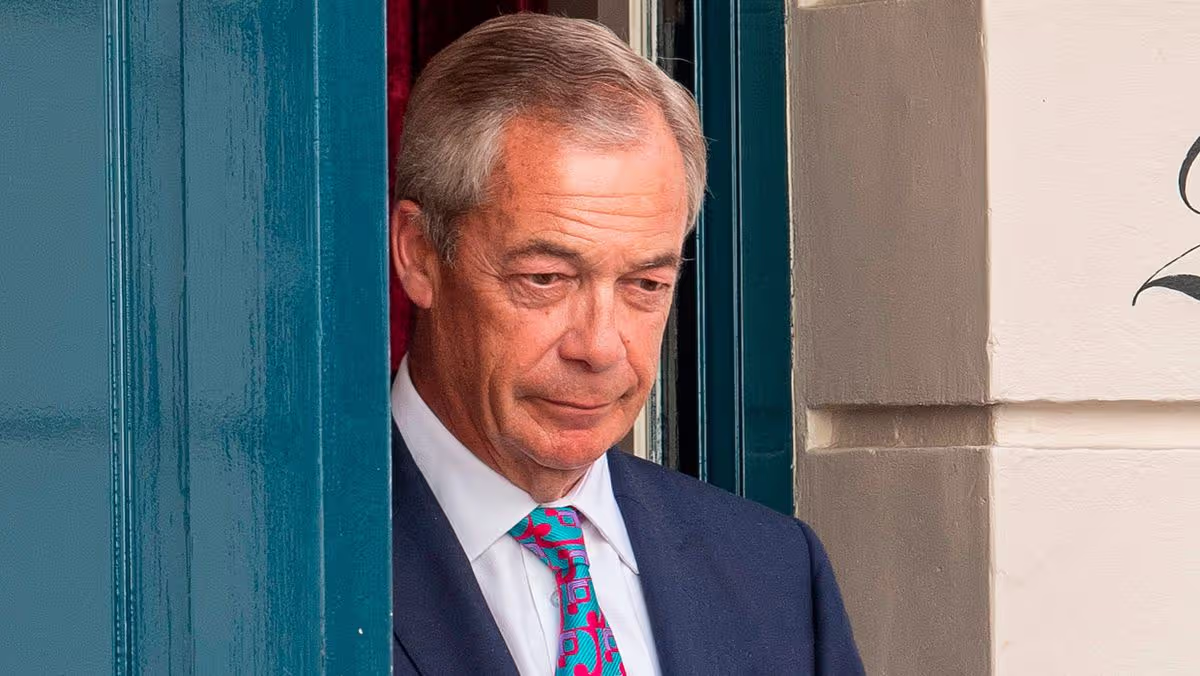
From the outset, the government, led by Prime Minister Luís Montenegro, sought to downplay the strike’s impact. Following a Council of Ministers meeting, Montenegro expressed respect for the right to strike but framed the action as ultimately harmful. He pointed to inconveniences faced by the public: children out of school, cancelled medical appointments, and disrupted commutes. Labour Minister Maria Rosário da Palma Ramalho provided a statistical backbone to this narrative, asserting that participation in the private sector was “marginal.” She presented a detailed, sector-by-sector breakdown claiming that factories, shops, banks, and travel agencies operated normally, and that private hospitals were unaffected. For the public sector, she acknowledged higher participation but insisted that essential services were being maintained.
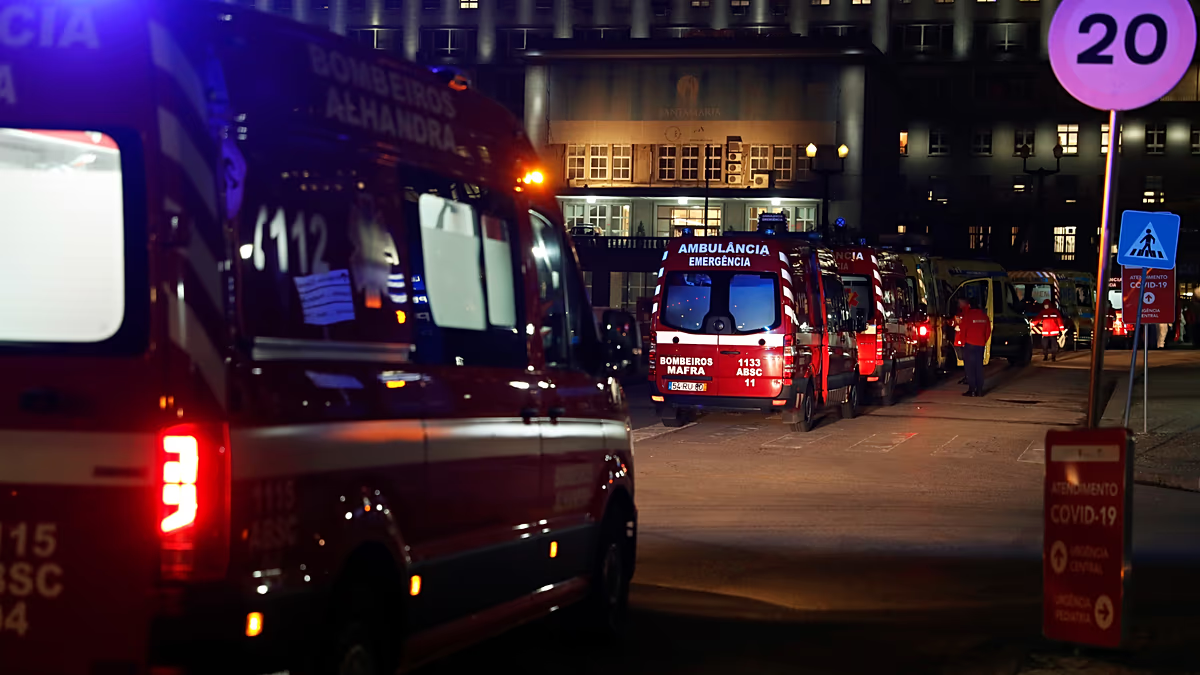
This official narrative, however, clashed dramatically with the on-the-ground reality reported by the CGTP-IN union confederation and witnessed across vital public services. Union leader Tiago Oliveira declared the strike a major success, citing 100% participation in major industrial plants and severe disruptions in transport. Most critically, the National Health Service (SNS) experienced profound stoppages, with night shift participation estimated between 95% and 100% by health unions. Major hospitals in Lisbon, Porto, Coimbra, and other cities reported near-total shutdowns of non-essential services, impacting outpatient consultations and surgeries. For the first time, even the SNS 24 telephone helpline, a critical triage service already under strain, was affected by the strike, with wait times reportedly stretching to hours.
The disruption extended far beyond healthcare, weaving a thread of paralysis through the daily life of the nation. Education was significantly hit, with many schools closing on a day when a national Year 6 Portuguese exam was scheduled—a move unions framed as a symbol of the government’s disregard. The transportation network ground to a near standstill in key areas: the Lisbon Metro was completely halted, Porto’s metro saw only partial service, and nearly 200 flights were cancelled across Lisbon, Porto, and Faro airports. Ferry crossings on the Tagus River and national rail services were also severely curtailed, isolating communities and stranding travellers.
At its heart, this widespread action was a powerful denunciation of the government’s labour reform package. The proposed “Trabalho XXI” initiative, encompassing over 100 amendments to the Labour Code, has become a lightning rod for worker anxiety. Unions argue the reforms will erode hard-won rights, tilting the balance of power overwhelmingly in favour of employers. The strike was the culmination of ten months of failed dialogue, with the CGTP-IN accusing Prime Minister Montenegro of “arrogance and a lack of respect” for ignoring their concerns. The chasm between the government’s technocratic language of modernization and the unions’ visceral defense of existing protections was laid bare in the streets and shuttered workplaces.
In the end, Wednesday’s events presented two irreconcilable portraits of Portugal. One, offered by the government, was of a resilient economy where dissent was respected but ultimately ineffectual, and where change was proceeding as planned. The other, evidenced by silent metros, closed school gates, and understaffed hospitals, was of a working class in open revolt, leveraging its collective power to defend its standing. The stark discrepancy in reported participation figures—from the government’s “marginal” to the unions’ “major”—symbolizes this deeper conflict. More than a simple work stoppage, the day served as a profound referendum on the social contract, revealing a nation grappling with fundamental questions about fairness, power, and the value of labour in the 21st century. The aftermath of this confrontation will likely shape Portugal’s political and social landscape for months to come.