

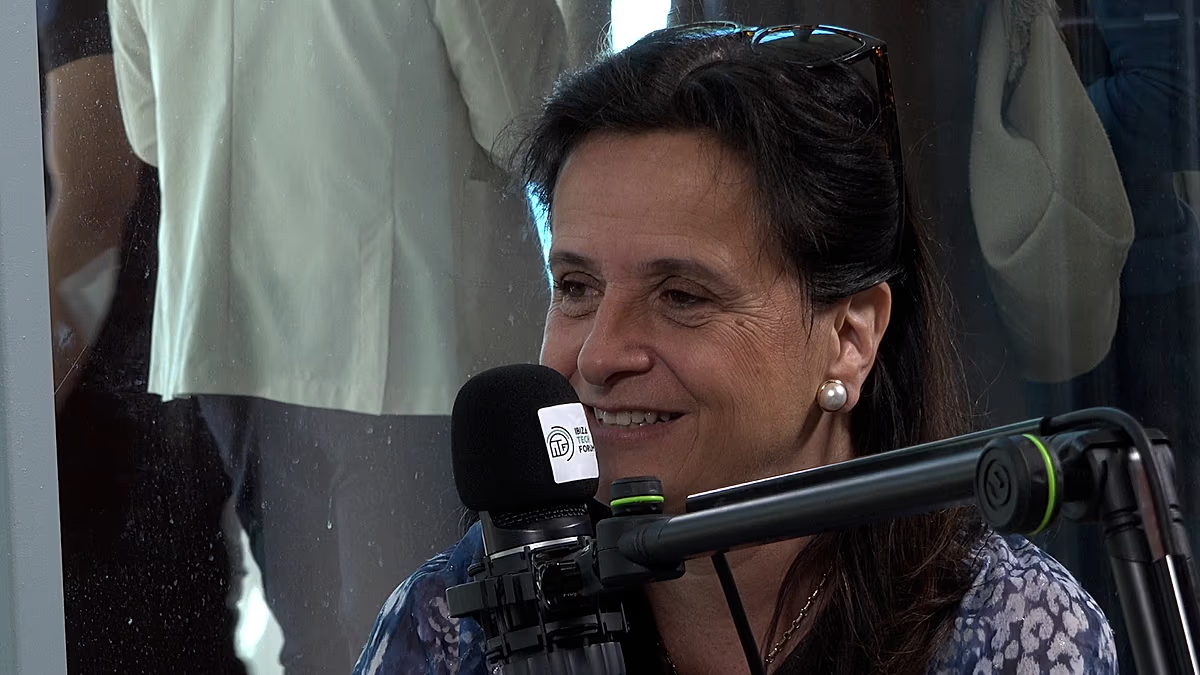


At the sun-drenched Ibiza Tech Forum 2026, a sobering conversation cut through the usual buzz of disruptive ideas. The central truth, echoed by experts and successful founders alike, is that a brilliant technological concept is merely the starting block. The real race is won on the track of financial architecture and scalable strategy. Beyond the visionary pitches lies the gritty, often unglamorous work of building a viable business from the ground up, a reality that separates fleeting projects from enduring companies. This year’s forum served as a vital checkpoint, urging the ecosystem to look beyond the initial spark and focus relentlessly on the sustainable engine of growth.
Navigating this complex terrain requires a fluent understanding of the investor’s lexicon, a point powerfully articulated by Pilar Carrato, CFO of Spain’s Centre for the Development of Technology and Innovation (CDTI). With the credibility of a public body that has invested €3 billion into the innovation landscape, Carrato observes a common and costly misstep among founders: a lack of strategic focus when seeking capital. The critical distinction, she notes, is that private investors are not simply hunting for a profitable business today; they are passionately searching for a scalable model. This is epitomized by the coveted J-curve—a willingness to endure initial losses and heavy investment for the promise of exponential revenue growth that eventually skyrockets without a parallel rise in operational costs. To even begin this conversation, Carrato underscores three non-negotiable pillars for any startup: a genuinely multidisciplinary team that covers technology, strategy, sales, and especially finance; a relentless market orientation that prioritizes solving a real customer need over clinging to an idealized product vision; and a deep, analytical understanding of the global competitive landscape, which in the age of AI is a fundamental requirement, not an afterthought.
However, even startups that master this foundation face a uniquely Spanish challenge, one that Carrato identifies as the ecosystem’s most significant bottleneck: a stagnant culture of exits. Unlike in thriving international hubs, the pathway for investors to successfully cash out and recycle their capital back into new ventures is clogged. Carrato links this directly to a corporate cultural deficit within Spain itself. Over the past twenty years, barely a handful of startups have been acquired by major domestic corporations. This means that neither large Spanish companies nor institutional investors like pension funds are actively buying homegrown technology. The result is a system where private capital gets trapped, drying up the vital cycle of reinvestment. To unblock this, Carrato advocates for a multi-pronged solution involving streamlined regulations, attractive tax incentives for corporate acquisitions, and improved access to secondary markets, arguing that the public sector must help catalyze this crucial cultural shift.
Within this broader context, Carrato champions an often-overlooked superpower for the early-stage founder: ruthless financial discipline from day one. Viewing the company’s finances as a mere administrative task, rather than a core strategic pillar, is a recipe for wandering and waste. A poorly planned roadmap locks founders into a desperate cycle of chasing the next funding round, starving their product of focused attention. Moreover, a haphazard initial corporate structure or a poorly negotiated term sheet can utterly eviscerate the value of a world-changing idea. Carrato has witnessed the stark contrast firsthand: companies with strong financial leadership tripling their sales, while others with equally brilliant products vanish, undone not by a lack of innovation, but by the fine print and financing missteps their founders signed in haste.
Given that Spain’s private investment muscle is still developing compared to markets like the US or UK, Carrato sees immense power in strategic public-private partnerships. This is precisely where instruments like the CDTI are designed to intervene, not to replace private risk-taking, but to mitigate it and encourage boldness. “We provide a leverage effect,” she explains. If a startup needs €2 million and a private investor is only willing to commit one, public funds can step in to cover the difference, effectively de-risking the proposition for everyone. Her final, crucial advice to founders is to become meticulous students of the entire funding landscape—from CDTI grants and Enisa’s participatory loans to the longer-term backing available through institutions like ICO or Cofides.
Yet, this exploration must be guided by a principle akin to choosing a life partner. Carrato leaves her audience with a resonant, human metaphor: “Bringing a fund on board is a long-term marriage.” The allure of a cheque must never override the imperative to scrutinize the terms and the people behind it. A misaligned investor can derail a company’s vision, while a supportive one can be its greatest ally through inevitable turbulence. Therefore, the ultimate recipe for success distilled from the forum is a blend of visionary ambition and pragmatic groundwork: build a resilient team, solve a real problem, understand your financials intimately, navigate the ecosystem’s specific challenges with eyes wide open, and choose your capital partners not just for their money, but for their shared commitment to the long, rewarding journey ahead.