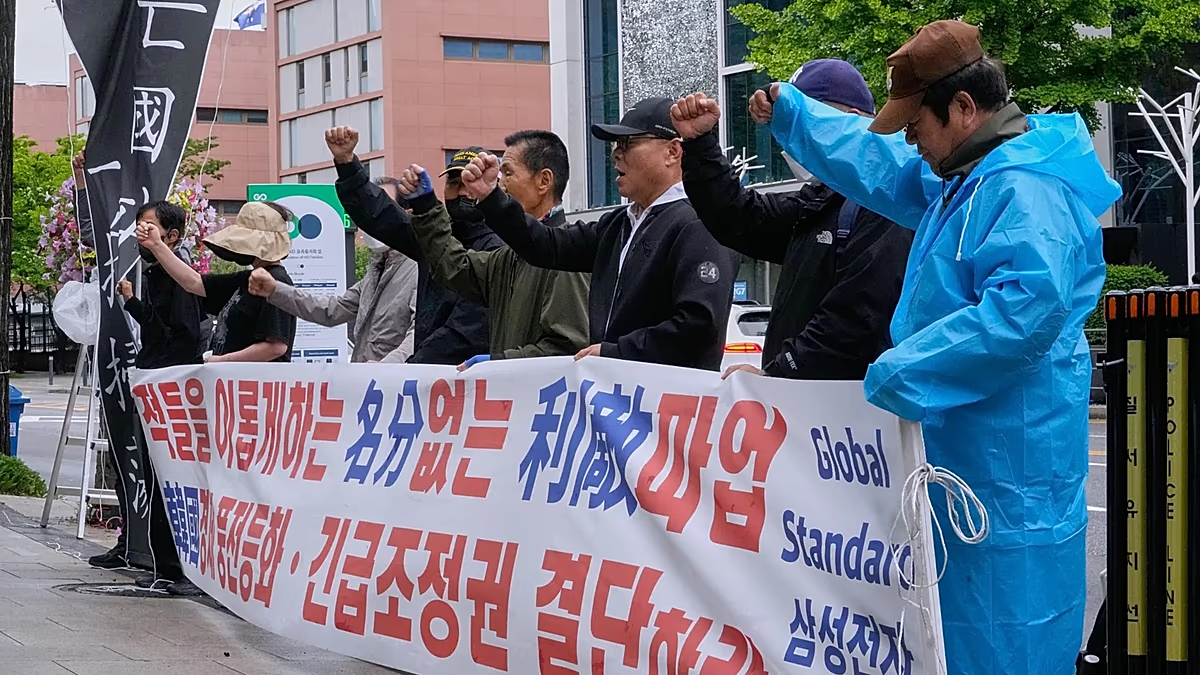



In a landmark decision, Samsung Electronics has reached a pivotal agreement with its labor unions, ending an 18-day strike and setting a significant precedent for profit-sharing in the technology sector. The deal, ratified by 74% of union members representing over 60,000 workers, grants semiconductor employees a performance bonus equivalent to 10.5% of the company’s earnings, to be paid in company stock. This arrangement comes as Samsung’s operating profit is estimated to reach a staggering €172 billion this year. For more than 28,000 employees in the critical chip division, this could translate into life-changing individual bonuses of approximately €350,000. Company leadership, including Vice-President Yeo Myung-gu, hailed the agreement as a foundation for strengthened global cooperation, expressing gratitude for the sustained dialogue that averted a prolonged dispute and underscored a shared commitment to competitiveness.
This resolution did not come easily and followed months of escalating tensions within the Korean tech giant. Employees had been pursuing strike actions since December, initially demanding a 7% wage increase. The path to agreement was fraught, concluding less than 48 hours after a Korean court overturned an injunction that sought to suspend the collective bargaining process. The successful negotiation highlights a significant shift in South Korea’s corporate landscape, where organized labor is becoming an increasingly powerful force in traditionally hierarchical conglomerates. The settlement not only averts further disruption to the global semiconductor supply chain but also signals a new era of labor-management relations at Samsung, where substantial profit-sharing is now a tangible outcome of collective bargaining.
The ripple effects of Samsung’s deal are already being felt across the Asian tech industry, setting a powerful benchmark for compensation in the artificial intelligence and semiconductor sectors. Samsung’s domestic rival, SK Hynix, reportedly allocated 10% of its operating profit to bonuses last year, a model that can now see chip workers receiving bonuses worth up to 3,000% of their base salary. Similarly, the Taiwanese semiconductor behemoth TSMC has promised employees an average 30% increase in their profit-sharing bonuses this year. Meanwhile, employees at other major Korean corporations like LG and Kakao are now mobilizing, demanding similar AI-related bonuses and threatening their own strike actions if their terms are not met. This trend underscores a burgeoning belief among tech workers that they deserve a direct and substantial share of the enormous profits generated by their innovations.
This movement is not confined to Asia; it is resonating with labor unions across the globe who are advocating for a “fair share” of the profits from the artificial intelligence boom. Major unions, including the Communications Workers of America (CWA) and the United Kingdom’s Trade Union Congress (TUC), are amplifying the call for economic justice in the AI sector. At an international level, the Uni Global Union frames this as a moral imperative, arguing that the prosperity created by AI must be “distributed broadly and equally, to benefit all of humanity” through thoughtful policy. While these global unions have yet to launch specific collective bargaining actions on the scale of Samsung’s, the precedent set in Korea provides a powerful case study and a rallying point for their campaigns, placing corporate management worldwide on notice.
The core of this burgeoning global movement is a fundamental debate about value, equity, and the future of work in an AI-driven economy. Workers who design, fabricate, and maintain the advanced chips that power AI systems are arguing that their specialized, irreplaceable labor is the true engine of this financial windfall. They contend that traditional compensation models are outdated and that a significant portion of the recorded profits—often in the hundreds of billions—rightfully belongs to the workforce that makes it possible. This represents a profound challenge to longstanding corporate profit distribution models and suggests a rebalancing of power, where highly skilled labor leverages its indispensability to claim a greater portion of the economic value it creates.
Ultimately, the Samsung agreement is more than a one-time bonus payout; it is a potential harbinger of a new social contract in the 21st-century tech industry. It demonstrates that through solidarity and negotiation, workers can successfully translate industry-wide profitability into direct, transformative financial rewards. As the AI revolution accelerates, the question of how its monumental economic gains are distributed will only grow more urgent. The events in South Korea prove that organized labor can play a decisive role in answering that question, ensuring that the humans behind the technology also thrive in the era they are building. The world will be watching to see if this model of profit-sharing becomes an exception or the new rule.