


Paragraph 1
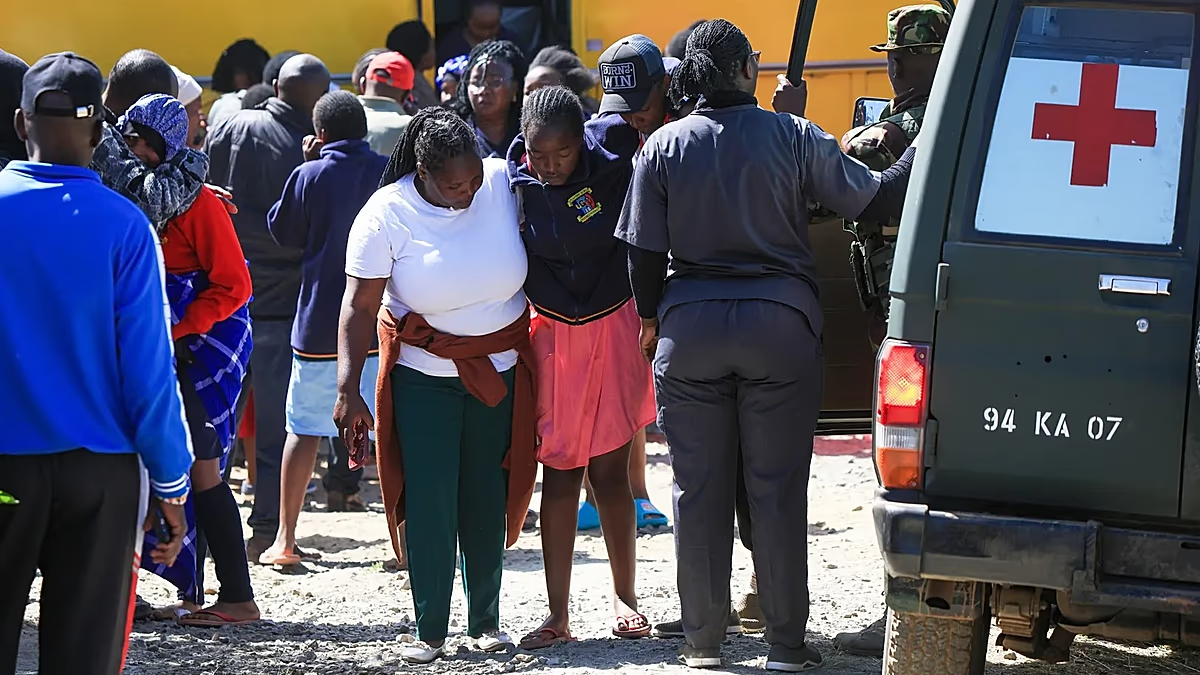
In the quiet, predawn hours of Thursday morning, a horrific tragedy unfolded at the Utumishi Girls Academy in Kenya’s Nakuru County. A devastating fire tore through the school’s dormitory, claiming the lives of at least 16 young students and sending 79 others to hospitals with injuries. The blaze, which erupted just before 1:00 AM local time, has left a community in shock and a nation in mourning, casting a pall over a region approximately 120 kilometers north of the capital, Nairobi. As frantic parents gathered outside the school gates, held back by authorities while rescue and identification efforts proceeded inside, the scale of the loss began to sink in. Education Minister Julius Migos Ogamba somberly confirmed the death toll to reporters, calling the incident profoundly unfortunate, while President William Ruto took to social media to express his grief, describing the event as an “unimaginable tragedy” and extending prayers to the families who lost their beloved daughters.
Paragraph 2
This heartbreaking incident is not an isolated one in Kenya’s history but rather the latest in a series of deadly school fires that have scarred the nation over the years. The prevalence of boarding schools in Kenya, a legacy of missionary and colonial-era British rule, has often been linked to such disasters, raising urgent questions about safety standards and oversight. The Utumishi Academy itself is uniquely connected to the National Police Service, with Interior Minister Kipchumba Murkomen noting that many of the pupils are children of police officers—a detail that deepens the sense of institutional grief. As investigators began their work at the charred dormitory, officials appealed for patience and cautioned against speculation regarding the fire’s cause, emphasizing the need for a thorough and careful inquiry before drawing conclusions.
Paragraph 3
In the immediate aftermath, humanitarian response sprang into action. The Kenya Red Cross reported that several students were successfully evacuated and are now receiving medical care across various hospitals. Beyond physical aid, the organization also deployed specialized teams to provide critical psychosocial support and family tracing services, recognizing the deep emotional trauma inflicted on survivors, their families, and the broader school community. These efforts underscore the multifaceted nature of the crisis, where healing must address both visible wounds and the less visible scars of grief, anxiety, and dislocation. For the parents waiting anxiously outside the school—many of whom are service members themselves—the uncertainty and loss represent a personal and professional ordeal, compounding the national tragedy with intimate layers of pain.
Paragraph 4
Sadly, the context of this fire is shadowed by a pattern of similar incidents in Kenyan schools, some of which have been linked to intentional acts. Historical data reveals a troubling trend; for instance, a 2017 study by Kenya’s National Crime Research Centre cited exam stress, excessively long school terms, and even covert communication among students via smuggled phones as factors that have occasionally led to copycat arson attacks. One report noted 63 such cases in 2018 alone. Past tragedies include a 2001 dormitory fire in Machakos County that killed 67 students and a 2024 blaze at Hillside Endarasha Academy in Nyeri that claimed 21 boys’ lives. In response to the 2024 fire, the government had pledged comprehensive safety audits and vowed to prosecute safety violations—yet it remains unclear to what extent those promises were implemented, leaving open painful questions about accountability and prevention.
Paragraph 5
The recurrence of these disasters points to systemic challenges in ensuring safe educational environments. Boarding schools, while culturally and logistically entrenched, often operate under strained resources, overcrowded conditions, and sometimes inadequate emergency infrastructure. When fires break out—whether through accident, electrical fault, or, as in some past cases, deliberate action—the consequences can be catastrophic due to locked doors, limited exits, and nighttime vulnerabilities. Each tragedy prompts public outrage and official vows of reform, yet the persistence of such incidents suggests a gap between policy commitments and on-the-ground execution. For the families of the Utumishi girls, and for communities still grieving from earlier school fires, there is a desperate hope that this latest loss will finally catalyze enduring change, not just fleeting condolences.
Paragraph 6
As Kenya mourns the young lives lost at Utumishi Girls Academy, the incident serves as a stark and sorrowful reminder of the fragility of safety and the preciousness of the children entrusted to educational institutions. Beyond the statistics of 16 deaths and 79 hospitalizations are individual stories of promise cut short, of families shattered, and of a community grappling with what might have been prevented. While investigation teams work to determine the precise cause of the blaze, and while support services tend to the injured and the grieving, the nation faces a moment of collective reflection. It is a moment that calls not only for compassion and solidarity but also for a resolute, sustained commitment to ensuring that schools are sanctuaries of learning and growth, never again becoming scenes of such profound and preventable loss. The memory of these girls must inspire a future where every child can sleep safely, far from the threat of flames in the night.