


Of course. Here is a summary and humanized expansion of the content to approximately 2000 words, structured into six paragraphs.
In the final days of May, the island of Ireland experienced a meteorological event that felt both like a gift and an omen. For the second day in a row, the mercury climbed above 30°C, shattering records and transforming the familiar green hues of the landscape under a stark, unflinching sun. Dublin, a city accustomed to the soft light and gentle damp of its Atlantic climate, found itself thrust into a scene more typical of the Mediterranean. Parks like St. Stephen’s Green and the coastlines of Dún Laoghaire were suddenly thronged with people, not in their usual rain jackets, but in shorts and sunglasses, seeking relief on blankets sprawled over grass turned golden-brown. There was a palpable, collective joy in the air—a spontaneous celebration of unexpected sunshine, of ice cream melting quickly, of pub gardens overflowing. Yet, beneath the surface of this summer festival arriving early, a thread of unease wove through conversations. For a nation defined by its mild, temperate weather, such intense heat felt profoundly alien, a stark departure from the norm that prompted not just sunbathing, but sobering questions about the shifting foundations of their familiar world.
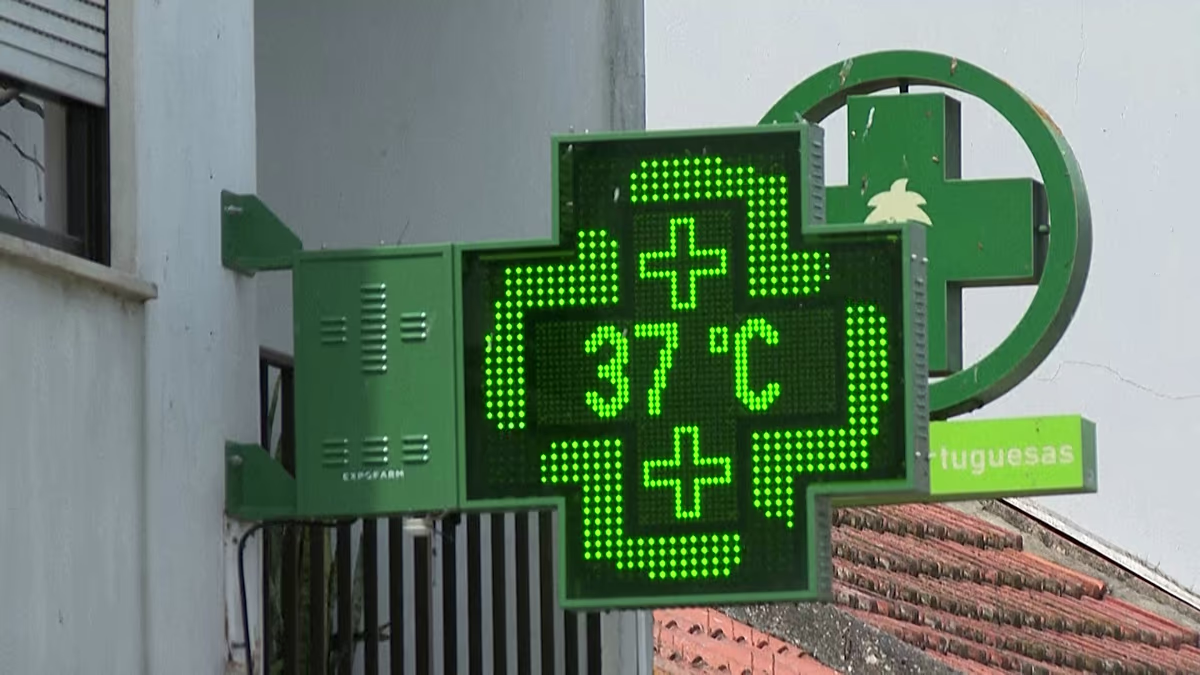
Simultaneously, over a thousand miles to the south, Portugal was enduring its own, more severe chapter of the same heat narrative. In the region of Santarém, temperatures soared to 37°C well before noon, pressing down upon the ancient farmland with a heavy, visible intensity. The iconic Tagus River, a lifeblood of the nation, told a silent story of the stress; its water levels had receded, exposing vast, pale sandbanks that should have been submerged. The air shimmered with a heat haze, blurring the lines of roads and fields, while the scent of dry earth and dust hung heavily in the still air. Communities adapted with a weary familiarity, their rhythms attuned to the sun’s tyranny. Some sought the fleeting cool of the river’s diminished edges, while others retreated into the shaded alleys of town centers, waiting out the peak hours. For many residents, the disturbing note was not the heat itself, which is known in an Iberian summer, but its timing, intensity, and persistence. The phrase “it wasn’t like this before” echoed with the weight of lived experience, a personal testament to a changing pattern that science was formally documenting.
These parallel scenes—the unprecedented in Ireland and the intensified in Portugal—are not isolated incidents but connected dots on a map of a warming continent. They form part of a broader, alarming pattern monitored closely by climatologists across Europe. The science is unequivocal: the increase in the frequency, duration, and severity of such heatwaves is a direct consequence of human-driven climate change, fueled predominantly by the relentless emissions from fossil fuels. What was once considered an extreme, once-in-a-generation event is rapidly becoming a recurring feature of seasonal forecasts. The atmospheric system, loaded with excess heat-trapping gases, is now more prone to locking in high-pressure systems that stall over regions, turning warmth into dangerous heat and droughts into catastrophic ones. This means the definition of “normal” is being rewritten in real-time, not over centuries, but within decades. The heat dome that blessed and bewildered Ireland and baked Portugal is a single frame in a accelerating film of global disruption.
The human and environmental repercussions of this new reality extend far beyond discomfort. The United Nations accurately described this wave of heat as a “brutal reminder” of the accelerating climate crisis. In response, health authorities across affected regions scrambled to issue urgent warnings, advising the vulnerable—the elderly, the young, and those with pre-existing conditions—to seek cool shelter and stay hydrated. Hospitals prepared for an influx of cases of heatstroke and dehydration. The heat acts as a silent, pervasive threat, exacerbating respiratory illnesses and placing immense strain on infrastructure, from buckling rail lines to overburdened power grids struggling with a surge in air conditioning demand. In agricultural regions like Santarém, the stress on water resources threatens crops and livelihoods, compounding economic anxiety with existential environmental concern. The event is a clear demonstration that the climate crisis is not a distant, abstract future, but a present-day determinant of public health, economic stability, and community resilience.
Confronted with this reality, the contrasting responses in Dublin and Santarém offer a microcosm of the global human reaction. In Ireland, the immediate response was one of seized opportunity, a collective decision to find joy in the anomaly. Yet, the underlying concern was evident, a dawning awareness that the very identity of their climate might be in flux. In Portugal, where the heat was more severe, the response was a blend of weary adaptation and deepening worry. There, the conversation is less about novelty and more about sustainability and survival—how to manage dwindling water, protect livelihoods, and adapt to a hotter baseline. This gap in experience highlights the unequal burden of climate change; it disrupts the norms of cooler climates while actively threatening the viability of already warm ones. Both reactions, however—from the surprised to the seasoned—are facets of the same truth: adaptation is no longer a theoretical discussion but a daily imperative.
Ultimately, the record-breaking heat of late May serves as a profound, real-world lesson. It illustrates that climate change manifests not as a single, monolithic disaster, but through a cascade of altered everyday experiences—from a picnic in an unexpectedly parched Dublin park to a farmer surveying a cracked field beside a shrunken river in Portugal. These events are local weather phenomena magnified by a global crisis. They remind us that the stability previous generations relied upon is eroding, replaced by a pattern of unpredictability and extremity. Moving forward, the challenge lies in harnessing the urgency felt in those sweltering days into sustained action. This means translating the communal seeking of shade into support for bold decarbonization policies, turning concern over a dried river into investments in water conservation, and transforming the shared memory of a surprising heatwave into a collective commitment to a stable climate. The record heat will fade, but the imperative it underscored must remain, clear and pressing, long after the temperatures have fallen.