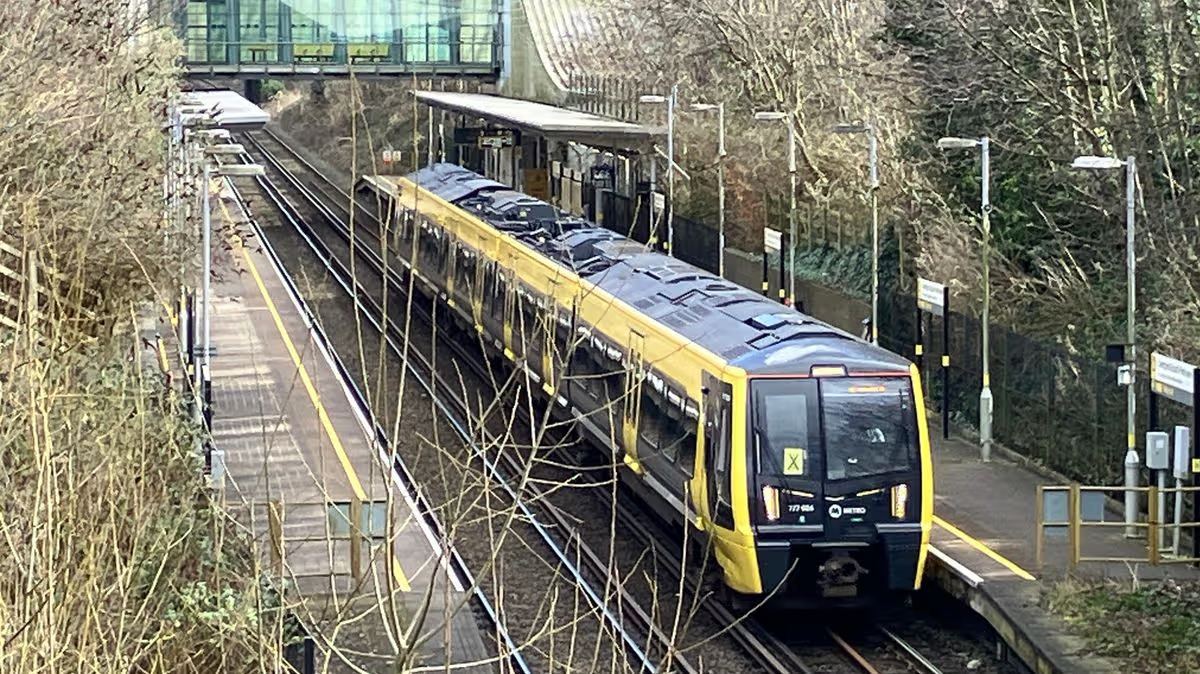


On a damp and unsettled morning in late May, thousands of travellers relying on Britain’s vital West Coast Main Line found their plans thrown into disarray. Avanti West Coast, the operator of these key intercity services, issued a critical alert to passengers: severe lightning strikes had damaged essential signalling equipment near the major railway hub of Crewe. This unforeseen act of nature forced a network-wide imposition of reduced speed limits across all lines radiating from the junction, creating a ripple effect of delays that spread across the country like a slow-moving wave. For anyone at a station platform or checking their phone for updates, the message was clear and concerning—a significant disruption was underway, with the intricate dance of timetables brought to a cautious, frustrating crawl.
The immediate consequence for commuters and long-distance travellers alike was a substantial lengthening of their journeys. Avanti West Coast advised that services passing through the affected area could be delayed by up to twenty-five minutes, a considerable chunk of time for someone heading to a crucial meeting, a family event, or simply trying to get to work. The company projected that this disruption would likely persist until at least 9:00 AM on May 28th, painting a picture of a morning marred by uncertainty and inconvenience. Behind the brief statement lay a frantic scene of engineers working to assess and repair the storm’s damage, a race against the clock to restore normal operations while ensuring the absolute safety of every train and passenger on the network.
Understanding the frustration and hassle caused, Avanti West Coast’s communication struck a tone of genuine apology, acknowledging the personal impact on people’s days. They directly addressed the most pressing question on delayed passengers’ minds: compensation. Travellers whose journeys were delayed by fifteen minutes or more were directed to the operator’s Delay Repay scheme, a straightforward online process designed to provide automatic refunds for the inconvenience suffered. This policy serves as a crucial form of accountability, offering not just financial redress but also a recognition that passengers’ time is valuable and that the company holds itself responsible for significant disruptions within its control.
For those facing the more severe disruption of a cancelled service, the guidance provided a clear path forward. Holders of tickets for cancelled trains were told their tickets would remain valid for travel on alternative Avanti West Coast services—specifically, they could board one of the two trains scheduled immediately before or immediately after their original departure. This flexibility aimed to prevent people from being stranded and offered a semblance of control in a chaotic situation. Furthermore, if the delays proved too disruptive and a passenger decided to abandon their journey entirely, the company confirmed they were entitled to a full refund from their original point of purchase, ensuring no one was financially penalised for the day’s events.
The alert also wisely noted that the disruption at such a critical national hub would not exist in a vacuum. Crewe’s function as a major interchange means that delays to Avanti West Coast services inevitably have knock-on effects for other train operators sharing the infrastructure or accepting its tickets. The company encouraged all affected passengers to proactively check the status of their entire route, including connecting services run by other companies, via online journey planners. This holistic advice was essential, as a passenger’s journey might involve multiple legs, and a delay on one could cascade and miss a vital connection elsewhere, requiring alternative planning.
In essence, this incident highlights the delicate balance and vulnerability of modern rail travel, where a single lightning strike in the Midlands can send timetables spiralling hundreds of miles away. While the cause was an uncontrollable force of nature, the response from Avanti West Coast followed a well-established protocol: clear, timely information about the cause and expected duration; actionable advice on alternative travel and refunds; and a direct apology acknowledging the passenger’s experience. It served as a reminder of the complex system we rely on and the importance of passenger rights and transparent communication when that system, inevitably, encounters a fault. For the travellers of that morning, it was a test of patience, met with a structured, if imperfect, framework for mitigation and redress.