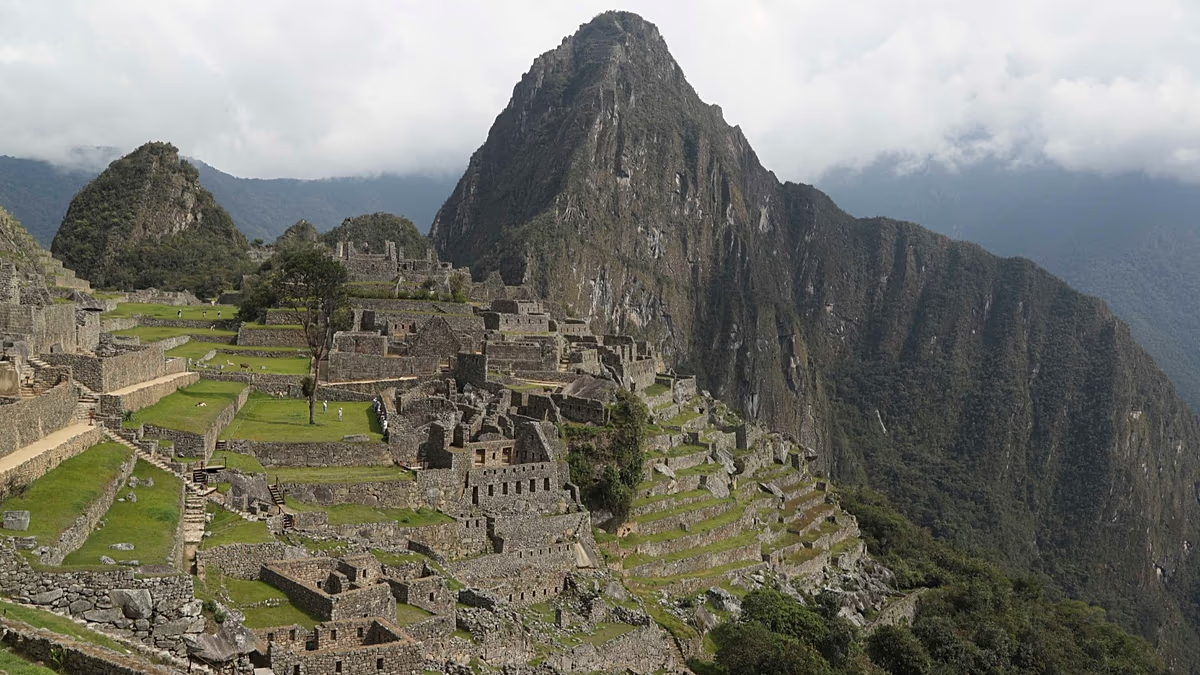




Machu Picchu occupies a hallowed place in the global imagination, a silent stone citadel perched among Andean clouds that represents the pinnacle of Inca engineering and spiritual harmony. For countless travelers, it is the ultimate destination, a shimmering icon on bucket lists across the world. This status was formally cemented in 2007 when it was voted one of the New Seven Wonders of the World in a global poll, a recognition that followed its 1983 designation as a UNESCO World Heritage Site. These accolades, however, have proven to be a double-edged sword. They have broadcast Machu Picchu’s majesty to every corner of the planet, transforming a remote archaeological treasure into a must-see phenomenon, but they have also set in motion a chain of pressures that now threaten the very experience they were meant to celebrate.
The dream of visiting this wonder is increasingly colliding with a fraught reality. Tourists today often encounter a scene far removed from one of serene contemplation. Overcrowding has become endemic, with long, snaking queues for entry and congested pathways diminishing the sense of awe. Transport services to the site, including trains and buses, are frequently described as unreliable, adding layers of stress and uncertainty to the journey. As Jean Paul De la Fuente, director of the New7Wonders foundation, starkly put it, “People travel to Machu Picchu thinking that they will visit a marvel of the world… But for many that dream is turning into a nightmare.” The foundational challenge is clear: visitor numbers have soared since 2007, but the management infrastructure and sustainable planning necessary to accommodate this growth have not kept pace.
Recognizing this growing crisis, the New7Wonders foundation has stepped forward with an offer of collaboration. Months after issuing a warning in September that Machu Picchu’s cherished “Wonder” status could be at risk due to persistent problems, De la Fuente has been in Peru for talks. He reports seeing “no progress,” a stagnation he attributes to the nation’s “political paralysis.” Peru is currently in the midst of a presidential runoff, its ninth leadership change in a decade, which pits Keiko Fujimori against Roberto Sánchez. This instability, De la Fuente suggests, has hampered decisive action. His foundation now extends an open hand to the next administration, hoping to meet and “explore solutions” to the poor services plaguing the site, emphasizing a desire to partner rather than to punish.
It is crucial to note that the foundation’s immediate goal is not revocation of the “Wonder” title, but rehabilitation. De la Fuente stresses that stripping the designation is not currently under consideration. Instead, the aim is to work with Peruvian authorities to implement a constructive plan for improvements. The vision is ambitious: to transform Machu Picchu from a case study in overtourism into a global model for sustainable heritage management. “Going from a negative situation to making sure that Machu Picchu can be an example that many of the other wonders of the world can look up to,” De la Fuente stated. This proactive approach seeks to preserve the site’s legacy not just as an ancient marvel, but as a living, accessible testament to human history that can be responsibly shared with future generations.
The path forward will require thoughtful, coordinated effort between the incoming Peruvian government, heritage bodies, local communities, and the tourism industry. Potential solutions may involve more nuanced visitor management systems, such as timed ticketing with stricter caps, investments in robust and eco-friendly transport infrastructure, and perhaps even the development of alternative itineraries that disperse tourism benefits to lesser-known archaeological sites in the region. The objective is to balance preservation with access, ensuring that the economic benefits of tourism continue to support conservation and local livelihoods without sacrificing the integrity of the site or the quality of the visitor experience.
Ultimately, the situation at Machu Picchu serves as a powerful parable for our time. It highlights the profound tension between our desire to witness the world’s greatest treasures and the responsibility we bear to safeguard them. The attention of the New7Wonders foundation is a welcome catalyst, a reminder that Machu Picchu belongs not only to Peru but to humanity as a whole. Its fate is a shared concern. With collaborative will and strategic vision, there is hope that the current challenges can be met. Then, this majestic city in the sky can continue to inspire wonder, not through mere title, but through a dignified and sustainable presence that honors both its glorious past and its enduring future.