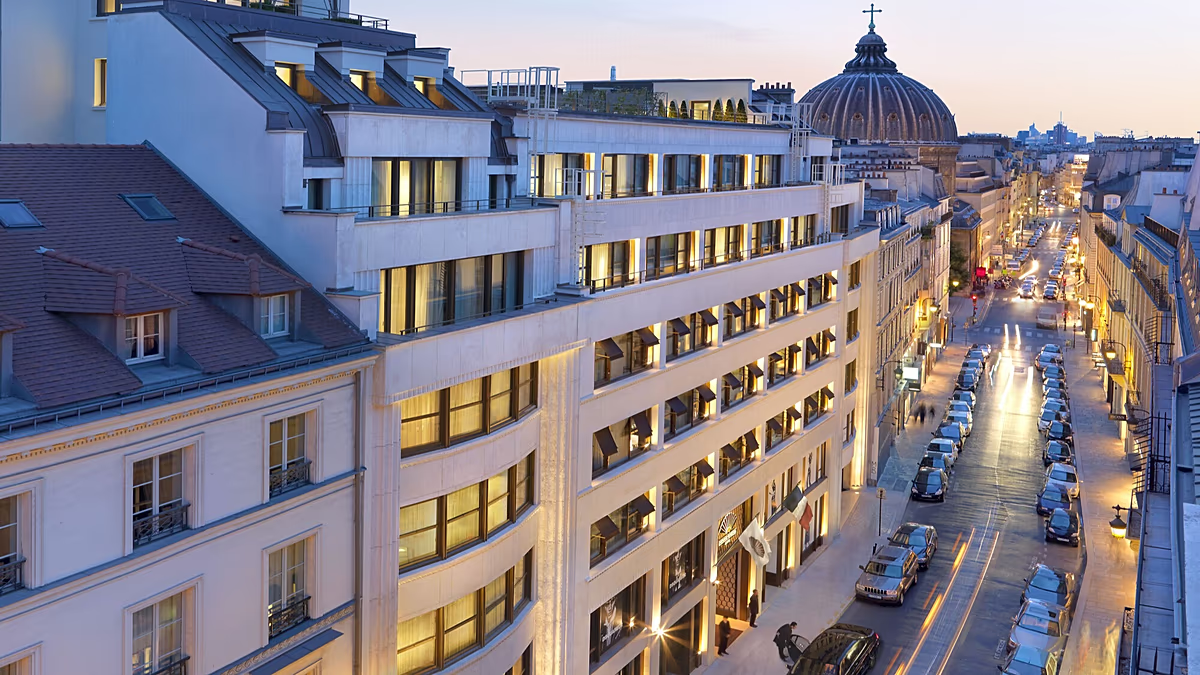



In the hushed, rarefied world of French luxury hospitality, a tremor of profound significance has just been felt. For the first time since the prestigious “palace” distinction was created in 2010, three of its holders have been stripped of the title. The Park Hyatt Paris-Vendôme, the Mandarin Oriental Paris, and the iconic Hôtel du Palais in Biarritz have all been downgraded following a rigorous review by the official Palace Commission. Described by Le Figaro as a “devastating blow,” this move signals a new era of accountability and fierce competition at the very pinnacle of the hotel industry. It is a clear declaration that the “palace” label is not a lifelong peerage but a demanding standard that must be continually earned, a symbol of living excellence rather than resting on historic laurels.
The reasons for the downgrades, while not detailed in full by the Commission—which cited only unspecified “insufficiencies”—offer a narrative of changing expectations. Reports suggest the Park Hyatt Paris-Vendôme and the Hôtel du Palais were penalized for a perceived lack of renewal and ongoing restoration. In an arena where the ultra-wealthy clientele expects perpetual novelty and flawless preservation, even momentary stagnation can be fatal. The context for the Mandarin Oriental Paris appears different, linked to imminent major renovations, suggesting a strategic pause perhaps not aligned with the Commission’s timeline. Furthermore, the apparent, though unconfirmed, disappearance of the legendary Hôtel Byblos in Saint-Tropez from the list hints at a comprehensive shake-up. The total number of palaces now stands at 27, a reduction from 31 in 2019, concentrating the honor further and heightening its exclusivity.
It is crucial to understand what these hotels have lost. The “palace” distinction is far more than a fifth star; it is France’s self-conscious curation of its ultimate luxury ambassadors. Created by the government to identify and promote hotels that “embody French excellence,” the label is a rigorous two-stage process. After meeting baseline five-star requirements like spas and concierge services, properties face a jury’s evaluation on more subjective, yet critical, grounds: unique heritage, architectural character, the artistry of its gastronomy, the intuitive quality of service, and commitment to environmental sustainability. It is a holistic judgment of a hotel’s soul and its narrative power, assessing not just the thread count of linens but the ability to create an unforgettable chapter in a guest’s life. This distinction directly enhances France’s global image as the undisputed capital of refined living.
The timing of this reassessment is no accident. In 2024, the French government shortened the review cycle from every five years to every three, dramatically increasing the pressure on these luxury giants. This change transforms the “palace” status from a medium-term achievement into a near-constant performance. Hotels can no longer invest heavily for a review year and then coast; they must now sustain peak condition in a perpetual state of graceful evolution. This new rhythm reflects the realities of the modern luxury market, where trends shift rapidly and today’s awe-inspiring innovation is tomorrow’s dated feature. The downgrades serve as a powerful warning to all current and aspiring palaces: complacency is the greatest threat, and continuous investment—in both physical spaces and human capital—is the only path to retention.
Despite the blow, it is important to note that these demoted properties remain, without question, among France’s most luxurious five-star hotels. Losing the “palace” title does not equate to a decline in everyday opulence or service. However, in the symbolic economy of high-end travel, the loss carries significant weight. The designation is a powerful marketing tool, a definitive filter for seekers of the absolute best, and a point of immense pride for staff. Its removal will inevitably be felt in prestige and potentially in the preferences of the most discerning travelers. Yet, this story is not solely about loss. The industry buzz, as noted by blogs like One Mile at a Time, anticipates that a “handful” of new hotels will be elevated to palace status when the official 2026 list is unveiled by Tourism Minister Serge Papin on June 2nd. This suggests a revitalization, making room for new stories and standards.
Ultimately, this historic shake-up reinforces the formidable integrity of the “palace” label. By demonstrating the courage to revoke its own award, the French state has proven that the distinction is meaningful and dynamic, not a permanent crown. It affirms that French luxury is not a museum piece but a living, breathing standard that must evolve and inspire. For the hotels that lost their status, the path forward is clear: deep introspection and renewed investment. For the remaining and soon-to-be-announced palaces, the message is one of both celebration and vigilance. And for the luxury traveler, it is a guarantee that the quest for the ultimate French hotel experience remains governed by a jury of uncompromising experts, ensuring that the word “palace” continues to promise a reality that is, indeed, fit for royalty.