

In an era defined by geopolitical strife and economic strain, the Portuguese spirit for exploration remains remarkably resilient. According to the latest Europ Assistance Holiday Barometer, an astounding 82% of Portugal’s population intends to travel in 2026, placing the nation just behind the United Kingdom as the most travel-eager in Europe. This enduring desire underscores a profound cultural belief that holidays are not a mere luxury, but a fundamental pillar of personal well-being and balance. Despite the pressures of the modern world, the Portuguese are actively prioritizing experiences and respite, demonstrating a commitment to preserving joy and connection through travel. This collective intention reveals a national character that fiercely defends its right to leisure, viewing time away not as an escape from reality, but as an essential recharge for navigating it.
This commitment is further illustrated by a willingness to invest financially in these crucial breaks. The average Portuguese holiday budget has risen to €1,662, a notable increase from the previous year. While this figure remains below the European average, its growth is significant, indicating that even amidst broader financial anxieties, the Portuguese are carving out resources for travel. However, a fascinating duality characterizes their travel choices. There is a pronounced trend towards domestic tourism, with 47% preferring to explore their own country—a testament to Portugal’s rich and diverse offerings, from the cliffs of the Algarve to the vineyards of the Douro. Yet, the allure of abroad persists, with Spain, Italy, and Brazil topping the list of preferred international destinations, reflecting both cultural proximity and historical ties that continue to shape Portuguese wanderlust.
Yet, planning a holiday in 2026 is not without its shadows. The study reveals a traveler increasingly vigilant about safety, with global conflicts casting a long pall over destination choices. A striking 70% of Portuguese respondents identified armed conflicts as a major concern, a figure substantially higher than the European average. Similarly, the risk of terrorist attacks weighs heavily on the minds of 67%. This heightened sensitivity has led some to reconsider travel to regions perceived as unstable, including the United Arab Emirates and the United States. The data paints a picture of a cautious explorer—one whose heart yearns for distant horizons but whose mind diligently assesses the risks, balancing the deep-seated need for travel against an uncertain world’s realities.
The greatest obstacle, however, remains firmly economic. For nearly half of the Portuguese who will forego travel, the decision is rooted in the need to save, with a overwhelming 90% citing inflation as a primary concern—the highest rate in Europe. This financial pressure creates a palpable tension between aspiration and practicality. The Portuguese are navigating a delicate equation, striving to protect their holiday budgets from the erosive effects of high prices on everyday essentials. It is a testament to their determination that, despite being the European population most worried about costs, their intention to travel remains robust, with 78% planning a summer trip. This highlights a collective resolve to safeguard this aspect of life, even if it means more prudent spending or choosing closer-to-home adventures.
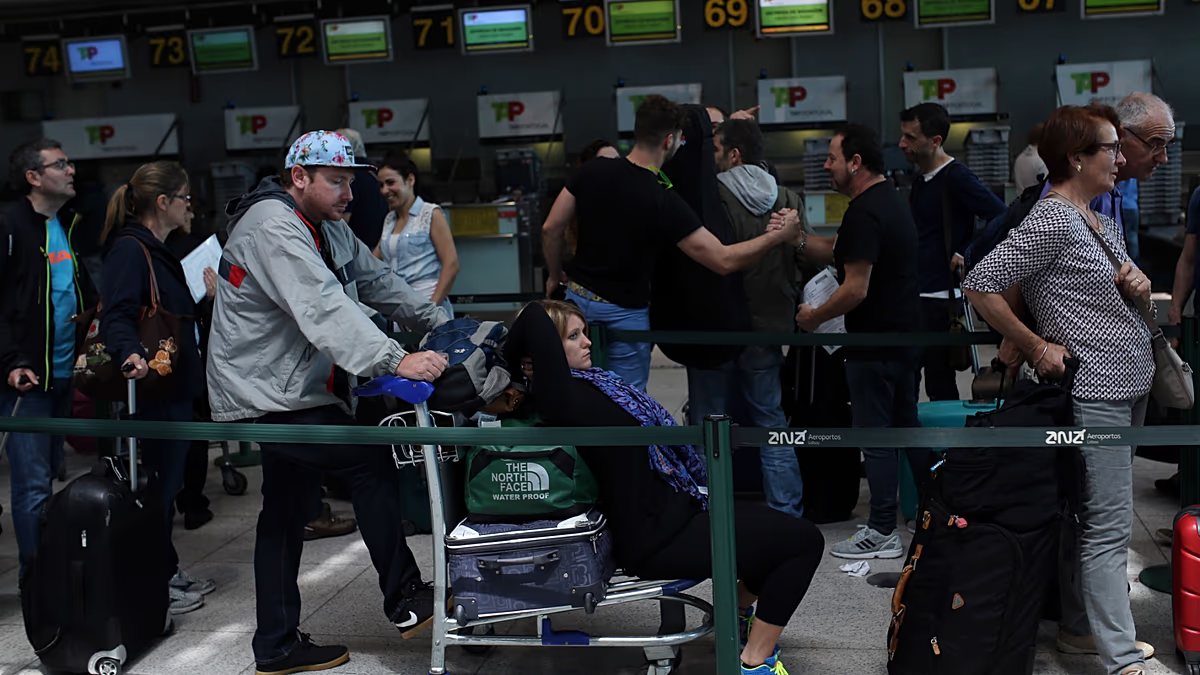
A new and urgent threat now looms over these carefully laid plans: a potential aviation fuel crisis. Geopolitical instability, particularly around the critical Strait of Hormuz, has disrupted jet fuel supplies, with the International Energy Agency warning of depleted European reserves within weeks. The specter of rising ticket prices, reduced flight availability, and even cancellations by major carriers like Lufthansa and British Airways now jeopardizes the summer travel season. For Portugal, a nation where over 90% of tourists arrive by air, this represents not just an inconvenience but a potential “very significant economic shock,” as noted by Finance Minister Joaquim Miranda Sarmento. The health of the entire tourism sector, a cornerstone of the national economy, is implicitly tied to the flow of fuel through global pipelines.
In response to this precarious situation, the Portuguese government is seeking assurances, with officials stating that domestic fuel reserves are secured until August and that they are in close contact with airlines and suppliers to monitor the situation. The European Commission is also preparing guidelines to optimize fuel use and logistics. This scenario culminates in a poignant snapshot of modern travel: the Portuguese citizen, buoyed by an irrepressible desire to discover and reconnect, now must contend with a trifecta of global challenges—safety fears, personal budgets squeezed by inflation, and a logistical crisis that could literally ground their plans. Their unwavering intent to travel in 2026, therefore, is more than a statistic; it is an act of optimism, a declaration that despite the world’s complexities, the human need for exploration and renewal endures.