
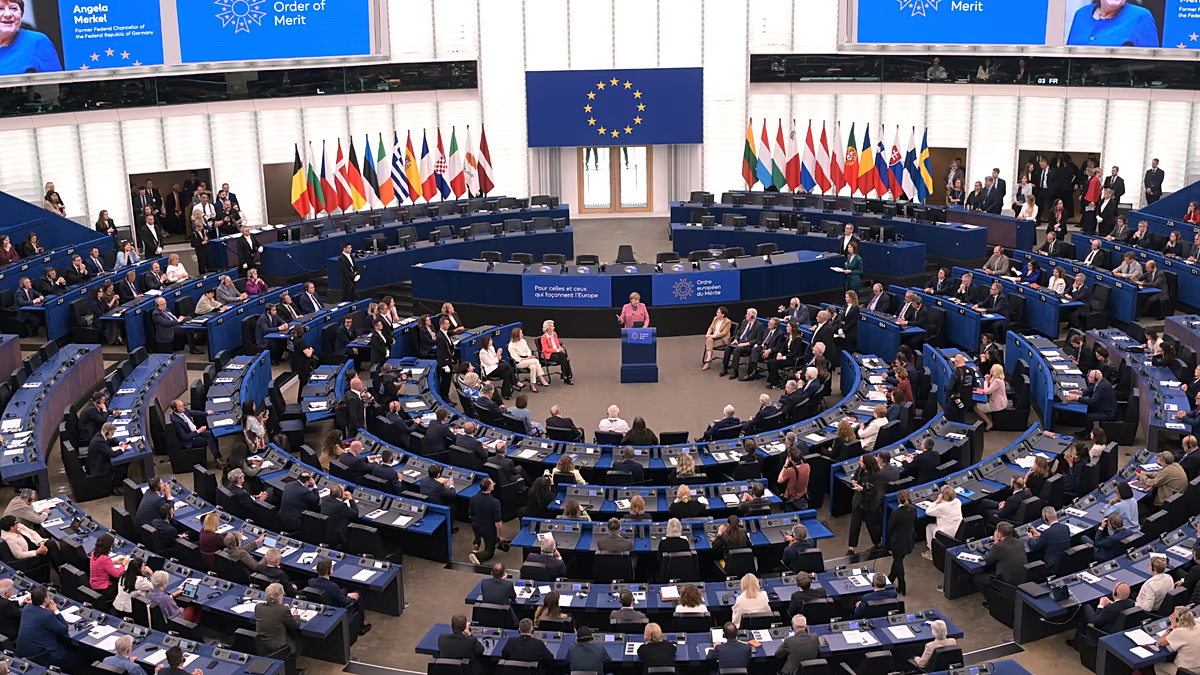


The recent award ceremony for former German Chancellor Angela Merkel at the European Parliament was intended as a solemn occasion, celebrating her contributions to European integration with the newly established European Order of Merit. However, the event became mired in controversy after several Members of the European Parliament and numerous social media users propagated a misleading narrative. They falsely claimed that the applause for Merkel was orchestrated, alleging that “claqueurs”—paid applauders or extras—had been brought into the parliamentary chamber to create a supportive atmosphere. These accusations, suggesting the audience was filled with “random types” instructed to clap, quickly spread online, casting a shadow over the proceedings and implying a deliberate attempt to manipulate the perception of Merkel’s reception.
To understand the origin of these claims, one must look at the physical setting of the ceremony itself. Broadcast footage revealed a notable number of empty seats in sections typically occupied by the far-right Patriots for Europe group. This was not due to a mysterious influx of outsiders, but rather the result of a deliberate boycott by certain political factions. Several MEPs from this group, including members of Italy’s Lega party, chose to attend a demonstration by Italian farmers instead, while others, like Finnish MEP Sebastian Tynkkynen, publicly stated they left the chamber in protest of Merkel being honored. The subsequent presence of other attendees in these vacated areas created a visual discrepancy that was misinterpreted and seized upon to fuel the “claqueur” theory.
The reality, as officially explained by the European Parliament, is far more procedural and less nefarious. A spokesperson clarified that for the duration of the award ceremony, the regular plenary sitting was officially suspended. This standard practice allows for a temporary change to the chamber’s access rules. During such suspensions, guests who would normally be excluded—such as the award laureates themselves, their family members, and staff involved in organizing the event—are permitted to enter and observe from available seating. Crucially, MEPs who wished to attend retained priority seating, but the suspension naturally allowed other legitimate guests to fill unused spaces, including those left empty by boycotting members.
This explanation was later reinforced by European Parliament President Roberta Metsola in the following plenary session. She explicitly reminded the chamber that the session had been suspended by prior agreement to accommodate the ceremony, a necessary measure to allow the honorees and their guests to participate. Her statement underscored that the individuals seen in the chamber were not mysterious interlopers but invited guests connected to the event. Therefore, the claims of planted applauders fundamentally misrepresent a routine administrative arrangement, transforming a common procedural pause into evidence of a staged spectacle.
There is simply no evidence to support the idea that these guests were instructed to applaud or were anything other than individuals present to witness a significant honorary moment. The spontaneous applause for a former chancellor who led Europe’s largest economy for 16 years, particularly from an audience containing many EU staff and citizens who may genuinely admire her legacy, requires no artificial engineering. The narrative of “claqueurs” appears to be a deliberate or misguided conflation of a visible, explained guest presence with a fabricated tale of orchestration, likely amplified for political point-scoring in a deeply polarized environment.
In conclusion, the controversy surrounding Angela Merkel’s award is a poignant case study in how procedural normalcy can be weaponized in the age of misinformation. A standard parliamentary practice—suspending a session to host guests for a ceremonial event—was twisted into a tale of deception and staged support. While political boycotts are a legitimate form of protest, the false allegations that followed served only to undermine the institution’s procedures and distract from the substantive debate over Merkel’s legacy. The incident highlights the enduring challenge facing democratic institutions: not only managing dissent but also correcting the rapid dissemination of fabricated narratives that erode public trust in transparent processes.