

The Prospect of a European Bridge: Merz’s Proposal for Ukraine’s Associate EU Membership
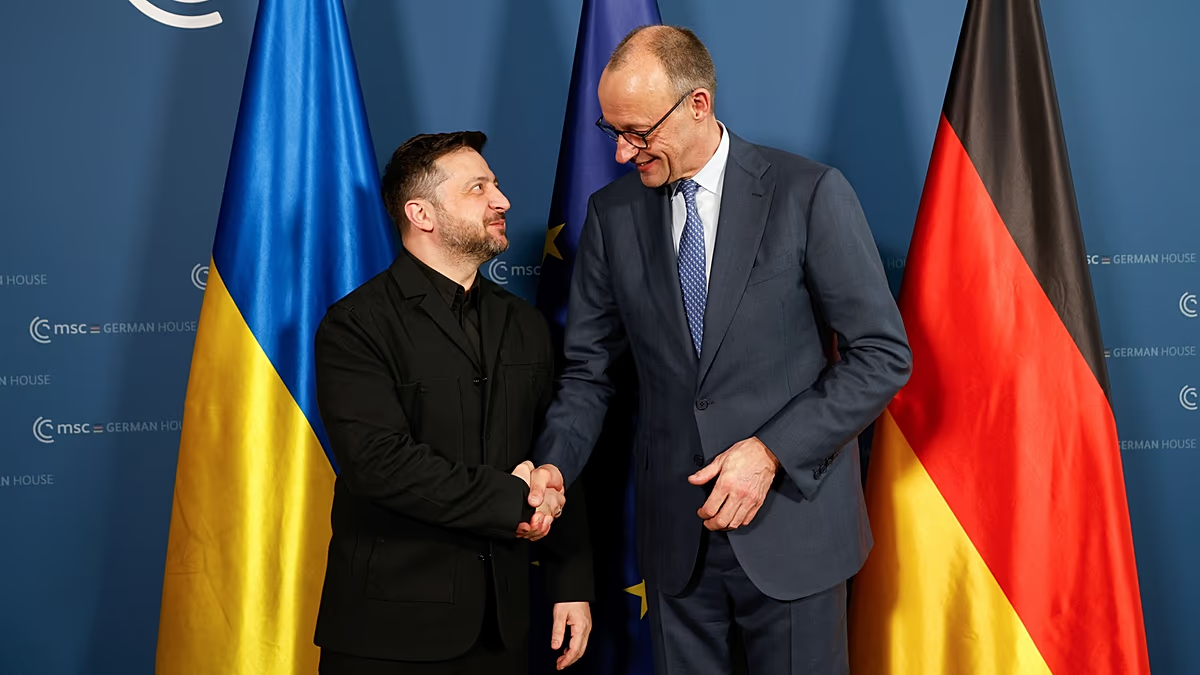
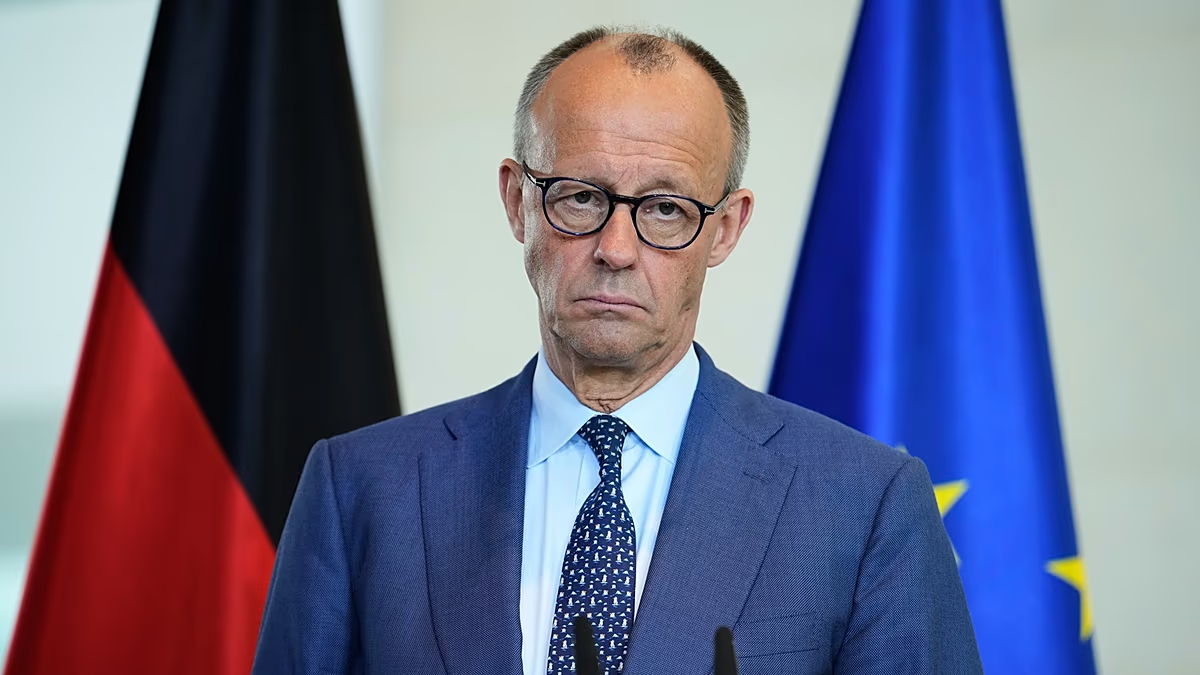
In a bold and unexpected diplomatic move, German Chancellor Friedrich Merz has put forward a groundbreaking plan to grant Ukraine a form of “associate membership” within the European Union. This proposal, detailed in a letter to fellow EU leaders, seeks to forge an innovative pathway for Kyiv’s integration as full membership remains a distant, albeit stated, goal. The core of Merz’s vision is a tailor-made status that would allow Ukraine to participate in EU decision-making bodies—though without voting rights or a formal portfolio—and grant it gradual, “step-by-step” access to certain EU-funded programs. Crucially, the plan invokes Article 42.7 of the EU treaties, which would enable Ukraine to request military assistance from member states in the event of armed aggression. For Merz, this combination creates a “substantial security guarantee” designed to deter further Russian aggression and signals that “it is now time to boldly move on with Ukraine’s EU integration through innovative solutions.” However, this ambitious blueprint has landed in Brussels with a thud of mixed reactions, raising immediate questions about its practicality and timing.
The reception among EU diplomats has been marked by profound skepticism and a notable degree of puzzlement. With intense, behind-the-scenes efforts already underway to convince Hungary to lift its veto on Ukraine’s accession talks by a crucial leaders’ summit in June, many found Merz’s intervention to be ill-timed and poorly coordinated. One diplomat bluntly called it “a rather hasty statement,” expressing surprise since tangible progress is anticipated soon. The proposal was also compared to Merz’s previous, ultimately unsuccessful push to use frozen Russian assets for a reparations loan—an idea that had similarly “shocked Brussels.” Legal doubts were front and center, with a second diplomat challenging Merz’s assertion that the plan wouldn’t require amending the EU’s foundational treaties. “I don’t see how this could work from a legal point of view… Associate members with all institutions by way of political arrangement? I don’t see it,” they stated. While some envoys acknowledged that “some ideas are better than others,” a clear consensus emerged that the real, substantive debate among the 27 member states had not yet begun, leaving the proposal floating in a diplomatic limbo.
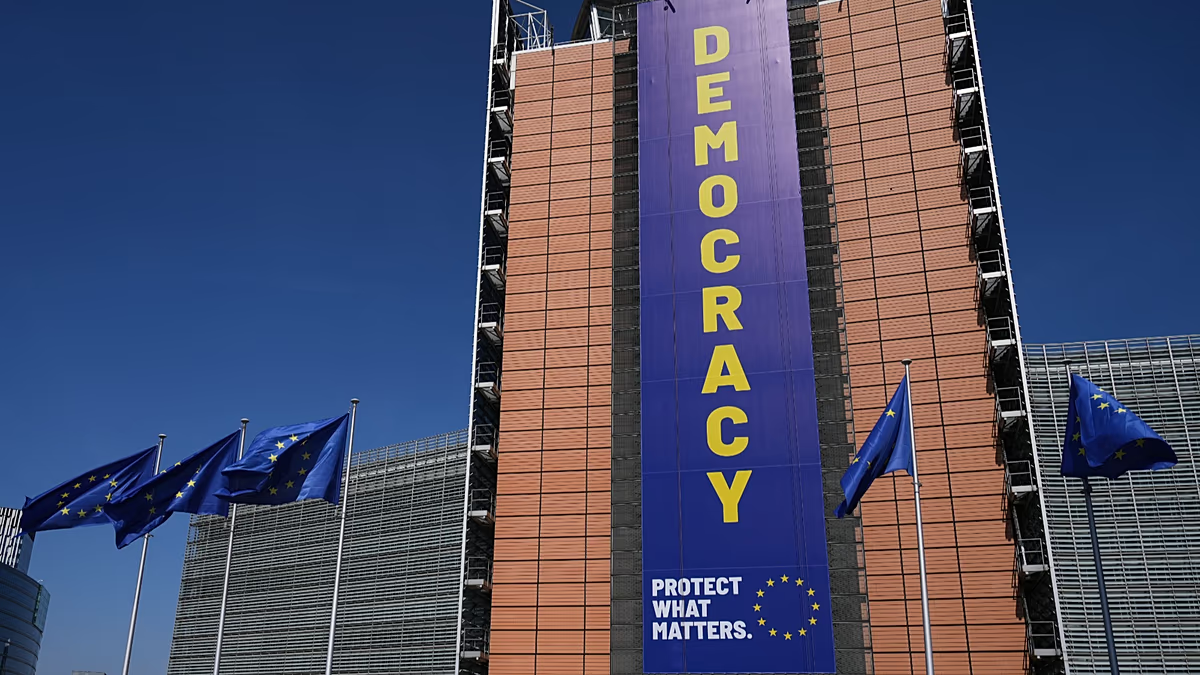
In stark contrast to the wary diplomatic corps, the European Commission—the EU’s executive body tasked with managing enlargement—offered a notably more positive, though measured, response. The Commission’s spokesperson for enlargement, Guillaume Mercier, welcomed the German initiative as evidence of a “strong commitment from member states to make enlargement a reality as soon as possible.” He emphasized that Ukraine’s future accession is “fundamentally linked to the security of our union,” framing the entire enlargement process as a vital “geostrategic investment.” However, the Commission also subtly reinforced the established rules of the game, stressing that any novel approach must remain firmly anchored in a “merit-based” logic. This principle is the bedrock of the EU’s complex accession process, where candidate countries must painstakingly align their laws and standards with EU rules across dozens of policy areas, or “chapters.” The Commission’s cautious openness hints at a willingness to explore new models, but only if they do not undermine the rigorous, step-by-step reforms the process is designed to incentivize.
Merz’s letter enters a policy landscape already stirred by previous creative—and controversial—ideas. Earlier this year, the European Commission itself floated a concept of “reversed” membership, where Ukraine would achieve formal member status first and then gradually assume the full rights and obligations. That idea was largely rejected by national capitals as dangerous and unrealistic, fearing it would admit a country embroiled in a major war without the necessary integration. Merz’s pitch can be seen as an inversion of that model: instead of membership first and integration later, it proposes deep integration first—access to funds, forums, and security assurances—with formal membership crowning the very end of the journey. This incremental approach aims to provide Ukraine with tangible benefits and a stronger political anchor to Europe now, while maintaining the ultimate prize of full membership as the final, motivating objective after all reform conditions are met.
The immediate political context for this debate is the urgent push to break the two-year deadlock caused by Hungary’s veto on opening formal accession negotiations with Ukraine. Budapest’s new government has recently initiated talks with Kyiv, focusing on the rights of the ethnic Hungarian minority in Ukraine—a long-standing and deeply sensitive issue. Brussels is cautiously hopeful that sufficient progress can be made to finally lift this veto at the June summit, allowing negotiations to officially begin with the first “cluster” of policy chapters. Against this delicate backdrop, Merz’s proposal is viewed by some as a potential complicating factor, introducing a new, legally ambiguous concept just as the bloc seeks to build consensus around the established procedural path forward. The critical question hanging over the June meeting is whether it will mark a historic step in Ukraine’s conventional EU journey, or whether ideas like associate membership will gain traction as an alternative for a nation in conflict.
Ultimately, the success of any such proposal will depend not only on the legal and political calculations in Brussels but also on its reception in Kyiv. Ukrainian President Volodymyr Zelenskyy has consistently rejected any notion of second-class or purely symbolic integration. Last month, he forcefully stated, “Ukraine is defending itself and is definitely defending Europe… And it is not defending Europe symbolically – people are really dying.” His words underscore a fundamental Ukrainian demand: that its immense sacrifice be met with genuine, substantive commitment from Europe. While Chancellor Merz’s associate membership model is designed to offer more than just symbolism, it remains to be seen whether it will be perceived in Kyiv as a meaningful bridge to full belonging or as a potentially endless halfway house. As EU leaders prepare for their critical June summit, they must balance the need for innovative, fast-track solutions with the unwavering principles of a merit-based process and the imperative to offer Ukraine a future that honors both its European aspirations and its profound sacrifice.