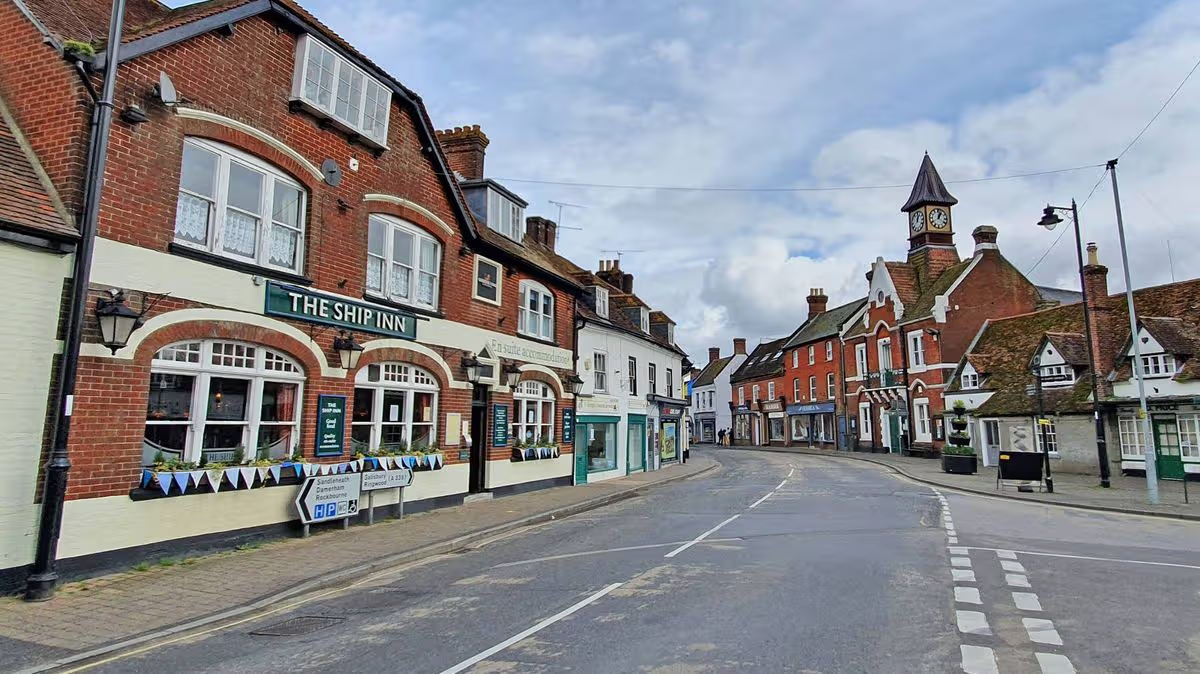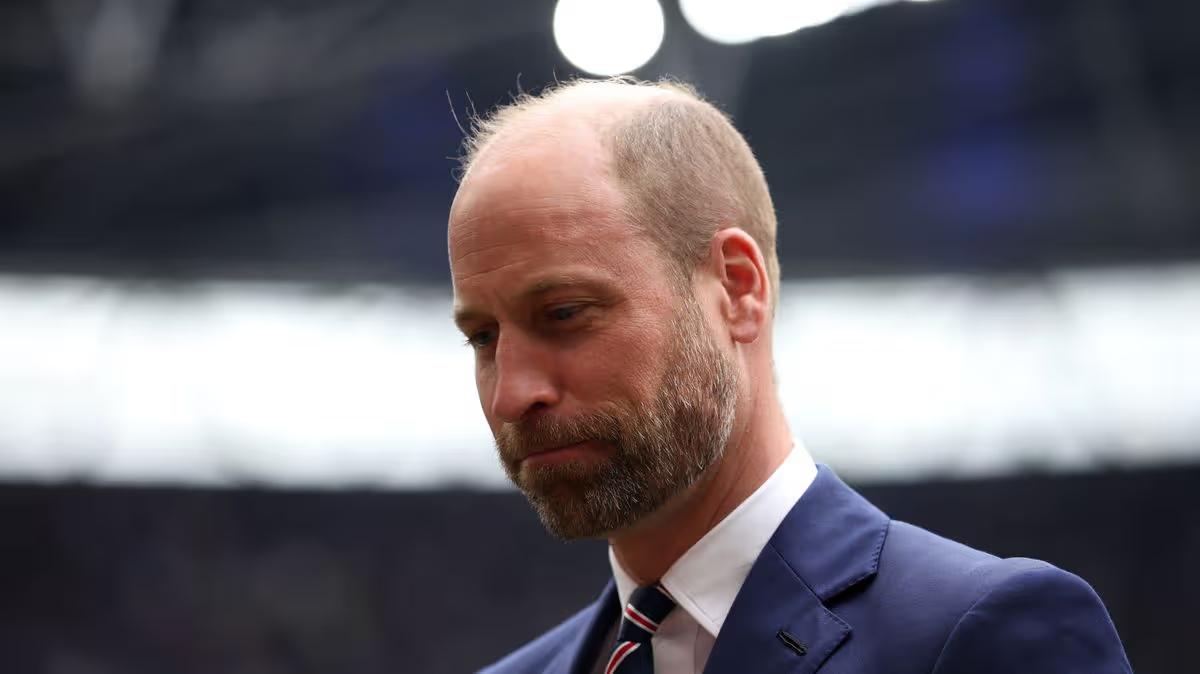



In the rolling countryside of Devon, the historic and often quiet town of Bradninch has been thrust into a state of profound anxiety. For generations, the rhythms of life here have been intertwined with the Duchy of Cornwall, an estate founded in 1337 and now under the stewardship of Prince William, the Prince of Wales. The recent announcement that the Duchy plans to sell approximately 3,500 acres—about 20% of its holdings around the 16th-century Bradninch Manor—has sent shockwaves through this tight-knit community. While framed by the Duchy as an opportunity for tenants and a means to generate £500 million for investments in housing and nature restoration elsewhere, the move has been met with what locals describe as “great distress.” For the farmers and residents whose lives and livelihoods are rooted in this land, the future has suddenly become deeply uncertain, raising fears of displacement and the unraveling of a centuries-old social fabric.
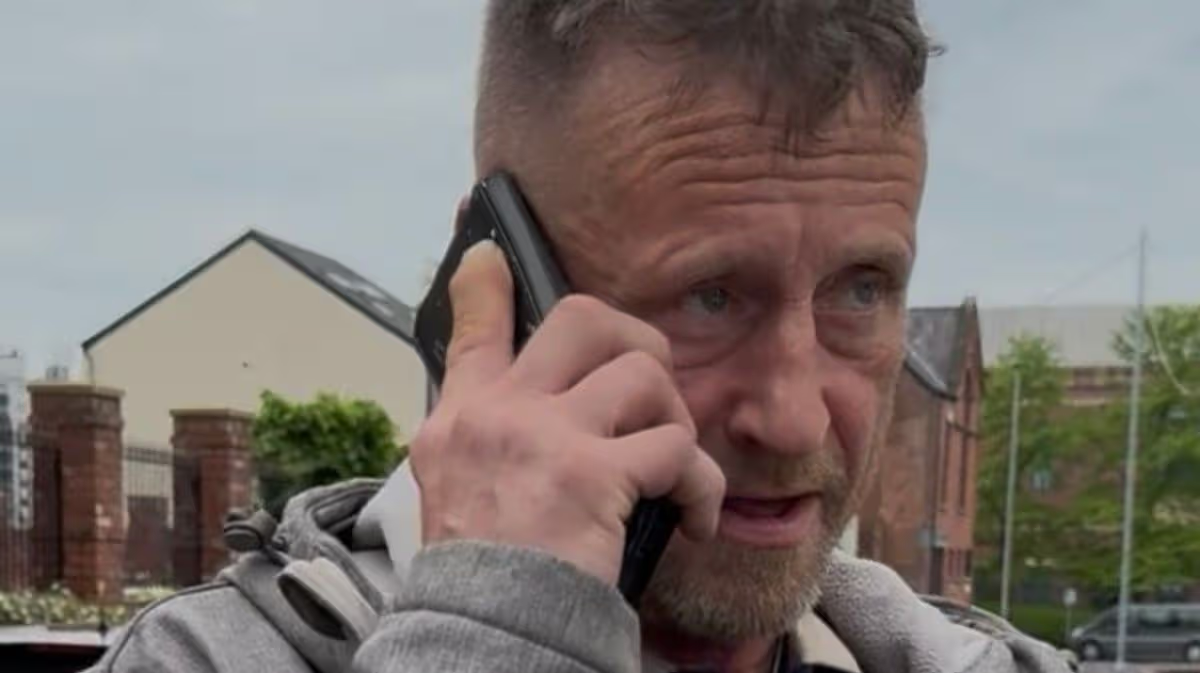
At the heart of the community’s distress are the tenant farmers, at least ten of whom are directly affected by the proposed sale. These individuals operate on land they do not own, a traditional arrangement that has provided stability for decades, if not centuries. The Duchy’s offer is, in principle, to give these tenants first refusal to purchase their farms, often with a discount. However, as retired surgeon John Palmer, a 35-year resident of Bradninch, poignantly notes, many are tenant farmers precisely because they lack the capital to buy property. The prospect of needing to raise substantial funds in an already challenging agricultural climate—marked by volatile markets, extreme weather, and soaring costs—is daunting. While some with deeper pockets may see this as a chance to invest and secure their legacy, others face a terrifying reality: an inability to buy could mean losing not just their business but their home, potentially rendering them, in Palmer’s words, “homeless.”
The emotional and psychological toll on these farming families is severe. Dr. Mary Ryan, a retired GP and fellow long-time resident, explains that the news places an immense and unfair burden on individuals already navigating immense pressures. Farmers engaged in negotiations are forced into a position of silent stress, having to “keep their own council” as they wrestle with financial calculations and soul-searching decisions that will define their family’s future. The process, shrouded in necessary confidentiality during negotiations, has had the unintended effect of isolating those most affected, compounding their worry with loneliness. Dr. Ryan emphasizes that this upheaval comes atop existing crises in the farming sector, from global conflicts impacting supply chains to the relentless UK cost-of-living crisis, making the timing of this transition feel particularly cruel and destabilizing.
The concern extends beyond the farm gates to the wider community of Bradninch. The estate in question isn’t merely pasture and ploughland; it includes rented cottages, cherished allotments, wetlands, and a local football field. The rumour of the sale first reached residents like Dr. Ryan about six weeks ago, when a distraught tenant called after hearing whispers from a farmer neighbour. This slow, informal trickle of information left the community scrambling to understand the “new shocking reality,” as Dr. Ryan describes it. There is a palpable sense that the very character of the town is at stake. While the Duchy has stated its intention to transfer community assets like the football pitch and allotments into community ownership, the loss of the surrounding farmland and the potential departure of multi-generational farming families threaten to alter the social and economic bedrock of the area irreparably.
In response to these widespread concerns, the Duchy of Cornwall has emphasized its supportive framework for the transition. A spokesperson outlined that the sales are intended to enable significant future investment in the Duchy’s “heartlands,” with the capital raised aimed at broader environmental and housing projects. They stress that one-on-one conversations are ongoing with all Bradninch farm tenants, who are reportedly exploring purchase options. Importantly, the Duchy highlights the availability of practical guidance, ongoing estate team support, and access to specialist mental health and wellbeing services tailored for the farming community. This dedicated support network is a crucial acknowledgment of the immense stress involved. The spokesperson affirmed that the Duchy supports tenants “whatever decision they make,” and that the community assets will continue in their current use.
Nevertheless, a significant disconnect remains between the strategic, macro-level vision of the Duchy and the lived, micro-level reality in Bradninch. Dr. Ryan articulates this local bewilderment, questioning the transparency and ultimate local benefit of “taking money out of the royal south west to invest in Cannington,” another Duchy centre. For residents, the calculus is simple and visceral: what does this grand investment plan mean for their neighbours, their landscape, and their community’s future? The situation in Devon is a stark case study in the complex tensions that arise when centuries-old institutions modernize and rebalance their portfolios. Prince William’s aim to generate funds for charitable causes is undeniably philanthropic in intent. Yet, on the ground in Bradninch, that noble goal is filtered through a lens of personal survival and community cohesion, where families must confront the painful possibility that their heritage on the land may end not with a harvest, but with a sale. The coming months will reveal whether a respectful balance can be found between progressive estate management and the preservation of the human foundations it was built upon.