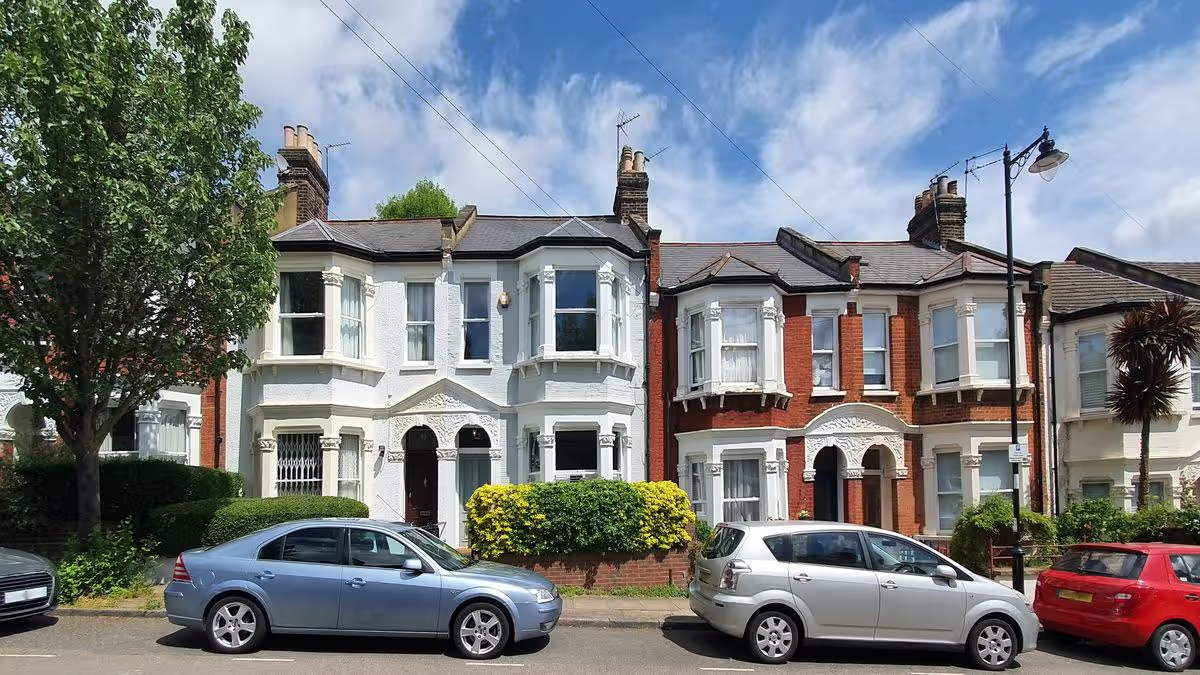



The simmering frustration of returning home after a long day only to find another car occupying what you consider “your” parking spot is a feeling countless UK residents know all too well. This seemingly minor inconvenience can quickly escalate into a source of persistent tension between neighbours, particularly when it becomes a repeated behaviour. The emotional response is instinctive—a sense of invasion, inconvenience, and a challenge to one’s rightful domain. However, beneath this initial frustration lies a complex web of legal realities and communal etiquette that many people are unaware of, turning simple irritation into protracted disputes. Citizens Advice confirms that such conflicts are increasingly common across the nation, often rooted in fundamental misunderstandings about the nature of parking rights themselves. The core of the problem frequently stems from ambiguity: is that space on the public road outside your house, the bay in your apartment complex, or the spot on your private driveway genuinely yours in a legal sense, or is it merely a space you have informally used for years?
The legal landscape of parking is far from straightforward and varies dramatically depending on location. For the vast majority of homes, the public road outside the property is communal space. The RAC clarifies that, provided a driver follows all local restrictions—such as not parking on yellow lines, obeying time limits, or avoiding illegal obstructions—they are generally entitled to park there. No resident holds an automatic, exclusive right to the section of public highway adjacent to their home. The situation transforms, however, when discussing private domains. For homeowners, a driveway is typically part of the property’s curtilage, and blocking access to it—preventing a vehicle from entering or exiting—is illegal as outlined on GOV.UK. For those living in flats or houses with allocated spaces, the rights are usually embedded within the property’s deeds or the tenancy agreement. The HomeOwners Alliance stresses the importance of checking Land Registry documents or lease agreements to confirm exactly what parking rights are formally attached to your home. This distinction between public permissiveness and private entitlement is the critical first step in understanding any parking conflict.
When disputes arise, especially on private land or allocated spaces, the impulse towards retaliatory action can be strong. Yet, experts uniformly warn against any form of escalation that involves taking direct, physical action against the offending vehicle. Blocking a car in, clamping it, or causing damage are not only socially inflammatory but often illegal. Notably, clamping or towing a vehicle on private land without lawful authority was outlawed in England and Wales under the Protection of Freedoms Act 2012. Such actions can turn a civil disagreement into a criminal matter, leaving the retaliator liable for damages or legal action. The recommended pathway is always to seek official intervention. For obstructions on a public road, the local council or police may intervene if access is blocked or regulations are breached. For disputes within private developments—such as a neighbour consistently using your allocated bay or a visitor spot in a managed estate—the initial point of contact should be the landlord, managing agent, or the company overseeing the permit scheme.
The human dimension of these disputes is where tensions truly ignite. Online community forums and social media groups are filled with heartfelt complaints from individuals worn down by persistent parking incursions. The frustration is compounded during evenings and weekends when parking shortages intensify, and the desire for convenience after a busy week peaks. What begins as an occasional nuisance evolves into a perceived pattern of disrespect, fostering resentment that can poison neighbourly relations for years. Citizens Advice underscores that the most effective first step, albeit sometimes the most difficult, is a calm, informal conversation with the neighbour. Approaching the issue with a collaborative mindset—perhaps acknowledging shared challenges or proposing clear, friendly communication about needs—can resolve misunderstandings before they harden into entrenched positions. Many disputes stem from simple ignorance of boundaries or assumptions about availability, not malicious intent.
If direct dialogue fails, a more structured approach is necessary. The journey from informal chat to formal resolution depends entirely on the nature of the parking space. For persistent issues on a public road, gathering evidence and reporting repeated infringements (like consistent obstruction) to the local council is the logical step. For disputes involving private driveways or deeded spaces, where trespass or obstruction is clear, legal advice may become necessary. Solicitors can clarify rights and, in extreme cases, help pursue injunctions. For tenants in managed properties, the lease agreement is the bible; management companies have a contractual duty to enforce the rules governing allocated parking and communal areas. Presenting a clear, documented record of breaches to them is often the most effective pressure point.
Ultimately, navigating parking disputes requires a blend of emotional restraint, legal awareness, and procedural patience. The immediate sense of injustice upon finding a car in your spot is a natural human reaction, but the response must transcend that instinct. Understanding the precise legal character of your parking claim—whether it is a strong private right or a weaker customary expectation—frames all subsequent actions. Prioritising calm communication preserves community harmony, while knowing the correct authorities to engage—be it a management company, council, or legal professional—provides a clear escalation path without resorting to harmful retaliation. In a nation where parking space is often scarce and tensions run high, equipping oneself with knowledge and a measured strategy is the key to resolving the conflict without leaving permanent scars on the neighbourhood’s spirit.