

Here is a humanized and expanded summary of the provided content, structured into six paragraphs.
Paragraph 1: The Scene at Ashdod Port
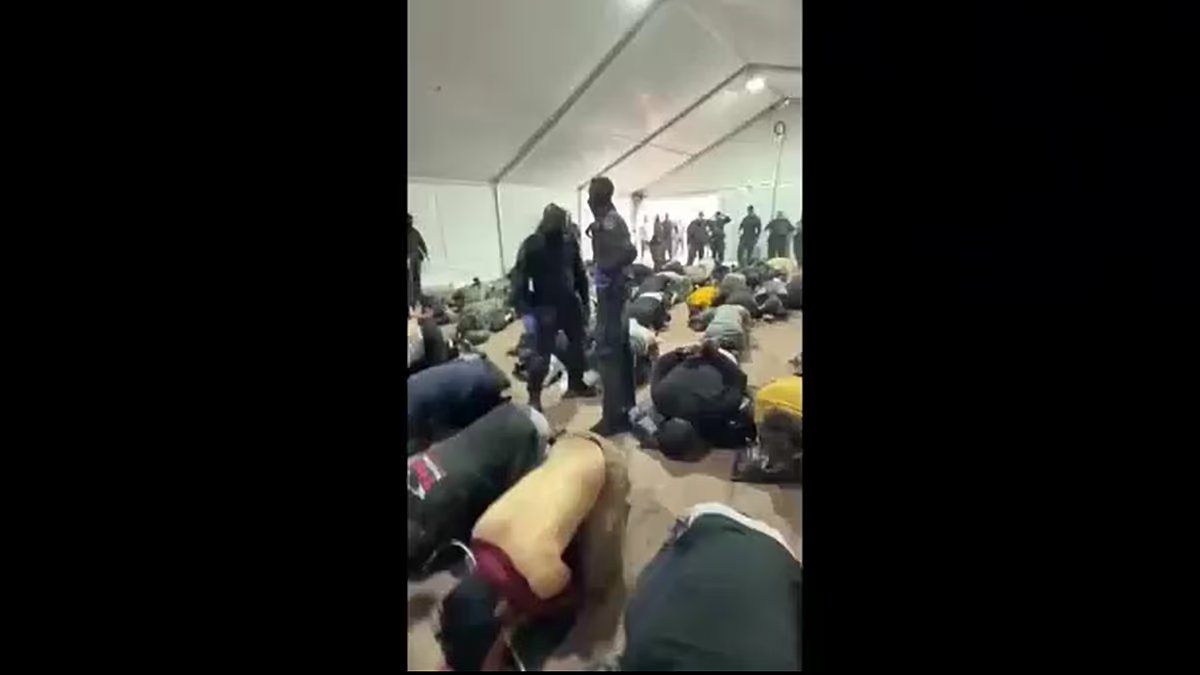
On a Wednesday at the Ashdod port in Israel, a scene unfolded that would quickly become a focal point of political and humanitarian debate. Video footage, released by the office of National Security Minister Itamar Ben-Gvir, showed activists from a pro-Palestinian aid flotilla detained, handcuffed, and lying on the ground. The images were stark and deliberate, intended for public consumption. They depicted a forceful police operation, with officers dragging and physically restraining individuals. The setting was not a clandestine operation but a public port, suggesting a message was being sent: the interception and detention were a display of state authority and control.
Paragraph 2: The Symbolism of Ben-Gvir’s Presence
Central to the video’s narrative was the presence of Minister Ben-Gvir himself. He was not merely observing from a distance; he walked among the subdued activists, carrying an Israeli flag. This act was deeply symbolic, transforming the logistical event of a maritime interception into a potent political tableau. The flag, waved over detainees lying on the asphalt, served as a visual claim of sovereignty and triumph. Ben-Gvir also engaged directly with some detainees, though the nature of these conversations was not revealed. His physical presence at the scene, as the minister overseeing the police, blurred the lines between operational oversight and political provocation, framing the state’s response as a personal and ideological victory.
Paragraph 3: The Confrontation and the Cry for Freedom
Within this controlled environment, a moment of raw human emotion punctured the official narrative. One activist, amidst the restraint and the minister’s walk, shouted “Free Palestine.” This cry, a fundamental expression of the flotilla’s purpose, was met with immediate physical response from security personnel, who pushed the activist to the ground. This brief clip encapsulated the entire clash in microcosm: a voice appealing for a cause deemed unlawful by the intercepting state, silenced by force. It highlighted the tension between the activists’ perceived role as humanitarian crusaders or protestors and the state’s view of them as security threats or lawbreakers, justifying physical suppression.
Paragraph 4: The Political Defense in Parliament
The story did not end at the port. Later, footage from Israel’s parliament showed Ben-Gvir transitioning from the field of action to the arena of political defense. He addressed the incident directly, defending the treatment of the activists and explicitly criticizing calls for an apology. His parliamentary remarks served to institutionalize the port scene’s narrative. By rejecting apologies, he framed the police actions as not only legally justified but morally correct and necessary for national security. This moved the discussion from operational critique—were procedures followed?—to a values-based debate about righteousness and defiance, solidifying his stance as one of uncompromising strength against perceived threats or criticism.
Paragraph 5: The Human Dimensions Behind the Footage
Beyond the political symbolism and forceful imagery, human dimensions lie at the heart of this incident. The activists on the ground were individuals participating in a flotilla, a tradition often aimed at challenging blockades and bringing attention to the humanitarian situation in Gaza. Their detention, handcuffed on the port pavement, represents a personal ordeal—fear, discomfort, and the frustration of a failed mission. Conversely, for the police officers and Ben-Gvir, the event likely represented a successfully executed duty, protecting borders from an unauthorized entry. The released video, however, frames these human experiences through a selective political lens, emphasizing control and submission, potentially overshadowing the personal motivations and consequences for all involved.
Paragraph 6: The Broader Implications of Narrative Warfare
Ultimately, this event is a case study in modern narrative warfare. The deliberate release of video by a minister’s office is a tool of political communication, designed to shape public perception both domestically and internationally. For some audiences, the footage projects an image of a firm state dealing decisively with挑衅. For others, it portrays excessive force and humiliation against unarmed activists. Ben-Gvir’s parliamentary defense further amplifies this crafted narrative, rejecting external criticism and appealing to a base that values demonstrative sovereignty. The incident thus transcends a simple maritime interception; it becomes a curated performance about power, resistance, and the relentless struggle to control the story itself, with real human beings as its central props.