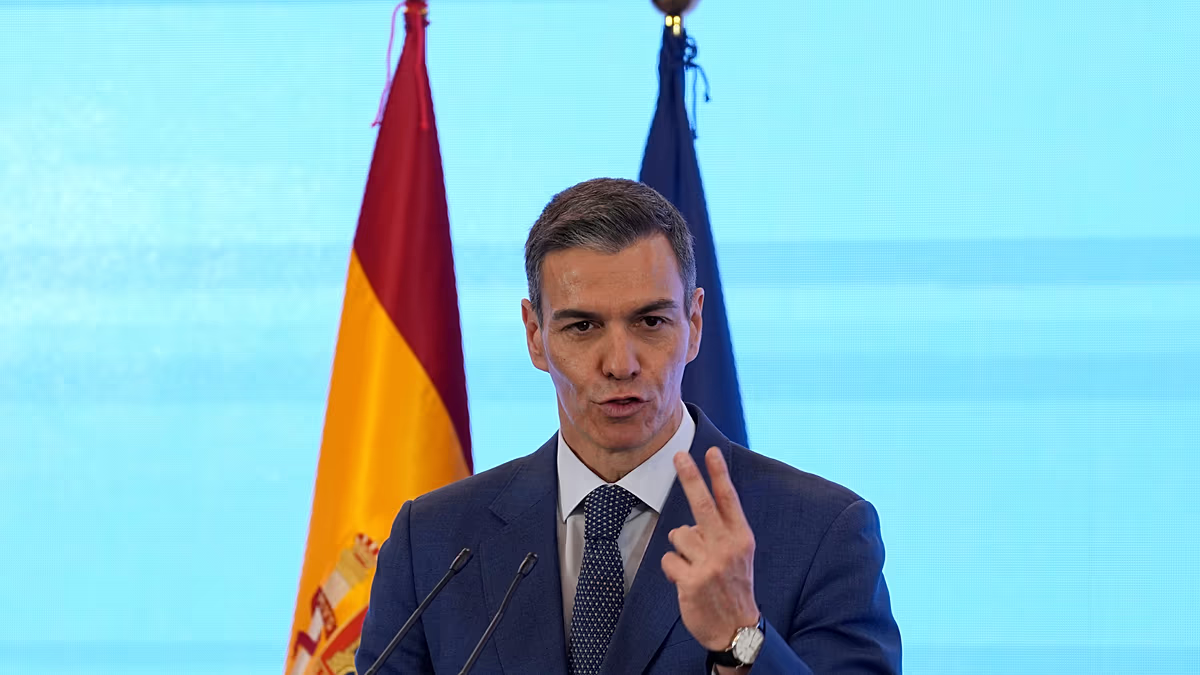
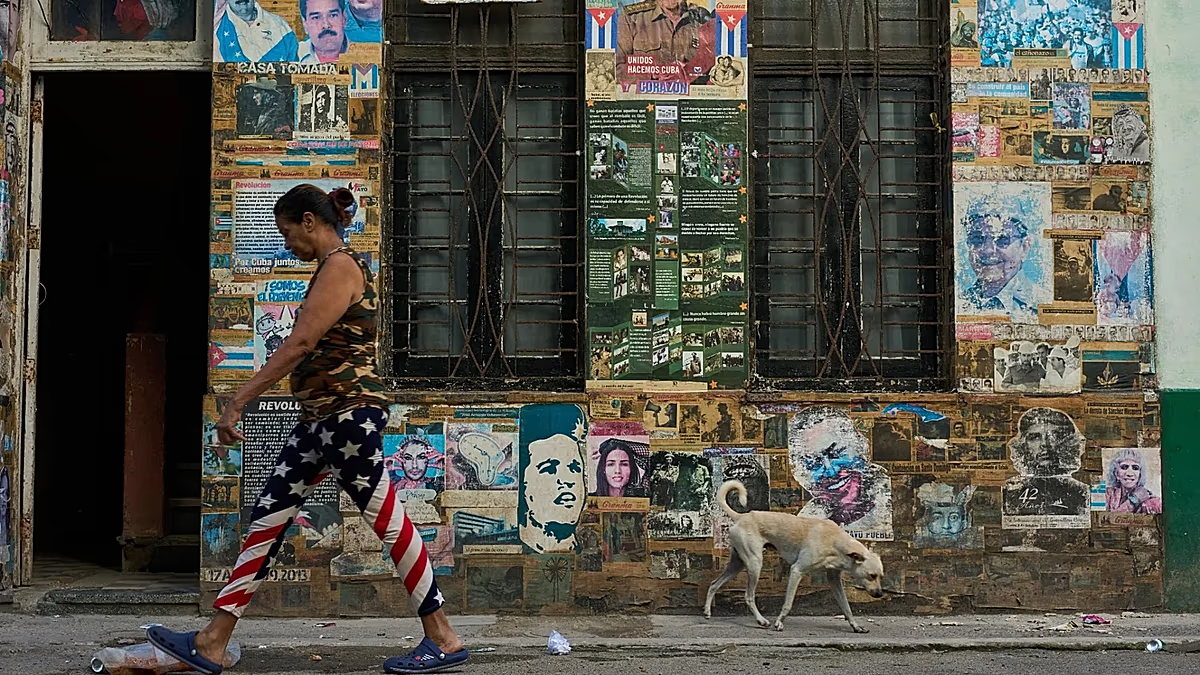


On a Wednesday in late May, with tensions between the United States and Cuba reaching a new peak, US Secretary of State Marco Rubio addressed the Cuban people directly in a video message. Speaking in Spanish, he sought to draw a stark line between the island’s communist leadership and its citizens, accusing the government of systemic theft, corruption, and oppression. He framed the moment as a pivotal one, offering what he termed a “new path” forward—a vision of a democratic Cuba where people could choose and replace their leaders. This rhetoric was carefully crafted, speaking past the government to appeal directly to a populace enduring severe economic hardship. The timing of his address was highly charged, coming just hours before Washington was expected to announce the unprecedented step of criminally indicting Cuba’s former leader, 94-year-old Raúl Castro.
The backdrop to this dramatic political theater is a relationship that has deteriorated sharply in recent months. The United States had recently orchestrated the military ouster of Venezuela’s Nicolás Maduro, a key Cuban ally, and followed it with a punishing energy blockade on the island. This move severed one of Cuba’s last economic lifelines, exacerbating existing shortages and struggles. President Donald Trump had openly signaled that Cuba could be “next,” even making inflammatory remarks about the US “taking over” the island. Rubio’s speech, while offering a conciliatory tone toward the Cuban people, firmly placed the blame for their suffering on their own leaders. He singled out GAESA, the massive military-controlled conglomerate that dominates the Cuban economy, calling it a “state within a state” that hoards wealth for a small elite while the government demands endless sacrifice from ordinary citizens.
The impending indictment of Raúl Castro, a historic and provocative legal maneuver, was reported to center on the 1996 downing of two civilian planes operated by an anti-Castro exile group. This move, reaching back decades to prosecute a former head of state, was seen as a significant escalation. It effectively criminalized the core of the Cuban revolutionary leadership, making any near-term diplomatic normalization even more difficult. This action, combined with the coercive economic pressure, painted a picture of an administration pursuing a strategy of maximum pressure, seeking to force political change through isolation and legal jeopardy rather than engagement.
Amid this pressure campaign, Rubio presented a conditional olive branch: an offer of $100 million in humanitarian aid for food and medicine. However, the offer came with a critical stipulation—the aid must be distributed through the Catholic Church, deliberately bypassing the Cuban government. This condition underscored the US position that the regime itself is illegitimate and corrupt, and that relief must not strengthen it. Rubio framed this not merely as charity, but as a strategic necessity, stating it was in the US national interest to have a “prosperous Cuba” and avoid a “failed state 90 miles from our shores.” The Cuban response was swift and dismissive; President Miguel Díaz-Canel retorted that the simplest solution would be to lift the comprehensive economic blockade, which he described as the coldly calculated cause of the humanitarian crisis.
Despite the public hostility and aggressive posturing, a more nuanced reality persists beneath the surface. The article notes that inter-governmental talks have continued, even hosting a high-level diplomatic meeting in Havana in April—the first such US landing in years. This reveals the complex, often contradictory nature of international relations, where public rhetoric of regime change coexists with quiet, practical dialogue. It suggests that channels remain open, perhaps for managing crises or discussing technical cooperation, even as the public strategy appears relentlessly confrontational. This duality highlights the gap between political messaging aimed at domestic audiences and the pragmatic necessities of statecraft.
Ultimately, the events described represent a dangerous escalation in a long-standing conflict. The strategy employs a combination of severe economic strangulation, historical legal prosecution, and direct public appeals to a nation’s citizenry against its government. While offering a vision of a democratic future and immediate humanitarian relief, the conditions attached ensure the current Cuban state views these actions not as an opening, but as an existential threat. The path forward, therefore, seems locked in a cycle of recrimination. The US demands fundamental political change as a precondition for relief, while Cuba demands an end to what it sees as illegal aggression as a precondition for any discussion. This leaves the Cuban people, whom both sides claim to champion, caught in the middle, bearing the weight of a geopolitical stalemate that shows little sign of a peaceful resolution.