


A Capital in Crisis: Vilnius Shudders Under the Shadow of Drones
On a Wednesday in May 2026, the familiar rhythm of life in Vilnius, Lithuania, came to an abrupt halt. Reports of a potential drone incursion triggered a city-wide shutdown, laying bare the acute anxieties that now permeate NATO’s eastern frontier. This was not an isolated scare but the latest in a distressing pattern; six reported or suspected drone violations have rippled through Baltic and Finnish airspace since the month began. Each event sends a fresh wave of unease not only through the nations bordering Russia but also through their allies across Europe, a stark reminder that the front lines of the conflict in Ukraine extend far beyond its official borders. The incident in Vilnius, though lasting only about an hour, was profoundly disruptive, leading to the closure of the country’s main airport and the evacuation of its highest offices of state, including the parliament, President, and Prime Minister, who were rushed to secure shelters.
A Unified Front: European Leaders Condemn “Coordinated Provocation”
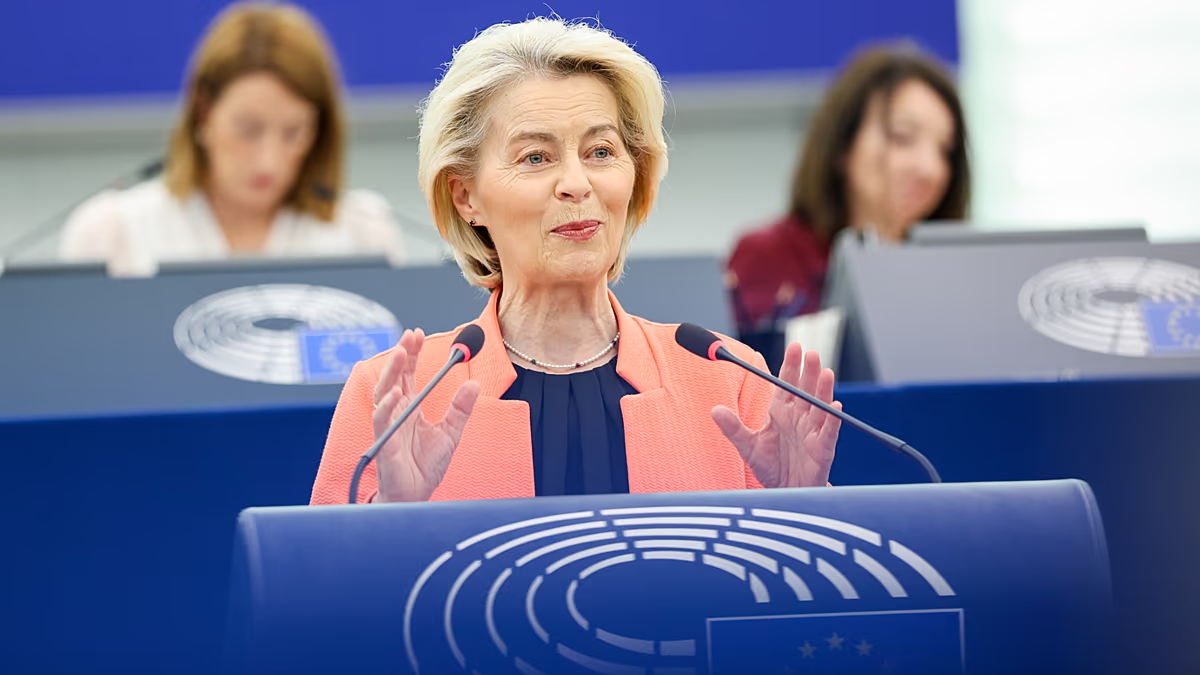
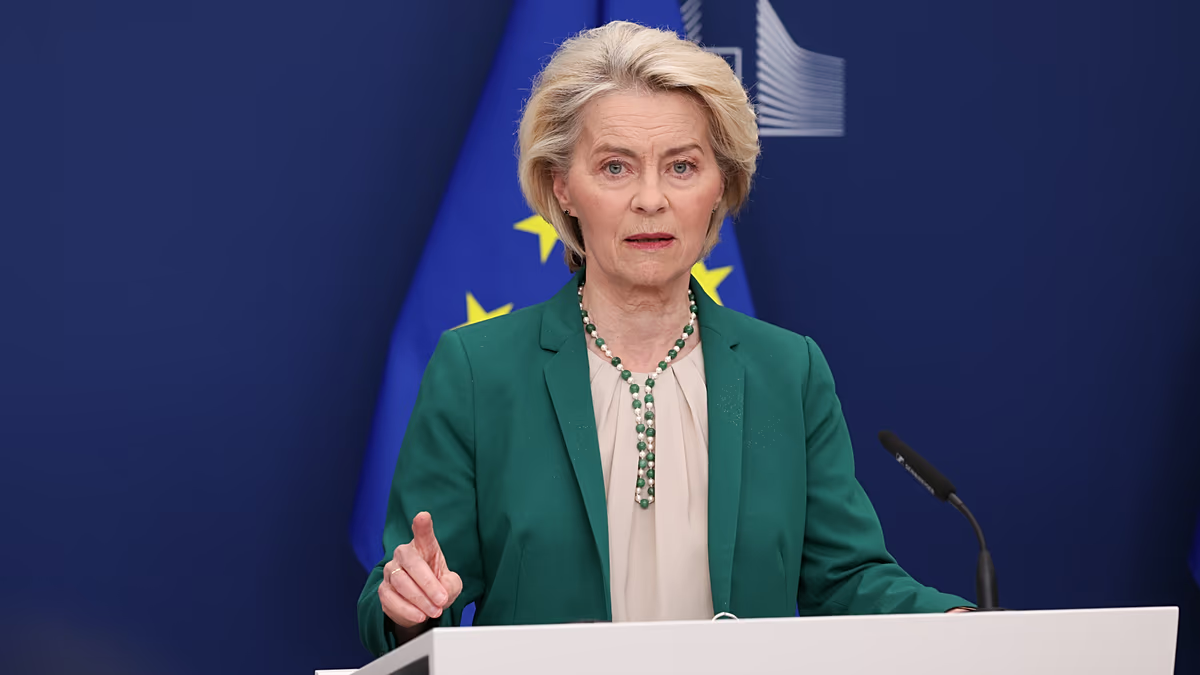
The reaction from European leadership was swift and stern, framing the event not as a mere accident but as a deliberate act of intimidation. European Commission President Ursula von der Leyen explicitly condemned what she termed Russia’s “completely unacceptable” public threats against the Baltic states, asserting that Russia and Belarus bore direct responsibility for endangering lives. Her statement, promising a response of “unity and strength,” echoed a formal plea from a group of 15 Baltic Members of the European Parliament. They described Russia’s provocations as having “reached a critical point” and demanded an immediate end to these dangerous actions. This perspective was forcefully echoed by Polish Prime Minister Donald Tusk, who labeled the recurring incidents a “coordinated provocation” and warned that the West could no longer afford to “pretend that nothing is happening.” His sentiment was informed by a major incident in September, when roughly twenty drones breached Polish airspace—an event he directly attributed to the Kremlin.
The Root of the Fear: Warfare Spills Beyond Borders
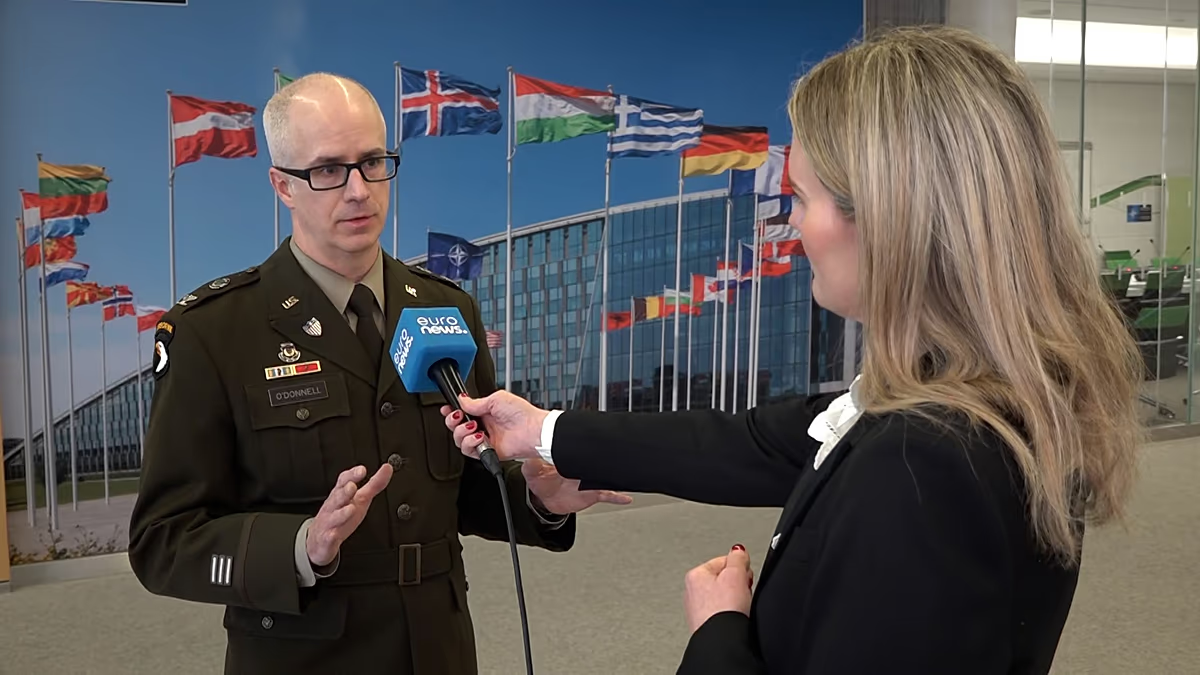
NATO Secretary-General Mark Rutte connected the dots directly to the source of the region’s instability: Russia’s “reckless, illegal, full-scale invasion” of Ukraine. He noted that the alliance’s vigilant fighter jets were executing exactly the kind of rapid response protocols designed for such scenarios. However, a troubling complexity has emerged. Investigations suggest that some of the intruding drones are actually of Ukrainian origin, believed to have been hijacked or diverted by Russian forces and intentionally flown over Baltic nations. This tactic transforms defensive weapons into tools of psychological warfare, deliberately sowing chaos and testing NATO’s resolve far from the primary battlefield. It represents a cynical strategy to export the tension and costs of the war directly into the heart of the European Union and its defensive alliance.
The Strategic Goal: Testing Resolve and Spreading Fear
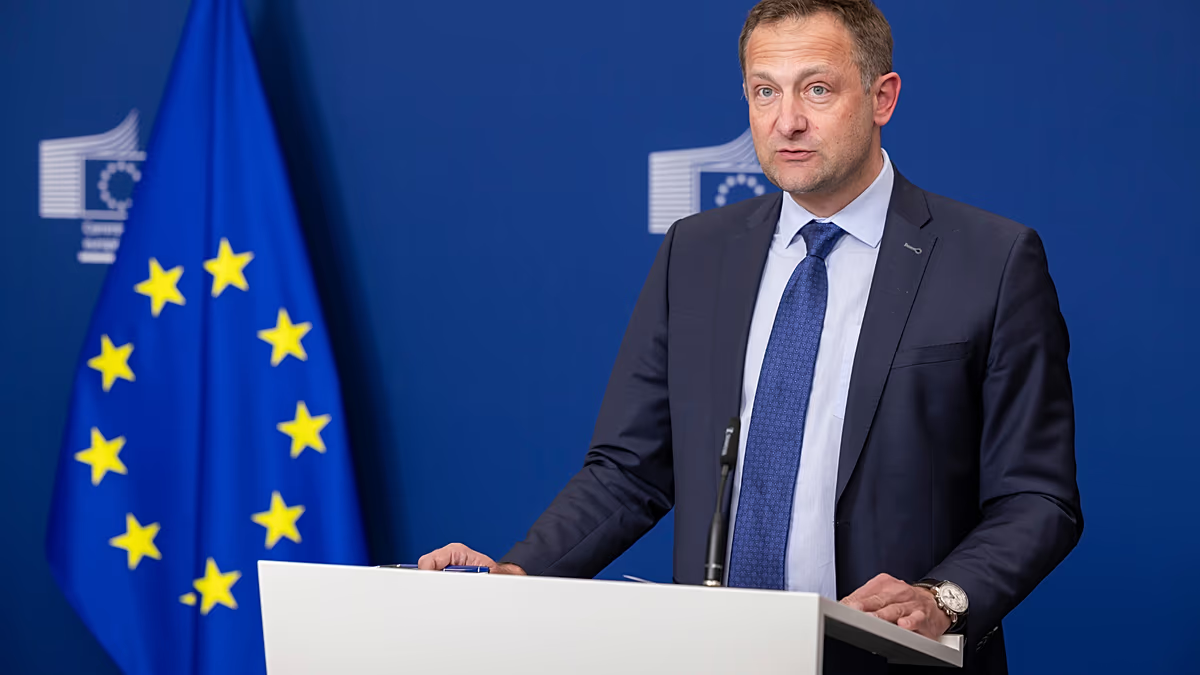
European Commissioner for Defence Andrius Kubilius, a Lithuanian himself, articulated the perceived strategic objective behind these incursions. Following a similar drone incident in Latvia, he stated that Russia is experimenting with new “forms” of pressure specifically aimed at the Eastern Flank nations. The goal, he argued, is not necessarily to cause physical destruction but to achieve a psychological victory by “frightening the people of the region.” This campaign of fear is designed to destabilize societies, strain national resources through constant alerts, and probe for weaknesses in NATO’s collective air defense and political solidarity. In this light, each drone sighting is both a literal violation of sovereignty and a metaphorical test of Western nerve.
The Prescribed Response: Fortification and Unwavering Support
In the face of this hybrid pressure, the prescribed response from Eastern European leaders is one of steadfast fortification. Commissioner Kubilius succinctly outlined the necessary counter-strategy, repeating a critical mantra: “further increase of national defence spending.” His message emphasized that security must be reinforced through a trio of actions: significantly bolstering national military capabilities, enhancing EU-wide support for the vulnerable Eastern Flank, and, fundamentally, providing stronger support to Ukraine itself. The underlying logic is clear: the best defense for Vilnius, Riga, and Warsaw is a victorious Ukraine. By ensuring Kyiv has the means to prevail on its own soil, the threat of such destabilizing provocations along NATO’s border would diminish. The path to safety, therefore, runs directly through continued and amplified assistance to the Ukrainian war effort.
Living on the Edge: A New Normal of Vigilance
The shutdown of Vilnius encapsulates a new and unsettling reality for nations living in the shadow of the Ukraine war. The frontline is no longer confined to the Donbas or the Dnipro River; it now manifests in the closed airspace above a European capital, in the evacuated halls of parliament, and in the daily headlines warning of the next incursion. While NATO’s defensive systems are being activated as planned, the psychological toll of this sustained pressure is a battle in itself. The unity called for by von der Leyen and the resolve demanded by Kubilius and Tusk are now the essential shields against a strategy designed to intimidate and divide. For the people of the Baltic states, the immediate future promises not a return to the calm of the past, but a continued state of heightened vigilance, where the distant drone of an engine can bring an entire city to a standstill.