

Of course. Here is a summary and humanization of the content, expanded into six paragraphs.
Paragraph 1
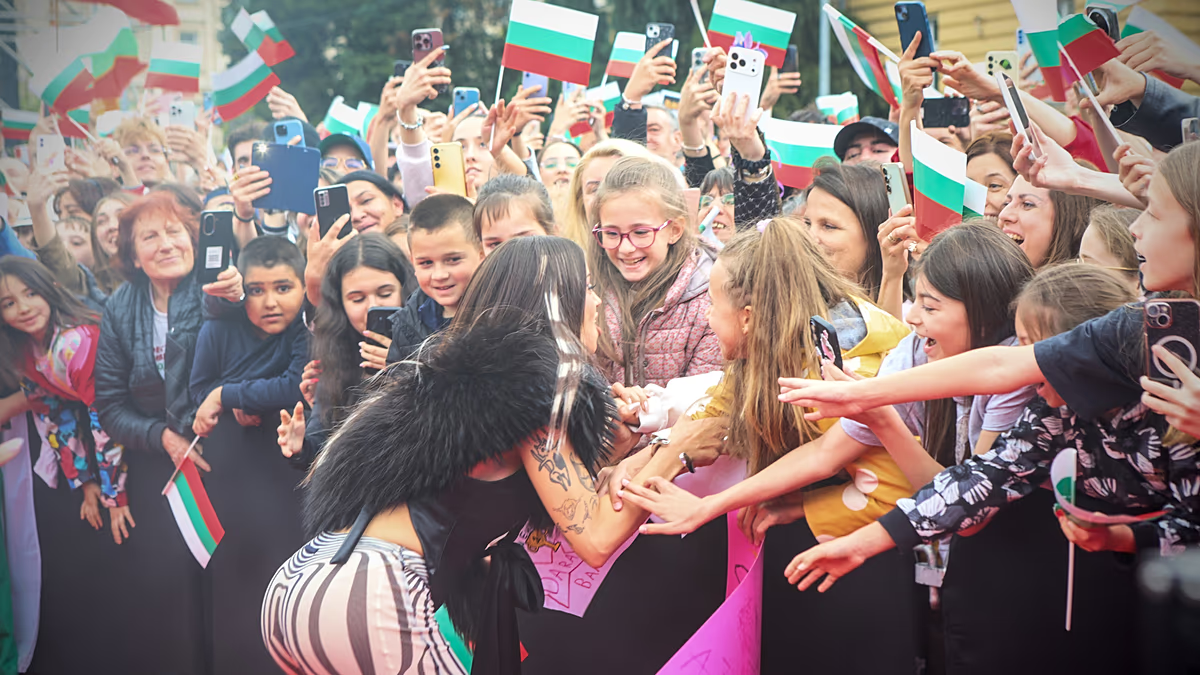
The atmosphere in Sofia was nothing short of electric. Following Bulgaria’s historic first victory at the Eurovision Song Contest, a tidal wave of national pride and joy swept through the capital. Thousands of jubilant fans packed into Alexander I Battenberg Square, a sea of faces united in celebration. This was not just a concert; it was a national homecoming party for their champion, the singer Dara, and a moment of collective triumph that had been decades in the making.
Paragraph 2
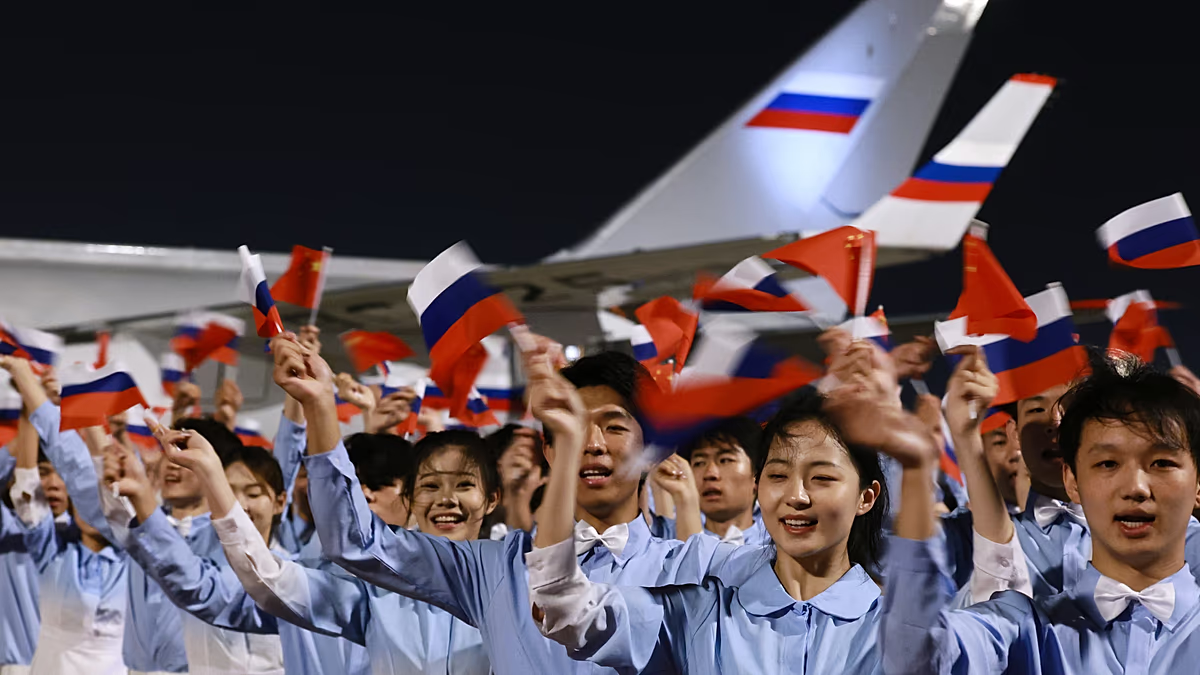
The city itself had transformed into a stage for this celebration. The event was meticulously organized, featuring multiple performance areas, a grand red carpet, and full live television coverage, ensuring every corner of Bulgaria could share in the moment. The central image was of Dara herself, performing her winning song “Bangaranga” for her home crowd. Around her, a vibrant mosaic of waving Bulgarian flags moved in rhythm with the music, and the cheers of the audience created a thunderous soundtrack of love and admiration.
Paragraph 3
The celebration reached a poignant symbolic peak when Sofia Mayor Vasil Terziev presented Dara with the symbolic key to the city. This gesture traditionally signifies trust, honor, and a sense of belonging. In this context, it was a profound acknowledgment from her hometown. It recognized not only her artistic achievement but also her role as a new cultural ambassador, who had unlocked a door to international prestige for Bulgaria on the world’s largest musical stage.
Paragraph 4
Dara’s victory in Vienna was a decisive one, achieved with an impressive 516 points. This numerical fact, however, was merely the scoreboard reflection of a deeper emotional resonance. Her win represented a breakthrough for a nation that had participated in Eurovision with passion for years, finally reaching the pinnacle. It proved that their music and artistic spirit could resonate powerfully across diverse European cultures and tastes.
Paragraph 5
In her remarks, Dara expressed a hope that transcended national pride. She stated that she hoped the victory would “help unite people through music.” This sentiment speaks to the core spirit of Eurovision—an event designed to foster connection and cultural exchange across borders. Her words framed the win not as a solitary national conquest, but as a bridge, using the universal language of music to bring people together in a shared moment of celebration and harmony.
Paragraph 6
In conclusion, the event in Sofia was a multifaceted milestone. It was a cathartic national celebration of a long-awaited achievement, a heartfelt hometown tribute to a local artist turned international star, and a hopeful embrace of Eurovision’s unifying ideals. The images of the packed square, the waving flags, and the presentation of the key to the city collectively tell a story of pride, honor, and a forward-looking aspiration for connection, all born from the power of a song and an unforgettable victory.