


The streets of London erupted in a sea of red and white jubilation as Arsenal Football Club secured its first Premier League title in 22 years, ending a generation of yearning and near-misses. For countless fans, this moment was more than a sporting triumph; it was the culmination of a long, often painful journey, a redemption story finally written in silver and confetti. The final whistle didn’t just signal a victory; it released a dam of pent-up emotion, sending waves of supporters pouring out of pubs and homes to reclaim their city. After more than two decades of watching rivals lift the trophy, the Arsenal faithful could once again call themselves champions of England, a title that resonated with profound significance for a club of such storied history.
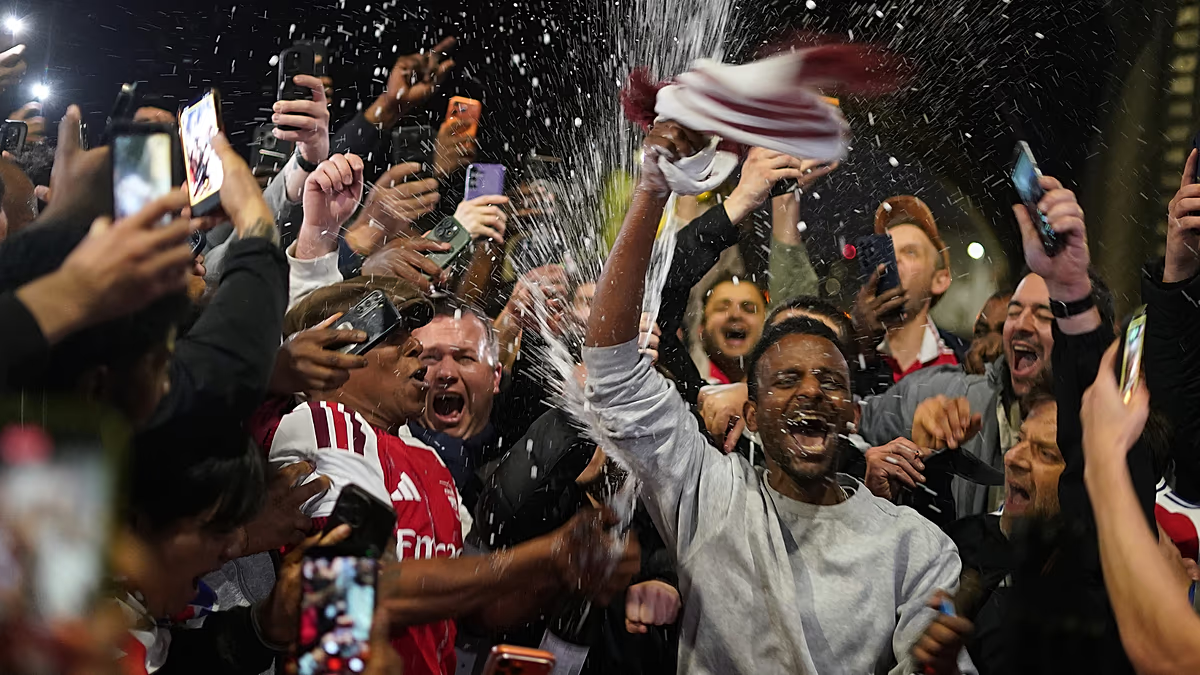
The epicenter of the celebration was, fittingly, the club’s home, the Emirates Stadium in North London, and the bustling artery of Holloway Road that leads to it. These familiar landmarks were transformed into a vibrant, roaring carnival. Images captured a breathtaking tapestry of joy: thousands of fans, wrapped in scarves and draped in flags, singing in unison with tears streaking through the grime of red smoke. Pyrotechnics lit up the night sky, their thunderous reports drowned out only by the deafening chants of “Champions!” that echoed off building facades. Everywhere you looked, there were embraces between strangers, fathers hoisting children onto their shoulders, and groups of friends screaming the lyrics to club anthems, their voices hoarse with passion.
Adding to the festival atmosphere were the enterprising merchandise sellers who materialized along the curbs, their tables overflowing with hastily printed championship memorabilia. Scarves, hats, and t-shirts emblazoned with “CHAMPIONS 2024” became instant relics, snapped up by fans eager to hold a tangible piece of history. The commerce was a sidebar to the overwhelming sentiment, however. More powerful than any purchase were the raw, emotional interviews with supporters who struggled to find the words. Many described the victory as a cathartic release, a weight lifted after seasons of falling agonizingly short. For older fans, it was a bridge back to the glory days; for a younger generation, it was a first, unforgettable taste of the supremacy their parents had always described.
This victory was inextricably linked to the legacy of legendary manager Arsène Wenger, whose iconic “Invincibles” team of the 2003-04 season was the last to bring the league trophy to Arsenal. For two decades, that unbeaten squad existed as both a proud monument and a haunting benchmark, a reminder of a pinnacle that seemed increasingly distant. The long drought that followed made this triumph under current manager Mikel Arteta not just a new achievement, but a spiritual passing of the torch. Arteta, a former captain under Wenger, has rebuilt the club in his own intense image, blending youthful exuberance with tactical brilliance. His project reached its zenith on this night, allowing fans to celebrate not only the present, but to feel a profound connection to a glorious past finally reclaimed.
As the night wore on, the celebrations showed no sign of abating, spilling from Holloway Road into the heart of London. The energy was not one of rowdiness, but of pure, unadulterated communal happiness—a shared understanding of what had been overcome. It was the sound of a massive, collective sigh of relief turning into a roar of triumph. In pubs from Islington to Finsbury Park, glasses were raised not just to the players on the pitch, but to the enduring faith of a global fanbase. This was a victory for every supporter who kept the faith during the fallow years, for every scarve worn with pride even in disappointment, and for the enduring idea that their club could once again sit atop English football.
When the sun finally rose over a litter-strewn but still-smiling North London, it illuminated a community forever changed. The red-and-white confetti stuck in the gutters and the fading echoes of songs were the evidence of a historic release. Arsenal was champion again, a fact that would take weeks to fully sink in. More than just a trophy, the win provided a new core memory, a “where were you when” moment for millions. It was a testament to perseverance, a reward for unwavering loyalty, and a night that wove itself instantly into the rich tapestry of the club’s identity, proving that some waits, no matter how long, make the celebration all the sweeter.