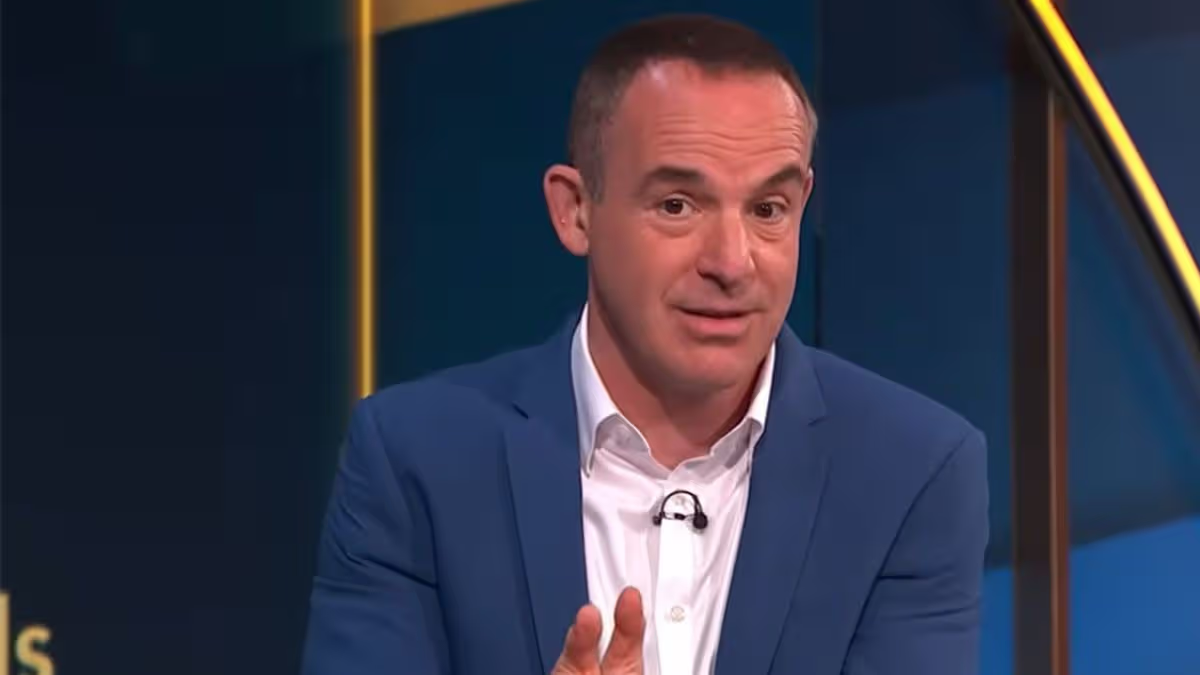




In a powerful joint letter to Prime Minister Keir Starmer, consumer champion Martin Lewis and the chief executive of Which?, Anabel Hoult, have issued a stark and urgent condemnation of the government’s failure to protect the public from online scammers. They accuse major technology platforms of not merely being passive hosts for criminal activity, but of “actively profiting” from the fraud that proliferates across their sites. This criticism strikes at the heart of a business model that prioritizes frictionless advertising over user safety, arguing that these corporations reap billions from an ecosystem that systematically preys on their users. The letter serves as a direct challenge to the government’s current policies, framing online fraud not as a niche crime but as one of the most prevalent and damaging forms of harm in modern Britain, requiring immediate and drastic regulatory intervention.
The human cost of this epidemic is devastating and extends far beyond mere financial loss. As Lewis and Hoult powerfully articulate, “This fraud doesn’t just destroy people’s financial lives, it can also destroy self-esteem and have huge impacts on mental health.” Victims are not just statistics; they are individuals and families who have been deceived during moments of vulnerability, whether seeking love on a dating app, a bargain on a social media marketplace, or financial security through an investment. The trauma of being scammed erodes trust and inflicts a deep sense of shame and violation, compounding the acute financial pressure many are already under due to the cost-of-living crisis. This emotional dimension underscores why the issue must be treated as a serious form of abuse, demanding a response with the same urgency as other online harms.
The scale of the problem is immense, with fraud now accounting for a staggering 45% of all crime in the UK, the vast majority of which originates online. The tactics employed are increasingly sophisticated, ranging from fake celebrity endorsements—using the deepfaked images of figures like Lewis, Deborah Meaden, and Richard Branson—to “ghost broking” scams targeting young drivers with counterfeit car insurance sold through social media. These fraudulent policies leave victims unknowingly uninsured, facing potential prosecution, massive fines, and the seizure of their vehicles. This ever-evolving threat landscape demonstrates how scammers expertly exploit the tools and reach provided by major platforms, adapting quickly to bypass weak or non-existent safeguards and directly targeting susceptible demographics.
A central pillar of the criticism is the deliberate inaction of the tech giants, which the letter attributes to a “lack of incentive” rather than any true technological barrier. These platforms operate advertising systems designed for ease and speed, allowing anyone to pay to have content placed before millions of users with minimal checks. This stands in stark contrast to the rigorous vetting processes legally required of traditional UK media companies for financial advertisements. By choosing this profitable, hands-off approach, the companies are effectively profiting from crime; it is estimated that online platforms rake in approximately £3.8 billion annually from scam advertisements aimed at European users alone. The letter explicitly rejects the platforms’ excuses, arguing they are simply unwilling to introduce the necessary “friction” that would protect consumers but potentially reduce advertising revenue.
Furthermore, Lewis and Which? are fiercely critical of the government’s own response, describing its flagship Fraud Strategy and the Online Safety Act as inadequate and failing to hold powerful tech firms to account. They contrast this “weak” approach with the government’s swift and decisive rhetoric when addressing other online harms, such as deepfake sexual content. The government had then warned platforms that “if you profit from harm and abuse, you lose the right to self-regulate.” The consumer groups demand this same principle be applied rigorously to financial fraud. They are calling for ministers to immediately direct the regulator, Ofcom, to use its existing powers to take forceful action against platforms that host scams, treating the crisis with the seriousness it warrants.
In response, a government spokesperson pointed to ongoing efforts, including a £79 million investment to tackle fraud and the obligations placed on platforms by the Online Safety Act to proactively remove illegal fraudulent content. However, the thrust of the letter from Lewis and Which? is that these measures are insufficient and poorly enforced, leaving the public dangerously exposed. The call to action is clear: the government must move beyond statements and compel tech giants to assume legal and financial responsibility for the scams they monetize. Until it does, these platforms will continue to profit, scammers will continue to operate with impunity, and countless more individuals will suffer profound financial and psychological harm. The ball, as the letter concludes, is firmly in the government’s court to prove it prioritizes citizen safety over corporate convenience.