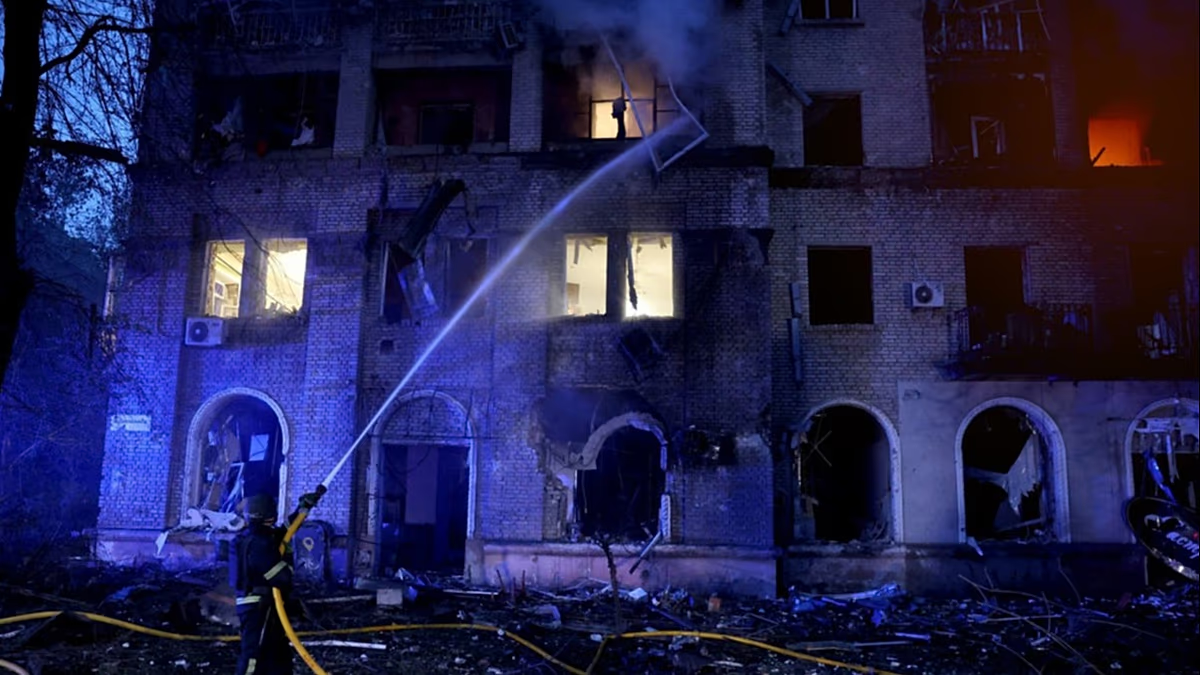
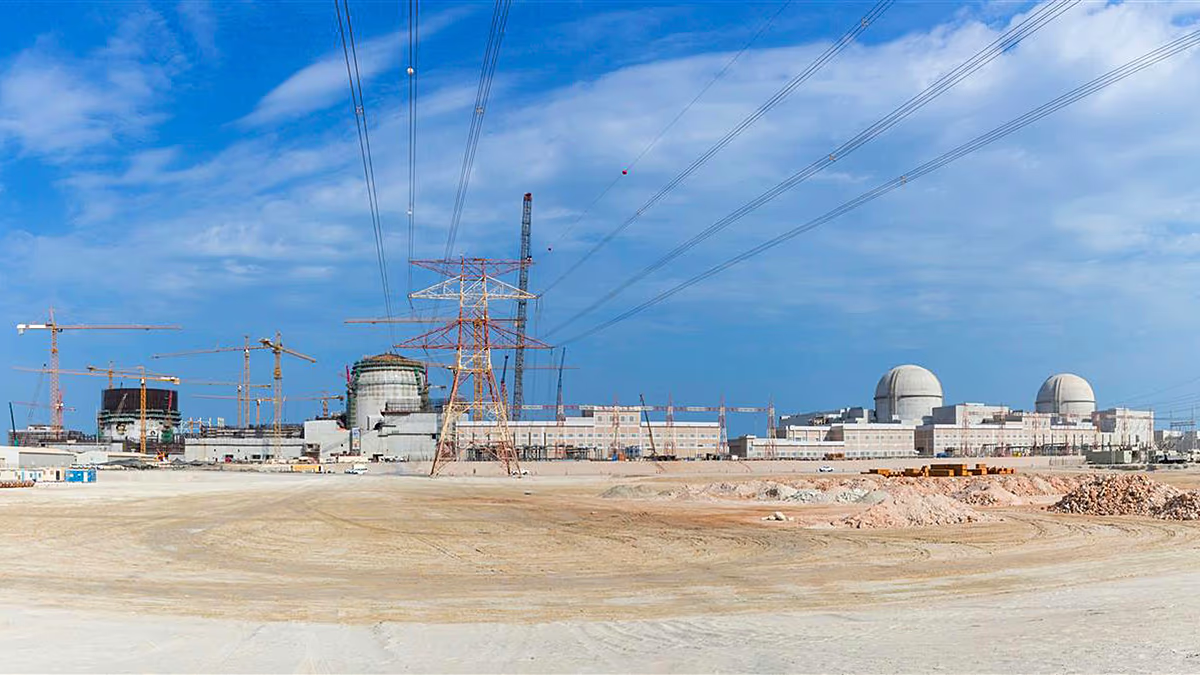


A troubling and dangerous threshold has been crossed in the shadowy, ongoing conflict that has simmered across the Middle East. On a Sunday in mid-May 2026, three drones streaked toward the Barakah Nuclear Power Plant, the gleaming cornerstone of the United Arab Emirates’ ambitious clean energy future and the only facility of its kind on the Arabian Peninsula. While two were successfully intercepted, one evaded defenses, striking an electrical generator near the reactor complex. Though officials confirmed there were no casualties, no radiation leak, and that nuclear operations were unaffected, the shockwave of the attack reverberated far beyond the resulting fire. The symbolic and psychological impact was immense, shattering an unspoken taboo that had previously kept such critical civilian infrastructure off the target list. The deliberate strike on a nuclear site, nestled near the borders of Saudi Arabia and Qatar, sent a stark message of escalating capability and intent, raising immediate fears of catastrophic consequences for the entire Gulf region.
By Tuesday, the UAE’s investigation had reached a definitive and incendiary conclusion. The nation’s defense ministry announced that technical forensic analysis confirmed all three drones had originated from Iraqi territory. This finding pointed directly to the network of Iran-backed paramilitary groups that have entrenched themselves within Iraq over the past two decades. Since the U.S.-led invasion in 2003 toppled Saddam Hussein, Tehran has meticulously filled the resulting power vacuum, funding, arming, and training a formidable parallel security structure. These militias, often operating beyond the full control of the Iraqi state, have become a primary instrument of Iranian regional policy. The UAE’s statement transformed the attack from an anonymous strike into a geographically attributable act, intensifying diplomatic pressure on Baghdad and exposing the persistent challenge these groups pose to regional sovereignty.
The Iraqi government, perpetually caught between its formal alliances and the influence of powerful militias, responded with carefully chosen words. Government spokesman Bassem al-Awadi issued a statement expressing Baghdad’s “strong condemnation” of the attacks targeting the UAE and emphasized the need for international cooperation to prevent escalation. Notably, however, the statement did not directly address or acknowledge the Emirati report pinning the launch to Iraqi soil. This diplomatic tightrope walk highlighted the central government’s chronic struggle to rein in groups like Kata’ib Hezbollah—a U.S.-designated terrorist organization distinct from its Lebanese namesake—which has been among the most active in targeting Gulf and U.S. interests. The attack laid bare the grim reality that Iraqi territory has become a launchpad for attacks on its neighbors, complicating regional diplomacy and security.
Frustration in the Emirates over this complex and dangerous landscape was voiced pointedly by a senior diplomat. Anwar Gargash, diplomatic advisor to the UAE president, took to social media to indirectly criticize what he perceived as ambivalence from some regional partners. He described a “confusion of roles” in the face of “treacherous Iranian aggression,” where the lines between victim, mediator, and ally had become dangerously blurred. “In this most perilous phase in modern Gulf history,” Gargash warned, “the gray position remains more dangerous than outright inaction.” His comments underscored a growing impatience with diplomatic hedging, calling for clearer, more steadfast alliances in confronting a campaign of aggression that has repeatedly targeted the economic and energy lifelines of Gulf states since broader hostilities between Iran and a U.S.-Israeli coalition ignited earlier in the year.
The strike on Barakah was not a spontaneous act but the realization of a visible threat. As recently as March of that year, Iranian state-run media had published a list of energy plants in the region as potential targets, explicitly including the Barakah facility. This move signaled a deliberate escalation in strategy, shifting from targeting oil infrastructure and commercial ports to threatening a critical civilian nuclear asset. The plant is not a minor installation; it provides approximately a quarter of the UAE’s total electricity, powering homes, industries, and cities. By taking aim at Barakah, the attackers sought to demonstrate their ability to threaten the very foundation of national stability and prosperity, aiming to inflict profound economic and psychological damage far beyond the physical impact of a single drone.
This event represents a significant and alarming inflection point. The violation of the sanctity of a nuclear power plant, using drones launched from a neighboring nation’s territory by proxy forces, encapsulates the modern complexities of Middle Eastern conflict. It blends asymmetric warfare with high-stakes geopolitical brinksmanship, challenging traditional defenses and diplomatic responses. For the UAE and its allies, the attack reinforces the persistent vulnerability of critical national infrastructure to determined, non-state actors operating with sophisticated backing. For the wider world, it serves as a grim warning of how regional proxy wars can escalate to jeopardize globally significant assets, pushing conflicts into uncharted and profoundly risky territory where the potential for miscalculation and catastrophic fallout grows ever more acute.