


Of course. Here is a summary and humanization of the content, expanded to six paragraphs.
Paragraph 1: The Human Toll
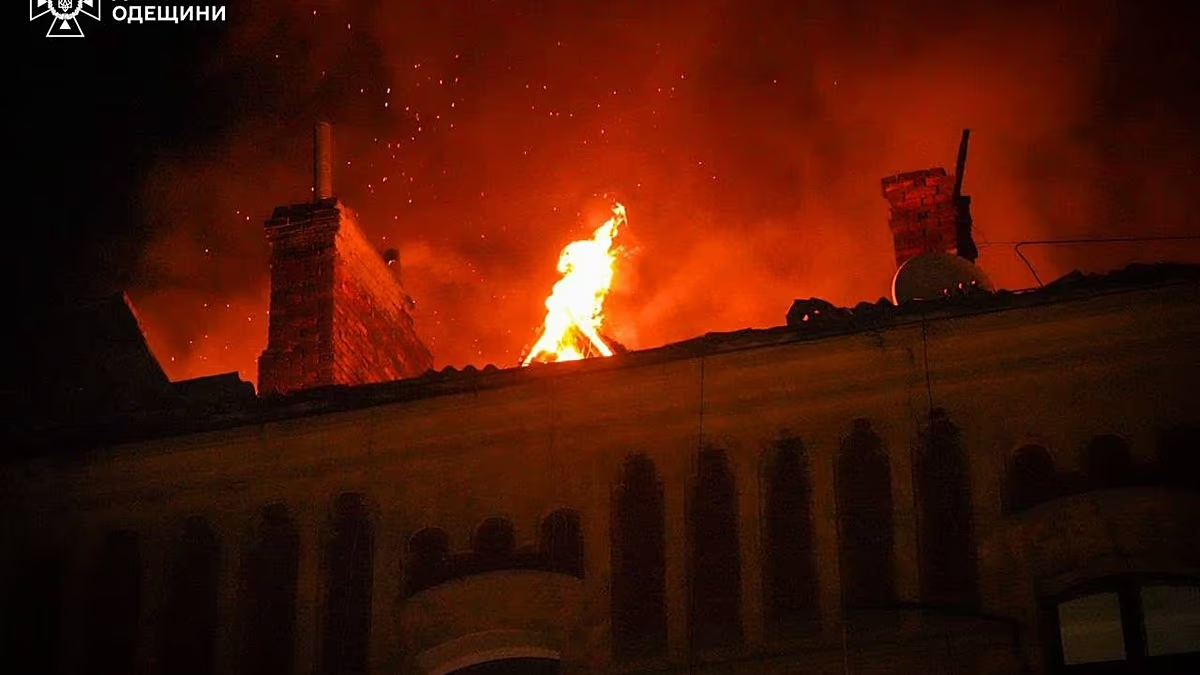
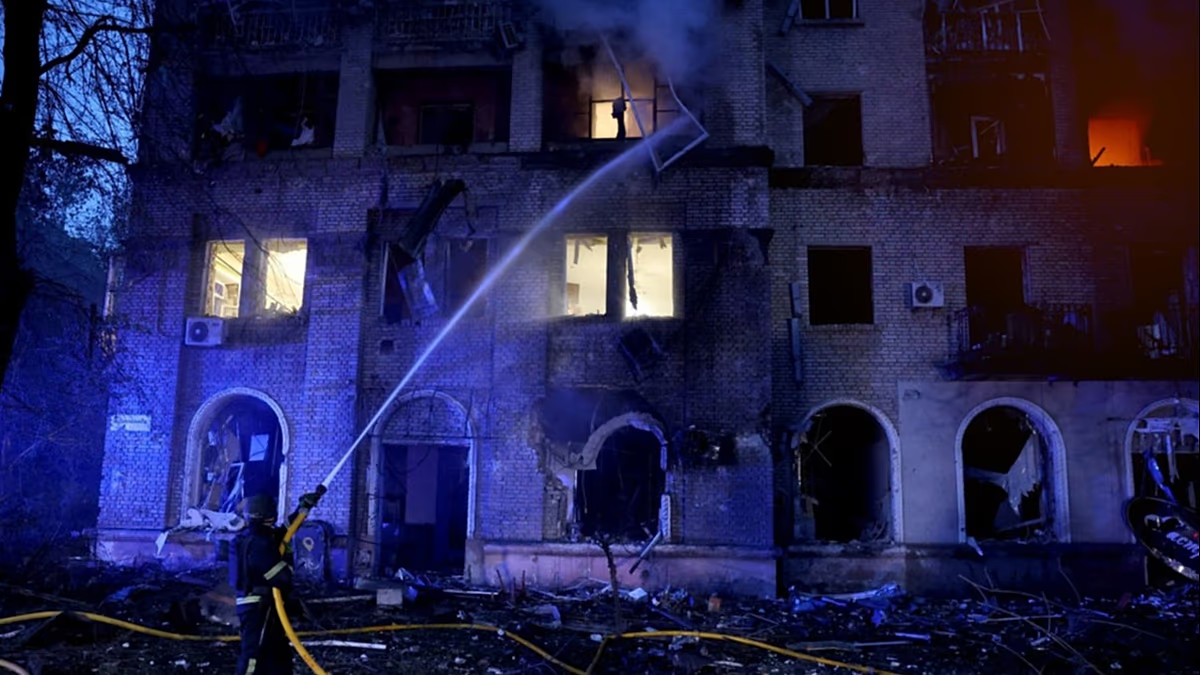
In the darkness of another night, the war reached into Ukrainian homes. Russia unleashed a massive barrage of drones and missiles across eight regions, with the central city of Dnipro suffering particularly heavily. President Volodymyr Zelensky reported that the assault involved over 500 Iranian-made Shahed drones and nearly two dozen ballistic and cruise missiles. Beyond the military statistics, the true cost was measured in civilian lives: local authorities confirmed that more than two dozen innocent people, including three children, were wounded in the attacks. This relentless bombardment underscores a grim reality: the conflict is not confined to front lines but is a daily terror for ordinary Ukrainians.
Paragraph 2: A Cycle of Escalation
This recent barrage is part of a dangerous and intensifying cycle of long-range strikes. Despite a brief ceasefire proposed by US President Donald Trump in early May, hopes for a lasting peace have evaporated. Instead, the violence has escalated, with Russian attacks frequently targeting residential areas. In one tragic instance, an assault on a Kyiv apartment building killed at least 24 people. There is currently no sign of a viable peace deal, even as diplomatic efforts continue. The war has entered a phase of reciprocal deep strikes, where both sides are increasingly capable of striking far behind the other’s traditional front lines.
Paragraph 3: Ukraine’s Growing Reach and Russia’s Pain
After more than four years of conflict, Ukraine has developed its own formidable long-range capabilities. In a strategic shift, Ukrainian forces are now consistently striking targets deep within Russia, focusing on oil facilities vital to the Russian economy and other symbolic sites. This tactic is designed to make the consequences of the war palpable to the Russian public, thereby increasing political pressure on President Vladimir Putin. Ukraine’s ability to hit back on Russian soil marks a significant change in the conflict’s dynamics, challenging Russia’s earlier sense of security and contributing to the struggle Putin’s army faces on the battlefield.
Paragraph 4: Technological Arms Race
The war is also accelerating a rapid technological arms race. Russia claimed to have intercepted over 1,000 Ukrainian drones targeting Moscow in a single day. Meanwhile, Ukraine continues to innovate, announcing the development of its first domestic glide bomb—a powerful weapon with a 250-kilogram warhead designed to destroy fortified positions and command centers far behind enemy lines. Ukrainian pilots are already training to use this new system under combat conditions. These advancements highlight how the conflict has become a testing ground for next-generation warfare, with each side striving to gain a decisive technological edge.
Paragraph 5: A Shift in Perception
President Zelensky believes these evolving capabilities are altering the global perception of the war. He stated that Ukraine’s long-range strikes are “significantly changing the situation” and that international partners are recognizing a new reality: Russian territory and assets are now reachable and vulnerable. This shift, he argues, changes strategic calculations about the conflict’s potential outcomes. Conversely, Russia claims its own strikes are achieving their goals, announcing a massive blow against Ukrainian weapons factories, energy infrastructure, and ports. This exchange of claims points to a war where information and perception are as contested as the territory itself.
Paragraph 6: The Geopolitical Stage
The latest escalations occur against a backdrop of significant geopolitical maneuvering. As Russia finds itself increasingly isolated by many Western nations, its partnership with China has deepened, with China now acting as its main trading partner. A highly anticipated meeting between Presidents Putin and Xi Jinping in Beijing is scheduled for this week, symbolizing the alignment of these two major powers. This meeting contrasts sharply with the continued violence in Ukraine, illustrating how the war is not merely a regional battle but a central fault line in global politics, influencing alliances and international relations worldwide.