


Paragraph 1: The Shattering of an Evening’s Peace
On a quiet Sunday evening in the Peterborough neighborhood of Paston Ridings, the predictable rhythm of domestic life was violently shattered. At approximately 6 p.m., a blue Ford Mondeo, traveling along the residential street, lost control. In a terrifying sequence of events, the vehicle collided with stationary cars parked along the road before its trajectory ended with a devastating impact into the front of a house. The force of the crash was immense, scattering rubble and debris across the property’s front garden, turning a home into a scene of emergency. This sudden eruption of violence instantly drew the attention and concern of the entire community, marking the beginning of a long night for residents, emergency services, and, most critically, for two individuals whose lives were now in peril.
Paragraph 2: The Human Toll Behind the Headlines
Behind the alarming images of a flipped car and a damaged house lay a profound human tragedy. Two people were caught in the catastrophe. Inside the home was a woman in her 70s, presumably enjoying the safety and comfort of her own dwelling. The driver of the Mondeo was a man in his 40s from Peterborough. Both sustained serious injuries in the collision and required urgent medical attention. They were swiftly rushed to the hospital by paramedics, their conditions a source of deep anxiety for investigators and neighbors alike. The incident starkly highlighted how quickly ordinary life can be upended, transforming a peaceful evening into a fight for survival, and leaving families awaiting news with heavy hearts.
Paragraph 3: Neighbors’ Accounts of Chaos and Community
For those living nearby, the event unfolded as a sudden intrusion of chaos into their quiet world. One long-term resident, Greg Hilliam, recounted hearing only the subsequent sirens, looking out his window to a scene of bewildering destruction. His decades of experience on the street had never included such an event, though he noted concerns about speeding vehicles. Another neighbor described his family being awakened by the “commotion,” with people gathering and a car having torn through the house’s hedge. Amid the shock, flashes of community spirit emerged. One individual was singled out as a “hero” for running over to provide immediate aid before professionals arrived. Another resident, who witnessed overturned cars from his window, expressed a simple, heartfelt hope: “I thought someone may be seriously hurt. If so, I hope they are ok.”
Paragraph 4: The Lingering Shadow of the Crash
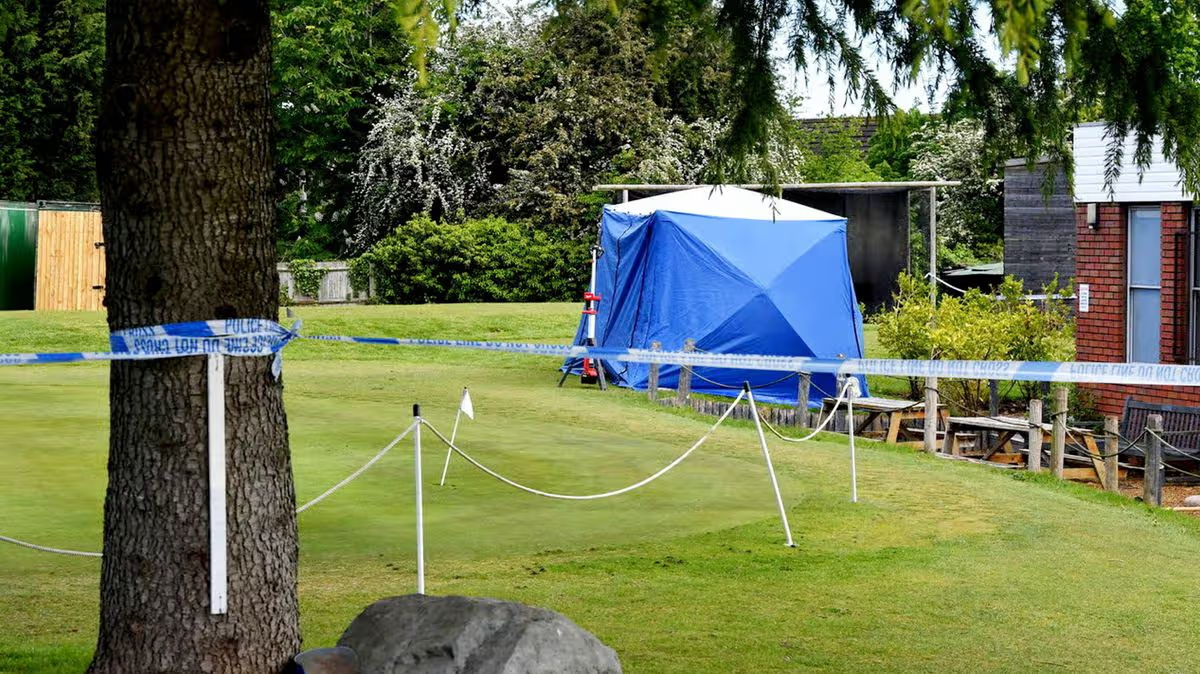
The physical and emotional aftermath of the crash lingered long into the next day. A police cordon remained firmly in place on Monday, a stark reminder of the ongoing investigation and the severity of the event. For residents returning home or passing by, the sight was described as “scary,” prompting questions and a sense of unease. The damaged property, the marked-off area, and the absence of normal activity served as a silent testament to the trauma that had occurred. This tangible scar on the neighborhood underscored that such events are not merely fleeting news items but leave a lasting imprint on the places and people involved.
Paragraph 5: The Official Appeal and Search for Answers
Cambridgeshire Constabulary issued a formal statement, confirming the details and launching a public appeal for information. They described the sequence of the collision and confirmed the serious injuries to both the driver and the pensioner inside the home. The appeal underscored the mystery surrounding the crash, seeking witnesses or anyone with dashcam footage that might shed light on the vehicle’s movements prior to the impact or the moments of the collision itself. This official step moved the incident from a local shock to a matter of public record and forensic inquiry, emphasizing the need to understand why this happened to prevent future tragedies and ensure accountability.
Paragraph 6: Reflections on Safety and the Fragility of Normalcy
This incident in Paston Ridings serves as a sobering community reflection. For long-standing residents, it disrupted a decades-long sense of security, proving that even familiar, quiet streets are vulnerable. It sparked immediate conversations among neighbors about driving behavior and local safety. On a broader human level, the crash is a poignant reminder of our shared fragility. It juxtaposes the mundane—a Sunday evening at home, a drive through a neighborhood—with sudden, life-altering violence. The hope for the recovery of the two injured individuals now hangs over the community, while the questions raised about road safety and the search for answers continue. Ultimately, it is a story about how, in an instant, the walls that separate our safe, interior lives from the chaos of the outside world can literally come crashing down.