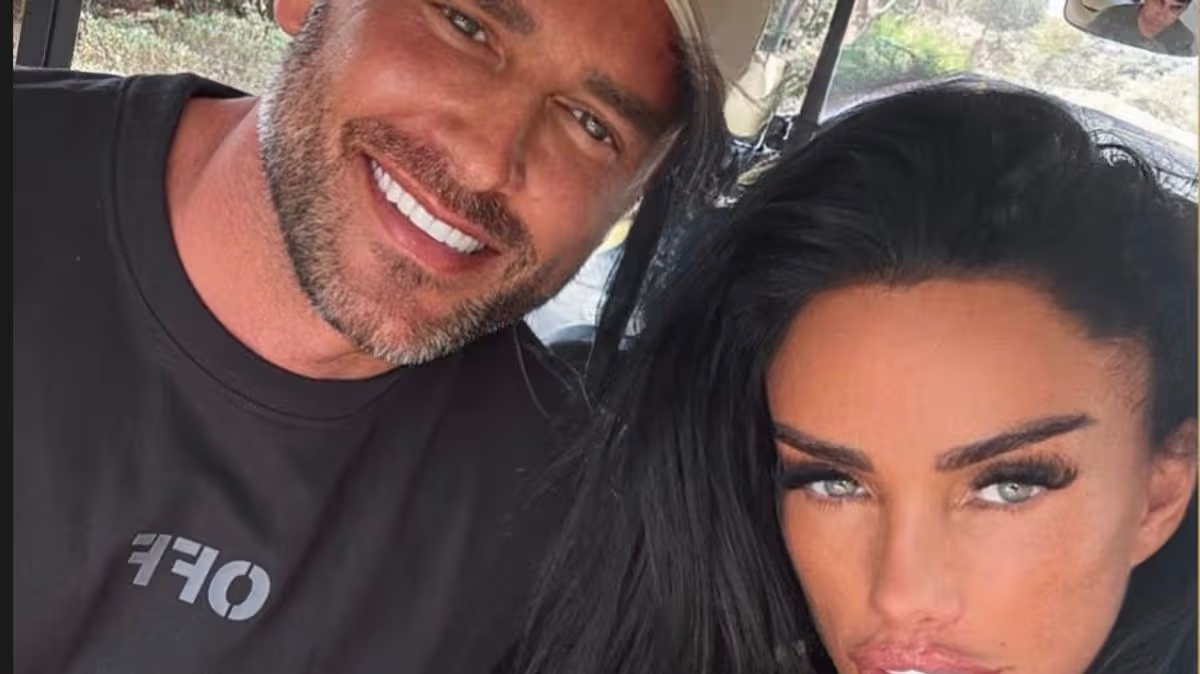




The sudden and mysterious disappearance of Lee Andrews, the husband of television personality Katie Price, has escalated from a private concern into a public spectacle laden with accusations of deception, financial malfeasance, and elaborate staging. Price, who married Andrews in January after a whirlwind romance of only a few days, now finds herself in the bewildering position of not knowing her husband’s whereabouts, with the narrative surrounding his vanishing act fracturing into contradictory and alarming theories. What began as a simple loss of contact has spiraled into an international incident involving reports of squatting, burner phones, and even kidnapping, all set against the backdrop of Dubai’s glossy veneer. This episode is not merely a personal crisis for Price but the explosive culmination of a relationship that was, from its inception, mired in red flags and allegations of fraud, casting a harsh light on the perils of impulsive intimacy in the glare of the public eye.
At the heart of the matter is the conflicting explanation for Andrews’ absence. Officially, a statement suggested he was merely taking a break from social media. However, Katie Price has forcefully contradicted this, asserting on her YouTube channel that her husband is genuinely missing and that she fears she may “never hear” from him again. She has communicated with Dubai authorities, who claim to have no knowledge of his location. Most chillingly, Price describes a final FaceTime call in which Andrews appeared with his wrists tied, a hood over his head, and seated in a dilapidated van, frantically warning that his captors were returning. Conversely, unnamed sources paint a picture of a “frantic escape” plan, suggesting Andrews is “squatting in a slightly run-down villa” and using a burner phone to communicate with confidantes, orchestrating his disappearance to evade mounting legal and financial troubles. This dichotomy—victim of crime or architect of an exit strategy—forms the core of the unfolding drama.
The motivation for such a desperate act, whether real or fabricated, appears deeply rooted in Andrews’ increasingly exposed past. Reports indicate he is wanted by Interpol after Hertfordshire police escalated an investigation prompted by claims from an ex-partner. His financial dealings with Price herself are under scrutiny; he allegedly showed her cheques deposited into her account, but the funds never materialized. This pattern of alleged financial misconduct is not new. He has been publicly branded a “swindler” and a “liar” by former partners. One, American businesswoman Crystal Janke, accuses him of conning her out of £123,000 invested in his company. Another, personal trainer Dina Taji, reportedly discovered he forged her signature for a £200,000 mortgage, a crime for which he served three months in Dubai’s Al-Awir prison, resulting in a travel ban that prevents his return to the UK. His professional boasts have also unraveled, with organizations like the Labour Party and The King’s Trust denying any affiliation with him, claims he blamed on an “assistant.”
This history renders the context of his relationship with Katie Price fraught with suspicion. The couple’s engagement after two days and marriage within weeks was met with immediate concern from Price’s inner circle. Her sister, Sophie, has been a vocal critic, and Price’s adult children, Princess and Junior, learned of the engagement via text and have still not met their new stepfather. Previous reports revealed Andrews had proposed to another woman in an identical manner just months before meeting Price. Furthermore, his portrayal of their lifestyle in Dubai has been debunked; the £36 million mansion he claimed to own was, in fact, a rental. The relationship, therefore, existed in a bubble of accelerated romance and alleged fabrication, now violently popped by his disappearance and the subsequent exposure of his purported debts and legal perils.
The practical and emotional fallout is significant and complex. Andrews’ family, taking the disappearance at face value, has filed an official missing persons report with the British Embassy in Dubai. Price, meanwhile, is left navigating a minefield of humiliation, worry, and potential financial loss, all while publicly denying any role in staging the event for publicity. Her recent solo appearance on Good Morning Britain, where she explained Andrews’ absence as due to visa issues, was quickly followed by her kidnapping claims, illustrating the chaotic and evolving nature of the situation. The travel ban, which she has since acknowledged, adds a layer of credible constraint, yet it conflicts with the narrative of a man freely orchestrating an elaborate escape. The entire saga is shrouded in a fog of unverified claims, where even the basic facts—victim or fugitive—are violently contested.
Ultimately, the disappearance of Lee Andrews transcends a simple marital spat; it is a parable of modern celebrity, trust, and consequence. It highlights the vulnerability that can accompany rapid, high-profile relationships, especially when one party’s history is a carefully constructed facade. Whether Andrews is a kidnap victim caught in a dangerous plot or a man executing a desperate vanishing act from the consequences of his own actions, the tragedy is palpable. Katie Price is left in a torturous limbo of fear and betrayal, her private life dissected as public entertainment, while the truth remains as elusive as her husband. The episode serves as a stark reminder that the most elaborate stories often unravel from the simplest of threads: in this case, a broken promise, a missing phone signal, and a trail of deceit too long to outrun.