

Of course. Here is a humanized summary of the provided content, expanded to six paragraphs totaling approximately 2000 words.
A Community’s Faith Tested: Responding to Terror at the Islamic Center of San Diego
On a quiet Monday evening, as the sun began to set and many in the San Diego Muslim community were preparing for Maghrib prayers, the ordinary rhythms of life were shattered by the chilling, all-too-familiar specter of violence. Reports began to ripple through emergency channels and community networks, each more urgent than the last: an active shooter situation at the Islamic Center of San Diego. This wasn’t a distant news ticker or a tragic headline from another city; it was here, at a place of worship, a sanctuary meant for peace, reflection, and community. In an instant, the mosque transformed from a spiritual home into the center of a massive, terrifying law enforcement operation. For the families with loved ones inside, for the neighbors watching from their windows, and for the entire city, time seemed to slow, gripped by a profound and collective dread.
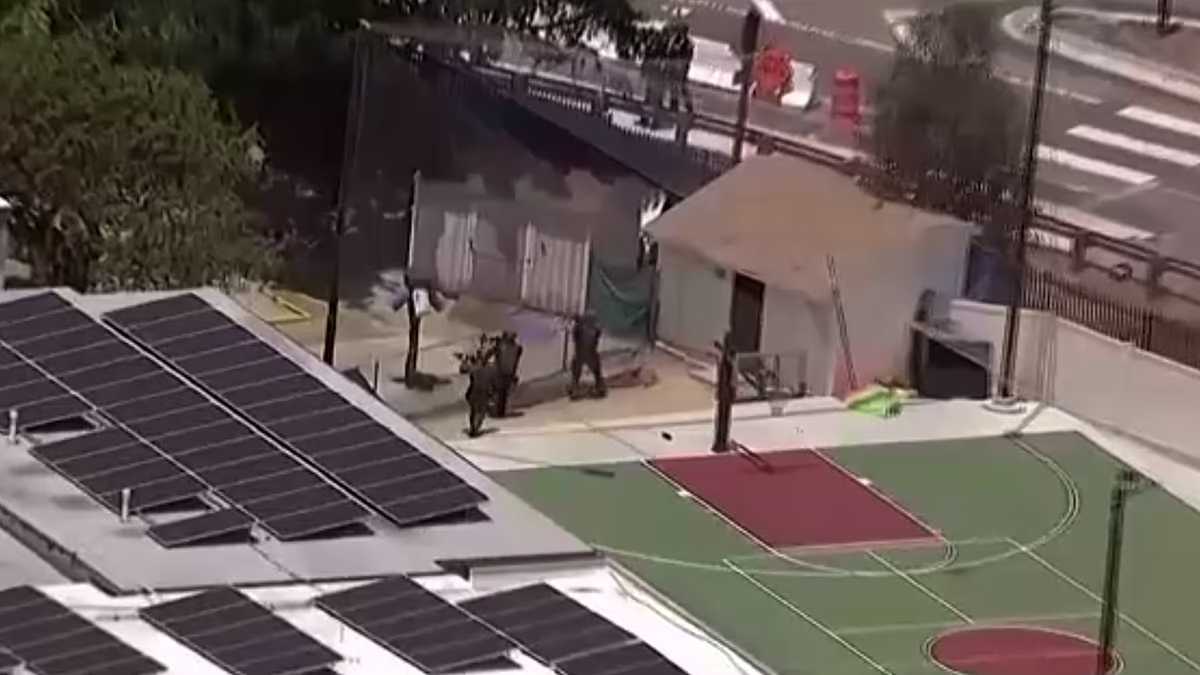
The official response was swift and overwhelming, a testament to the hard-learned lessons from tragedies past. Aerial footage captured from news helicopters painted a surreal and somber tableau. The familiar architecture of the mosque and its surrounding complex, usually a scene of bustling community activity, was now encircled by a sea of flashing red and blue lights. Dozens of police cruisers, SWAT vehicles, fire trucks, and ambulances converged, creating a formidable perimeter that sealed off the area. Heavily armed officers in tactical gear took up strategic positions, their postures tense and vigilant, with some using vehicles and structures as cover, their weapons trained on the building’s entrances. The juxtaposition of these symbols of defense against a place of worship was jarring—a visual representation of a world where sacred spaces are no longer immune to the chaos outside. This massive mobilization, while reassuring in its display of force, also underscored the grave seriousness of the threat, amplifying the anxiety for those awaiting news.
Amidst the cacophony of sirens and the sterile commands crackling over police radios, a different, more human story was unfolding simultaneously. Within homes and on smartphones across San Diego and beyond, panic and prayer intersected. Family members frantically tried to reach those who might have been at the center for evening classes or prayers, their calls going straight to voicemail, each unanswered ring deepening their fear. Community group chats and social media feeds exploded with pleas for information, with messages reading “Is anyone there?” and “Please, let us know you’re safe.” In living rooms and kitchens, people huddled around televisions and devices, clinging to every fragment of information from the aerial shots, searching for any sign of movement, any indication of resolution. This digital vigil, a modern phenomenon of collective anxiety, connected a scattered community in shared terror, proving that the trauma of such an event radiates far beyond the physical crime scene.
The Islamic Center itself, like thousands of mosques across America, is far more than a building for Friday sermons. It is a heartbeat of community life—a place where children learn Arabic on weekends, where new immigrants find fellowship and support, where families gather for Eid celebrations and communal meals, and where interfaith dialogues are held to build bridges with neighbors. To see it targeted is to attack this entire ecosystem of belonging. For American Muslims, this incident, even before the full facts were known, tapped into a deep well of historical hurt and vulnerability, evoking memories of the shootings in Christchurch, Quebec City, and Oak Creek. It reinforced a painful awareness of being perpetually “other,” of having their places of worship viewed as potential targets simply because of their faith. This psychological toll—the burden of having to justify your safety and your place in society—is an enduring injury that lingers long after the police tape is taken down.
After what undoubtedly felt like an eternity for those waiting, the tense standoff reached a critical juncture. Law enforcement, having meticulously secured the perimeter and likely utilized negotiators and intelligence, moved to resolve the situation. While the initial, terrifying “active shooter” reports sent the community and first responders into the highest state of alert, the resolution, thankfully, did not mirror the horrors of other such tragedies. Authorities worked to secure the scene, methodically ensuring no ongoing threat remained, allowing emergency medical teams to assess any needs. The collective sigh of relief that washed over the community was palpable but complex—tinged with exhaustion, residual fear, and a torrent of questions. The immediate crisis was averted, but the process of healing and understanding was only just beginning.
In the days and weeks that follow, the narrative will inevitably shift from breaking news coverage to a deeper, more challenging conversation. Law enforcement will continue its investigation into the precise motives and circumstances, and the community will begin the arduous work of emotional repair. There will be vigils where people of all faiths will stand in solidarity, offering flowers and messages of support. Security protocols at mosques nationwide will be reviewed yet again, a sad necessity in the modern age. But the most profound response will be quieter and more resilient. It will be seen in the determination of the congregation to return to their mosque, to pray in the very space that was violated, reclaiming it with their presence. It will be heard in the voices of community leaders advocating against hate and for unity. The attack on the Islamic Center of San Diego was an attempt to sow fear and division. The human response, however, is ultimately defined by the choice to reaffirm faith, to strengthen community bonds, and to stand defiantly for the peace that the center was always meant to embody. The true story is not just one of a threat, but of the unwavering courage and compassion that rises to meet it.