


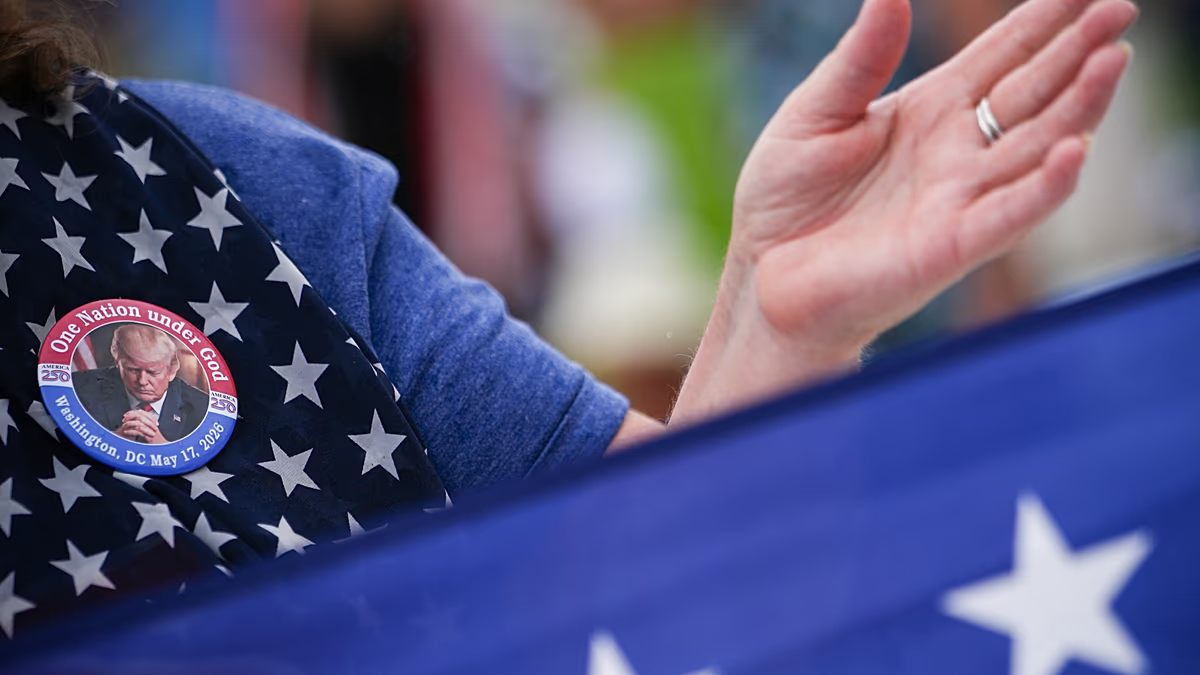
Under the bright sun and sweeping skies of the National Mall, thousands gathered, united by a powerful fusion of faith, national identity, and political allegiance. The scene was a vivid tapestry of America’s cultural currents: hymns echoed alongside the rustle of American flags, signs proclaiming “Jesus Saves” waved beside those endorsing a political figure, and prayers for national healing were offered against the monumental backdrop of the nation’s capital. This event, formally tied to the ongoing commemorations leading to America’s 250th anniversary, transcended a simple patriotic ceremony. It was a profound expression of a particular worldview, one where Christianity is seen not just as a private faith but as the essential bedrock for the country’s identity and future prosperity. The very location—the symbolic heart of American democracy—lent the gathering a weighty sense of purpose, framing the day’s devotions as a plea for the soul of the nation itself.
The atmosphere was less that of a political rally and more of a vast, open-air worship service. The program was built on the pillars of contemporary Christian culture, featuring stirring musical performances from popular faith-based artists and impassioned speeches from a roster of religious leaders. These orations wove together scripture, American history, and calls for personal and national repentance, creating a narrative in which the country’s challenges—from cultural division to moral decline—could only be solved by a collective return to religious principles. The crowd, a sea of people holding Bibles and wearing patriotic attire, participated not as passive spectators but as a congregation, singing along to worship songs and offering murmured “amens” to the prayers spoken from the stage. It was a demonstration of a vibrant and politically engaged segment of the American electorate, for whom spiritual revival and national renewal are inextricably linked.
The event reached its symbolic climax with a brief but significant video appearance by former President Donald Trump. From off-site, he read a passage from the biblical book of 2 Chronicles: “If my people, who are called by my name, will humble themselves and pray and seek my face and turn from their wicked ways, then I will hear from heaven, and I will forgive their sin and will heal their land.” This verse, a longtime favorite in certain Christian circles for national reflection, served as the day’s central thesis. In Trump’s delivery, it acted as a powerful connective thread, positioning him not merely as a political candidate but as a potential instrument in a divine plan for national restoration. For his supporters in the audience, this moment reinforced his alignment with their values and framed their political support as part of a larger spiritual duty. It presented a vision where voting is an act of faith, and electoral victory is a step toward fulfilling a biblical promise.
This gathering, however, exists within a complex and often contentious national dialogue about the proper role of religion in public life. To its participants, it was a righteous and necessary stand for the nation’s founding principles, a joyful reclaiming of public space for worship and a positive vision for the future. To many observers outside this tradition, the seamless blending of partisan political figures with evangelical Christian worship raises enduring questions about the separation of church and state and the potential for faith to be co-opted as a campaign tool. The rally highlighted the deep and sometimes conflicting understandings of American identity: is it a secular republic with freedoms for all beliefs, or is it a nation whose destiny is uniquely tied to a specific Christian heritage? The event on the Mall was, in essence, a massive public argument for the latter perspective.
Beyond the immediate political implications, the rally served as a poignant snapshot of a community seeking assurance and hope. In a time of widespread anxiety—over cultural change, political polarization, and global instability—the message offered was one of clear resolution and divine intervention. The act of coming together in such a vast number provided a sense of solidarity and collective strength. The prayers for healing, though filtered through a particular theological and political lens, spoke to a universal human longing for security and unity that transcends any single group. There was a palpable desire to anchor the nation’s turbulent present in what was perceived as the solid rock of eternal truth and tradition.
Ultimately, the day on the National Mall was more than a news story; it was a living portrait of a significant dimension of the American experience. It showcased the powerful emotions that arise when deep faith, fierce patriotism, and political conviction converge. Whether viewed as an inspiring revival or a concerning politicization of faith, its impact lies in its demonstration of the potent forces that continue to shape the nation’s journey toward its semiquincentennial. The echoes of the hymns sung that day, the images of flags against the Washington Monument, and the recited words of an ancient king about healing a land, all contribute to the ongoing and deeply human story of how a diverse nation defines itself, seeks purpose, and envisions its path forward.