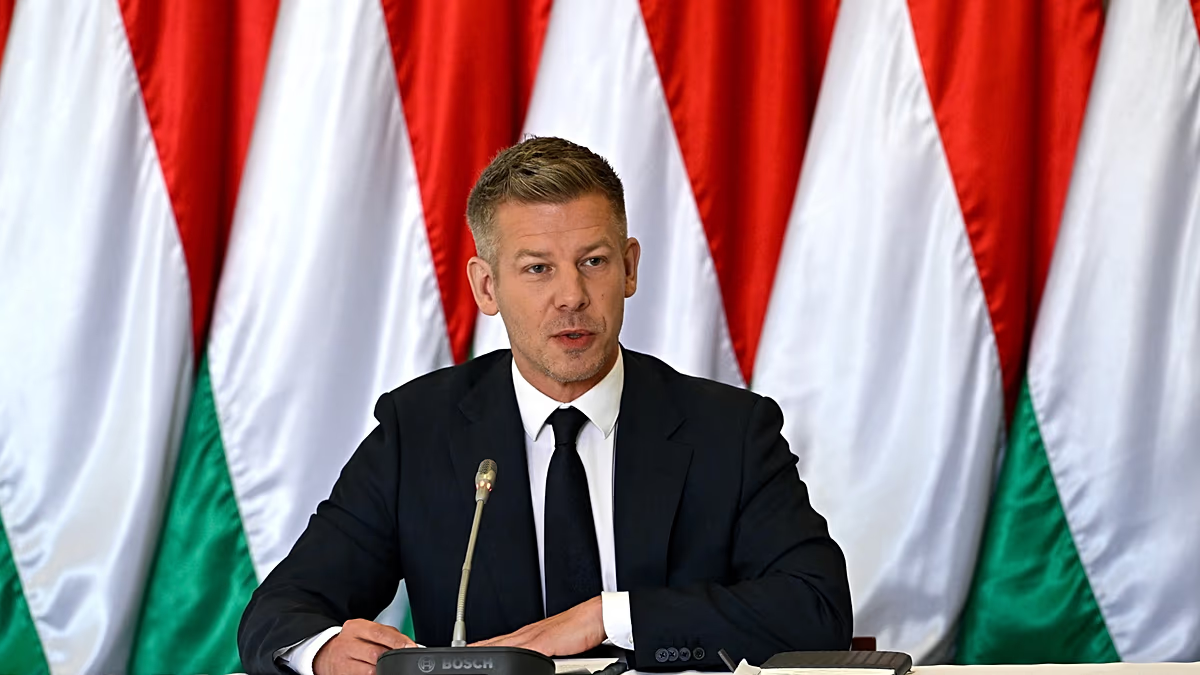


Following a historic change in government, Hungary is signaling a new willingness to engage with Ukraine on a long-standing and contentious issue: the rights of the Hungarian minority in Ukraine’s Transcarpathia region. This shift follows the decisive electoral victory of Péter Magyar, whose administration has replaced the 16-year rule of Viktor Orbán. Under Orbán, Hungary had blocked the start of formal EU accession talks for Ukraine, specifically halting progress on the crucial first “cluster” of reforms related to rule of law and financial control. This obstruction was rooted primarily in Budapest’s dissatisfaction with the treatment of the ethnic Hungarian community in western Ukraine. The new government, while inheriting this deep-seated concern, appears to be adopting a more pragmatic and diplomatic approach to resolving the conflict.
The core of the dispute revolves around the sizable Hungarian population in Transcarpathia. For years, Budapest and Kyiv have been at odds over issues of language, education, and cultural rights for this community. The previous Orbán administration crafted an 11-point plan aimed at restoring these rights, and Hungary considers the implementation of these measures a prerequisite for supporting Ukraine’s EU integration. Initial signs of a potential thaw emerged recently when a Hungarian ambassador indicated at an EU meeting that Budapest is now ready to engage for “concrete results.” Furthermore, Prime Minister Magyar has announced technical consultations with Kyiv and expressed a desire to meet President Volodymyr Zelenskyy in early June in Berehove, a town central to the Transcarpathian Hungarian community, to directly address these issues.
This renewed dialogue is occurring within a critical European framework. The EU itself has mandated that Ukraine must adopt and implement an ambitious action plan on national minorities—a category that includes not only Hungarians but also Romanians, Poles, and Bulgarians—as part of its accession process. The issue is poised to be a key agenda item at upcoming European Council meetings. The office of Council President António Costa has indicated that moving forward with Ukraine’s accession talks will depend on announcing concrete progress, specifically regarding the lifting of Hungary’s veto. President Costa has personally conveyed to Magyar that further steps must be preceded by respect for the minority’s rights.
Hungary’s conditions for moving forward remain clear. According to Márton Hajdu, head of the Foreign Affairs Committee, the fundamental requirement is “legally guaranteed language, education, and cultural rights for the Hungarian minority in Transcarpathia as soon as possible.” A source close to the Hungarian government suggested that if Ukraine fully implements the 11-point plan—and if the representatives of the Transcarpathian Hungarian community themselves approve the outcome—Hungary would likely support opening the first major negotiation chapter. However, a potential complication lies in the plan itself; it may contain certain “hidden landmines,” or politically sensitive demands from the Orbán era, that could make complete implementation challenging for Ukraine.
The response from Kyiv has been cautiously positive. President Zelenskyy has stated that Ukraine is “working on all issues” related to the ethnic Hungarian minority, affirming that they are “our citizens, just like everyone else.” Ukrainian Foreign Minister Andrii Sybiha has welcomed the election results in Hungary as a “pivotal moment” for European integration and expressed readiness to engage with the new government on all issues to restore trust. Hungary’s Deputy Prime Minister, Anita Orbán, confirmed that expert-level consultations involving the Hungarian community from Transcarpathia will now begin. These statements are viewed in Budapest as constructive, opening a path for negotiation that seemed firmly closed under the previous administration.
While this diplomatic opening is significant, it represents only the first step on a complex path. Lifting the Hungarian veto would merely unblock the start of the EU accession process for Ukraine, a process that involves rigorous negotiations across many chapters and requires consensus from all 27 member states. Other EU countries have not yet publicly stated their positions on this specific hurdle and may only do so as negotiations advance. Nevertheless, the change in Hungary’s political landscape has created a tangible opportunity for reconciliation. By shifting focus from obstruction to technical consultation and by emphasizing the direct involvement of the Transcarpathian community itself, the new Hungarian government is fostering a more collaborative atmosphere. This could finally allow a persistent regional grievance to be addressed through dialogue, potentially transforming it from a major obstacle into a manageable issue within Ukraine’s broader journey toward European integration.