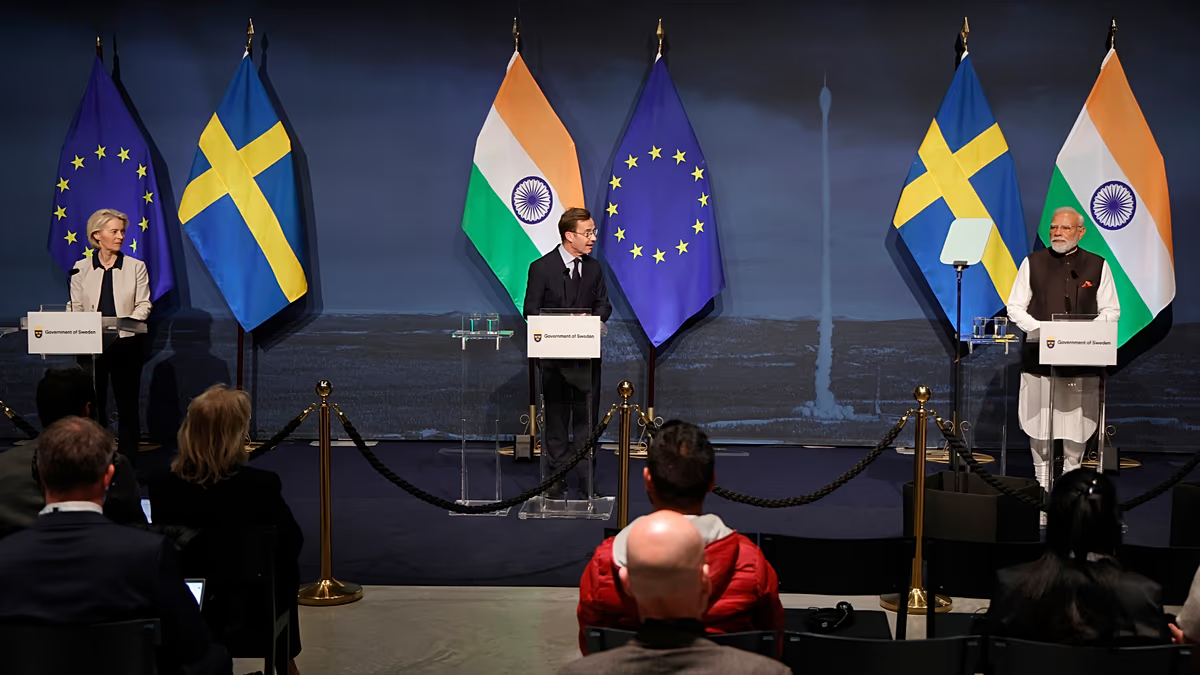


In late May 2026, Indian Prime Minister Narendra Modi embarked on a significant diplomatic tour across Europe, underscoring India’s growing role as a global economic and strategic partner. The journey, spanning Sweden, the Netherlands, Norway, and Italy, was not merely a series of routine meetings but a concerted effort to weave stronger threads of cooperation between a rising India and the European continent. This tour highlighted a mutual recognition: Europe seeks reliable partners in a shifting world order, and India offers a vast market, technological prowess, and strategic stability. The second stop in Sweden became a focal point, where in Gothenburg, Modi convened with Swedish Prime Minister Ulf Kristersson and European Commission President Ursula von der Leyen at a high-profile business roundtable. The setting was symbolic—a forum for industry leaders—emphasizing that the core of this renewed relationship is grounded in tangible economic growth and shared prosperity.
The centerpiece of discussions was the monumental EU-India trade agreement, signed earlier in the year and poised for finalization by year’s end. President von der Leyen aptly termed it the “mother of all deals,” a pact encompassing nearly two billion people and a quarter of the world’s economic output. In practical terms, it represents a historic opening: the EU will liberalize 99.5% of its tariff lines for Indian goods over seven years, while India will eliminate or reduce duties on 96.6% of EU exports. This agreement transcends mere statistics; it is a conscious geopolitical and economic alignment. At a time when global trade is increasingly fragmented by tensions, this deal signals a commitment to rules-based, mutually beneficial commerce. However, von der Leyen astutely noted that “trade is only half of the equation,” advocating for a complementary investment agreement to complete the puzzle. This vision frames a future where capital, innovation, and enterprise flow freely between the two regions, creating a truly integrated economic partnership.
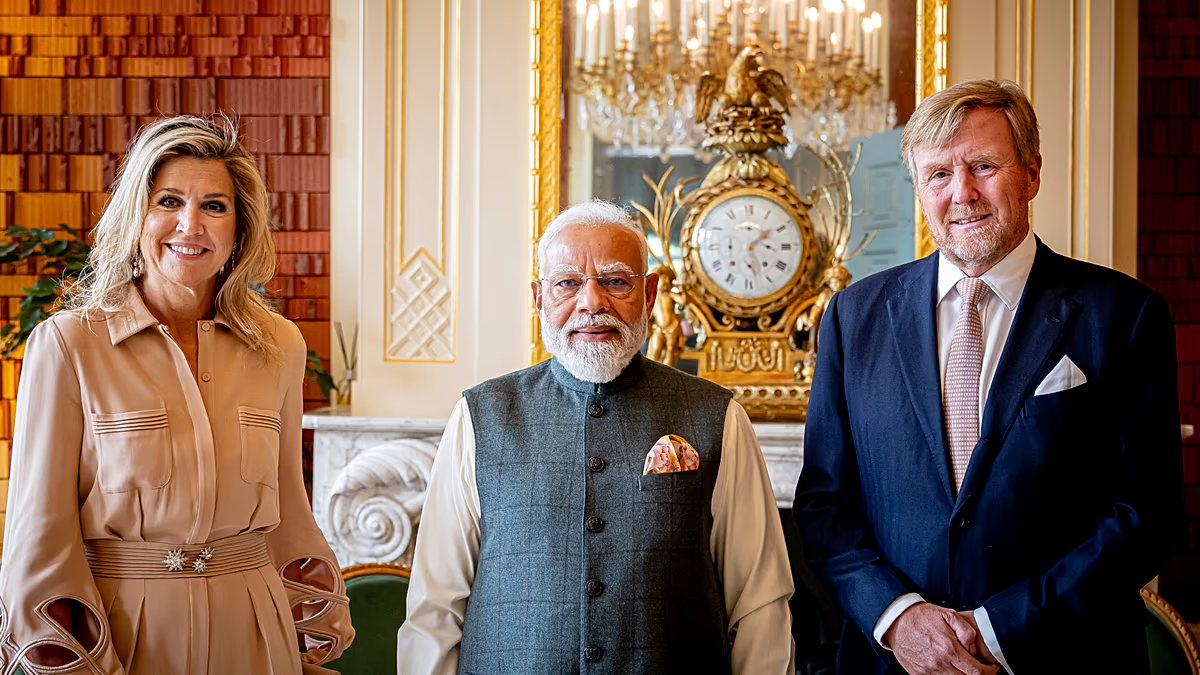
Beyond the overarching EU framework, Modi’s visit deepened bilateral ties with individual nations, each with unique synergies. With Sweden, discussions expanded beyond trade to include critical domains like innovation, defence, and technology—areas where Swedish expertise and Indian dynamism naturally converge. Prior to this, in the Netherlands, Modi and Prime Minister Rob Jetten signed a strategic partnership focusing on trade, technology, and clean energy, highlighting the Dutch role as a gateway to European markets and a leader in sustainable solutions. These bilateral threads are essential, as they tailor cooperation to specific national strengths and interests, creating a multi-layered and resilient network of relationships. It reflects a nuanced approach where India engages with Europe both as a collective entity and as a constellation of individual partners with distinct value.
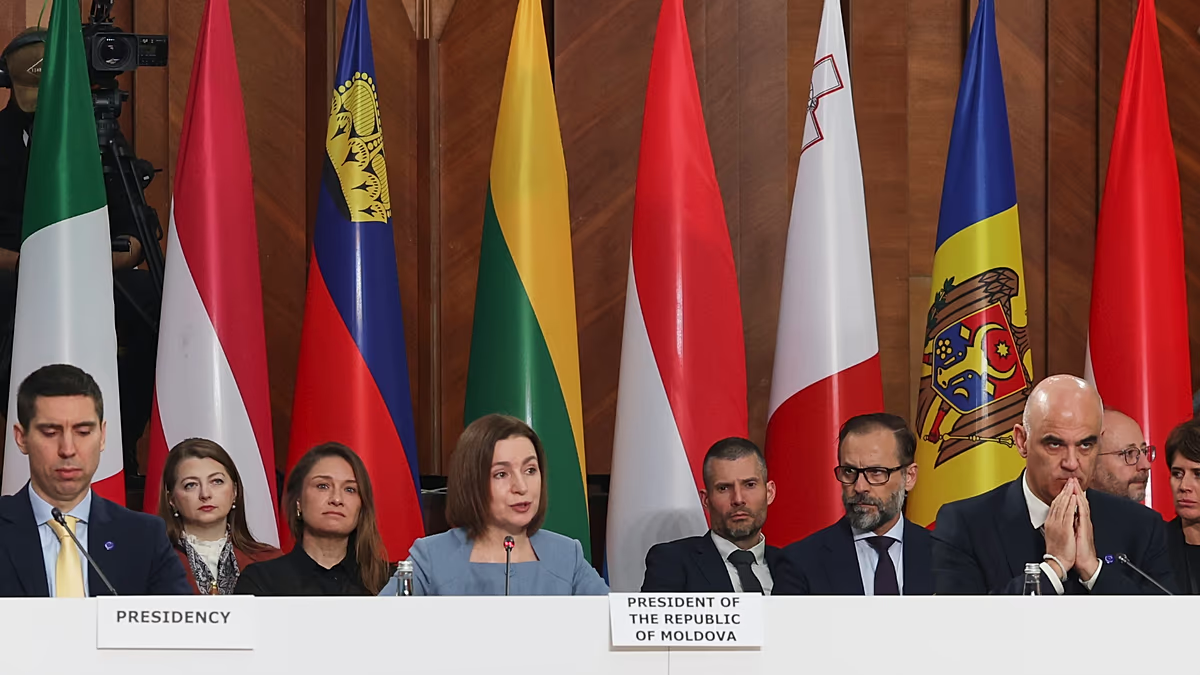
The next phase of the tour, the third India-Nordic Summit in Oslo, further illustrated this multi-dimensional strategy. Here, Modi met with the leaders of Norway, Sweden, Denmark, Finland, and Iceland, turning attention to regional cooperation on shared priorities. The agenda focused deliberately on technology, renewable energy, defence, space, and the Arctic region. This Nordic engagement is particularly strategic; these nations are pioneers in green technology and Arctic governance, areas of immense importance to India’s sustainable development and scientific frontiers. The summit transformed the dialogue from purely economic terms to collaborative problem-solving on global challenges, positioning India as a stakeholder in critical future-oriented sectors.
The final stop in Italy served to reinforce the strategic depth of these European ties. Meeting Prime Minister Giorgia Meloni, Modi built upon a 2024 “Joint Strategic Action Plan” that commits both nations to enhanced cooperation in security and defence. Importantly, the dialogue also included promoting “safe and legal migration channels,” a topic of profound human and social dimension. This aspect of the talks acknowledges the lived reality of global mobility, seeking to structure it within frameworks of legality and safety, benefiting both societies. It is a reminder that beyond treaties and tariffs, diplomacy ultimately shapes the lives and opportunities of citizens.
Prime Minister Modi’s European tour, therefore, was a narrative of evolving partnership. It moved from the broad, historic canvas of a EU-India trade deal down to the specific, actionable collaborations with individual nations and regional groups. The conversations balanced hard economics with soft diplomacy, covering investment, defence innovation, clean energy, and human migration. Collectively, they painted a picture of a relationship maturing from casual engagement to a structured, interdependent alliance. For Europe, a confident and growing India represents a democratic, stabilizing force and an economic engine. For India, Europe offers technology, sustainable models, and a gateway to global credibility. This tour was a step in solidifying that bond, aiming not just for a moment of agreement, but for a durable era of shared progress and mutual trust.