

Here is a humanized and expanded summary of the provided content, structured into six paragraphs.
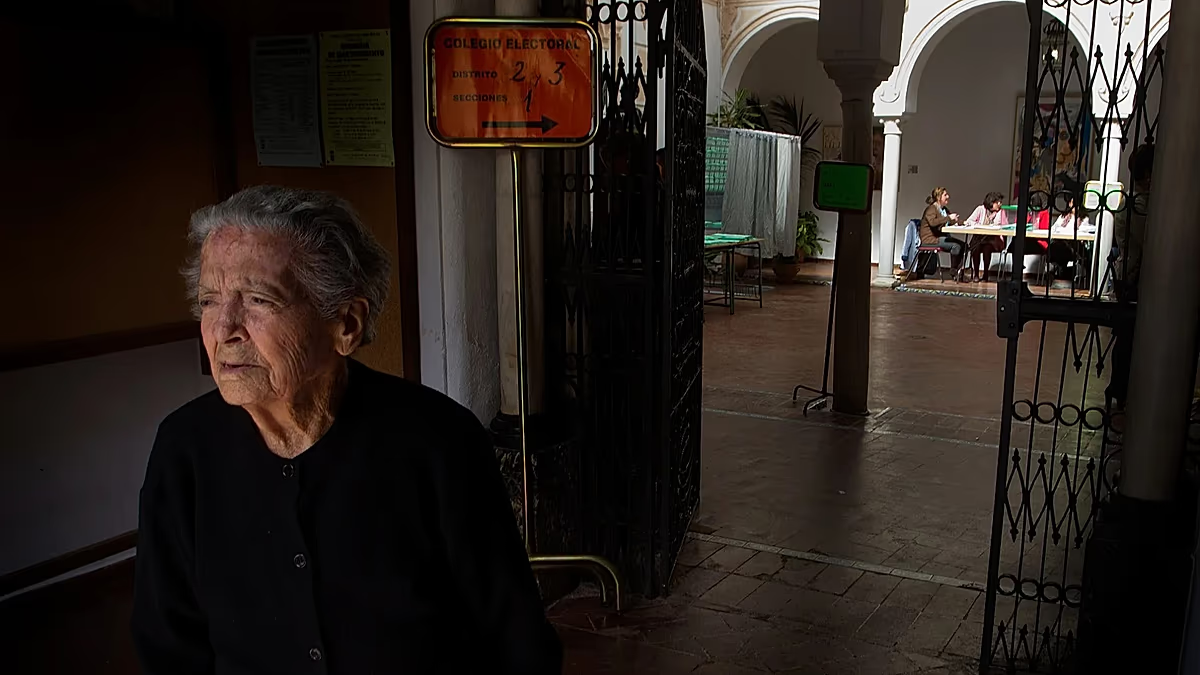
Andalusia stands at a pivotal moment. As Spain’s most populous region and a vital economic engine, its regional election this Sunday is far more than a local affair. After two intense weeks of campaigning, filled with passionate messages, striking imagery, and unavoidable controversies, the political landscape has been sharply defined. The final rallies and closing arguments have underscored that this is a vote watched with keen interest not just within Spain, but across Europe. In a continent navigating profound changes, the outcome here could signal shifts in political alliances and influence the delicate national balance of power in Madrid. All of this hangs in the air as Andalusian citizens prepare to have their say.
The conservative People’s Party (PP), led by the incumbent regional president Juanma Moreno, has closed its campaign with a clear and consistent mantra: stability through a strong majority. Moreno’s strategy has been to present himself as a dependable and approachable steward of Andalusia’s progress, warning against the instability of fragmented parliaments and coalition dependencies. This message has been amplified through a modern, personality-driven communication campaign, heavily focused on social media to reinforce his image as a pragmatic and relatable leader. The PP’s closing argument is essentially a plea to their voters not to become complacent, framing a robust victory as the only guarantee for continued, uninterrupted governance.
In contrast, the Socialist Party (PSOE) has fought a campaign aimed at energizing a base they fear may be disheartened or disengaged. With national figure María Jesús Montero leading the charge, their final push has been a direct appeal to core constituencies: women, young people, and the middle class. The Socialist message warns that the comfortable lead projected for the PP could lead to policies resembling those of the hard right, including potential cuts to cherished public services. However, their campaign momentum was dented by a significant misstep, when a party spokesperson referred to the deaths of two Civil Guard officers in a drug trafficking operation as “workplace accidents.” This comment cast a shadow over their final days, forcing them into damage control and complicating their effort to present a cohesive front.
On the right flank, Vox has approached the finish line with a posture of assertive leverage. Its leader, Santiago Abascal, has dismissed the notion of a “useful vote” for the PP as a trick, positioning his party as the indispensable guardian of its core principles. Vox’s rhetoric has hardened around issues of national identity, immigration control, and tax cuts, making it clear they intend to be decisive kingmakers, not passive supporters. Their closing message is a warning to both the PP and the electorate: their support after the election will come at a price, and they are prepared to defend their political space aggressively against any dilution of their agenda.
The left of the political spectrum presents a fractured picture. Adelante Andalucía has pursued a strategy of stark confrontation, with candidate José Ignacio García claiming to have “torn off the mask” from both Moreno’s PP, which they accuse of empty managerialism, and Vox, portrayed as serving purely economic elites. Their campaign has consciously embraced a tone of joy and street-level activism, offering itself as the only true bulwark against the entire right. Meanwhile, the coalition Por Andalucía, led by Antonio Maíllo, has campaigned on a markedly different note, advocating for a “clean” and constructive debate focused on policy. Maíllo has criticized what he calls the PP’s “dirty tricks” and the politics of fear, positioning his group as a steadily growing, proposal-oriented alternative amidst the campaign noise.
As the sun sets on the campaign and the posters come down, Andalusia moves from a season of words to a day of decision. The diverse strategies—from calls for stable majorities and urgent mobilization to hardline warnings and joyful resistance—now converge at the ballot box. This election is a microcosm of broader European tensions between incumbency and change, fragmentation and consolidation. The voters of Andalusia, weighing these competing visions for their region’s future, will deliver a verdict that will resonate far beyond its sunny borders, setting a new course in one of Spain’s most historically and politically significant territories.