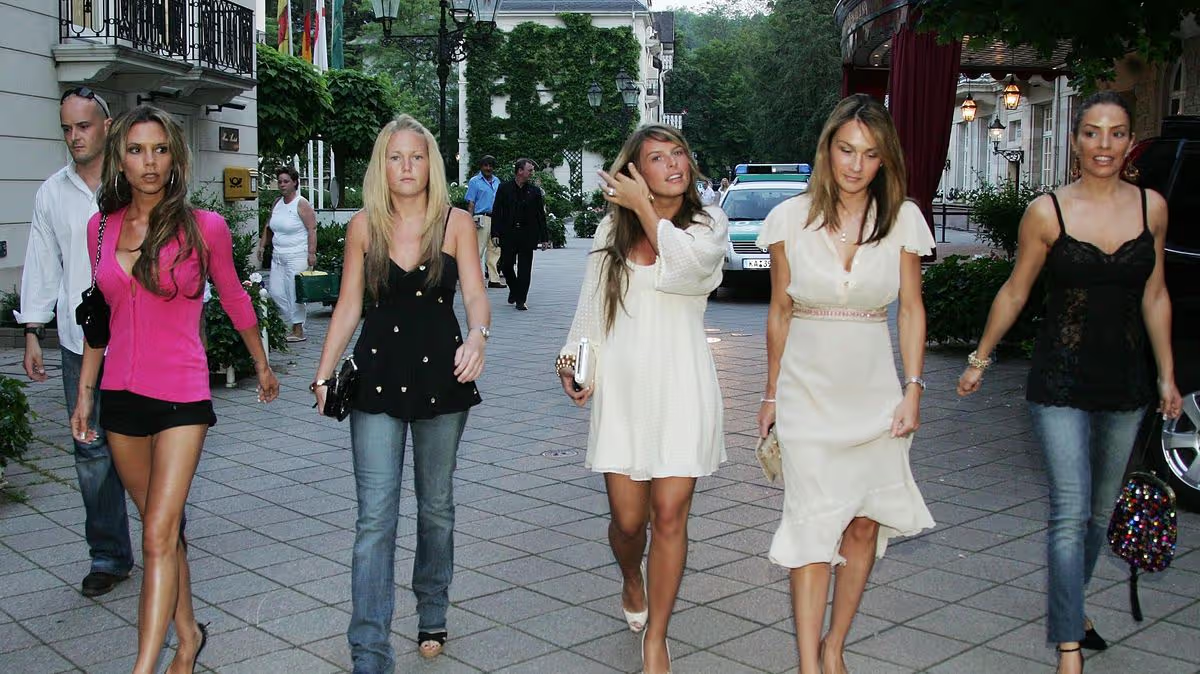




The 2006 FIFA World Cup in Germany will forever be remembered in England for two parallel, and wildly contrasting, stories. While the so-called “Golden Generation” of English footballers, including David Beckham, Wayne Rooney, and Steven Gerrard, suffered yet another heartbreaking quarter-final defeat on penalties, a different group was capturing the world’s attention from the sleepy spa town of Baden-Baden. As chronicled in a recent BBC documentary, the Wives and Girlfriends—or “WAGs,” a term famously coined by the Daily Mirror’s 3am column—staged a dazzling, chaotic, and ultimately triumphant spectacle that eclipsed the tournament itself. Figures like Coleen Rooney, Alex Curran, Victoria Beckham, and Cheryl Tweedy became global celebrities in their own right, their daily pilgrimages between luxury boutiques, wine bars, and high-end restaurants dominating the front pages. As former England captain Rio Ferdinand succinctly put it, they became “bigger superstars than the players.”
The scene in Baden-Baden was one of surreal excess and unforgettable vignettes. It was a world where pop superstars mingled with footballing icons, and where bar bills regularly soared into the thousands. One legendary night at the Italian restaurant Garibaldi’s saw the bar tab exceed £3,000 and culminated with Gary Neville’s father, Neville Neville, leading a raucous singalong while clutching a replica World Cup trophy—a moment immortalised by the Mirror’s headline: “Neville Neville in Baden-Baden.” The entourage grew with the arrival of families from Liverpool, dubbed the “House of Scouse,” and even included a tabloid journalist being unceremoniously thrown into a nearby river. Amid the glittering chaos, the WAGs navigated the intense scrutiny with a mix of defiance and humour; Alex Curran, for instance, famously joked with a reporter about her tabloid star rating, insisting, “I’m at least an eight.”
However, this era of unabashed glamour and media frenzy was not without its critics, both at the time and in retrospect. Within the footballing establishment, the Baden-Baden circus was viewed as a significant distraction. Rio Ferdinand retrospectively described the episode as “an absolute shambles,” and Wayne Rooney recalled “absolute mayhem.” The perception grew that the carnival atmosphere surrounding the WAGs contributed to the team’s on-field failure, creating a narrative of misplaced priorities. The late manager Sven-Göran Eriksson’s partner, Nancy Dell’Olio, claimed the women had “tried to keep a low profile,” a statement that now seems almost comical given the relentless media spotlight. This period marked a peak in both the cultural power and the subsequent backlash against the WAG phenomenon.
In stark contrast, the modern approach to player welfare and family inclusion under managers like Gareth Southgate and now Thomas Tuchel represents a philosophical sea change. The Football Association now orchestrates structured family days, where children, grandparents, and siblings are invited to visit the squad’s training bases, prioritising morale and emotional support over paparazzi opportunities. For the upcoming 2026 tournament across the USA, Mexico, and Canada, this supportive model will be more crucial than ever, given the vast distances and long duration away from home. The new generation of partners is planning to share accommodation near the team’s base in Kansas City, fostering a close-knit community. This group is also distinctly different in profile: they are as likely to be influencers, interior designers, marketing experts, or university graduates as they are to be celebrities, reflecting a more independent and professional ethos.
Today’s WAGs are building their own legacy—one of mutual support and shared experience. Relationships forged during previous tournaments have created lasting bonds, such as the close friendship between Jordan Pickford’s wife, Megan, and Harry Maguire’s wife, Fern. This summer, a new cohort will come together, including figures like Bukayo Saka’s girlfriend Tolami Benson, a university graduate, and Reece James’s partner Mia McClenaghan. The timing of the tournament, encompassing Father’s Day, will make messages from home and personal mementos invaluable for players like Ollie Watkins, Anthony Gordon, and Jarrod Bowen, who are now young fathers themselves. This environment is a world away from the “invisible beings” described by Daphne Cohen, wife of 1966 hero George Cohen, who recalled the wives of her era being sidelined entirely.
The journey from the glittering, unregulated extravagance of Baden-Baden to the managed, family-focused support system of today illustrates football’s evolving relationship with fame, family, and performance. The 2006 WAGs etched themselves into pop culture history through sheer force of personality and spectacle, for better or worse. Their modern counterparts are writing a quieter, but perhaps more profound, story of partnership and stability. As England heads to North America, the hope is that this supportive, close-knit community off the pitch can help foster the unity and focus needed on it. Should the team finally achieve glory, the celebration will undoubtedly include the families—not as separate superstars, but as an integral part of the team’s journey, fulfilling Daphne Cohen’s promise of “wonderful, wonderful times” for a new generation.