



Of course. Here is a humanized and expanded summary, structured into six paragraphs.
The world of football fandom is often a sacred, inherited tradition, passed from parent to child with a sense of solemn duty. For Prince William, a devoted Aston Villa supporter, this parental duty once came with a very specific instruction for his eldest son, Prince George: you may support any club you like, except Chelsea. This light-hearted but firm decree, shared during a 2019 interview, highlighted the Prince of Wales’s passionate allegiance to Villa and a playful disdain for the London club. However, as any parent knows, children have their own minds and passions, and royal children are no exception. Prince George, now 12, has evidently developed a fondness for Chelsea, who are preparing to face Manchester City in this season’s FA Cup final. This has led William to gracefully soften his stance, evolving from a father laying down the rules to one observing and accepting his son’s independent choices.
William’s own commitment to Aston Villa is deep and public. He has been a regular at Villa Park for years, his enthusiasm unmistakable. Recently, he was captured on camera in a moment of pure, unguarded joy, punching the air as Villa secured a 4-0 victory over Nottingham Forest to reach the Europa League final. His connection extends beyond the stands; after that pivotal match, he visited the dressing room to congratulate the players and manager Unai Emery, sharing in the collective triumph. This journey with Villa is profoundly personal—the club is on the cusp of its first major trophy since 1996, and William’s emotional investment is clear. It is against this backdrop of his own fervent loyalty that his relationship with his son’s football preferences unfolds.
The initial “ban” on Chelsea support was, of course, more about familial teasing and club rivalry than a serious edict. Yet, William’s shift in perspective is notable and speaks to a modern parenting approach, even within the royal family. By 2020, during Frank Lampard’s first tenure as Chelsea manager, William had already begun to reconsider. He expressed on the That Peter Crouch Podcast that Lampard’s influence seemed to have positively changed the club’s culture and values. For William, the critical factor became not the club’s badge, but its ethos—how it treats its players and sets an example for young fans. He emphasized his hope that his children, when attending matches, would “come away loving what they’ve seen” and find role models whose behavior was admirable. The focus moved from identity to integrity.
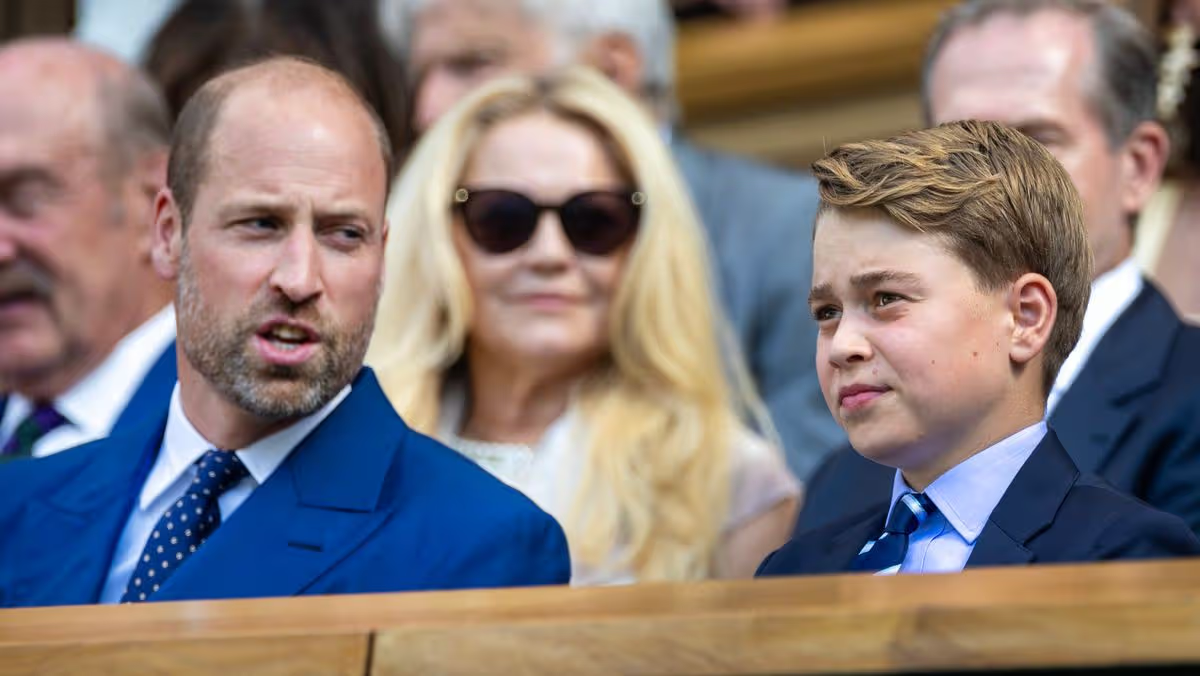
This evolution has now reached a point of full acceptance. In a recent conversation with TNT Sports, while attending a Villa Champions League match with George, William openly stated, “I’m genuinely open to whoever they support.” He acknowledged his own bias, noting that since his children come to Villa games, they might naturally lean that way. But the door is now firmly open. The previous directive has been replaced by an invitation for George, and his siblings Charlotte and Louis, to discover their own authentic affiliations. This reflects a broader theme in William’s public role: balancing tradition with a relatable, contemporary openness.
The upcoming FA Cup final places George’s reported club preference in the spotlight. Chelsea, under interim management after a turbulent season, face the formidable Manchester City. For the young prince, it will be a chance to see his team compete for a historic trophy. Meanwhile, his father will be eagerly anticipating Villa’s own European final just days later. It creates a charming parallel—both father and son, with their distinct club loyalties, sharing the experience of a season climax, each hoping for their own team’s success. Football, here, becomes a bond rather than a point of division.
Ultimately, this story transcends royal status and club rivalries. It is a universal tale of parenting: the journey from imposing our own passions on our children to supporting them as they cultivate their own. Prince William’s path from saying “anyone but Chelsea” to being “genuinely open” mirrors that of many fathers who have learned to let go, to share the love of the game itself above allegiance to a specific team. It highlights how sport can serve as a conduit for connection, growth, and gentle lessons in independence within a family. As William cheers for Villa and George (likely) cheers for Chelsea, their shared enjoyment of football’s drama and community remains the true, enduring victory.