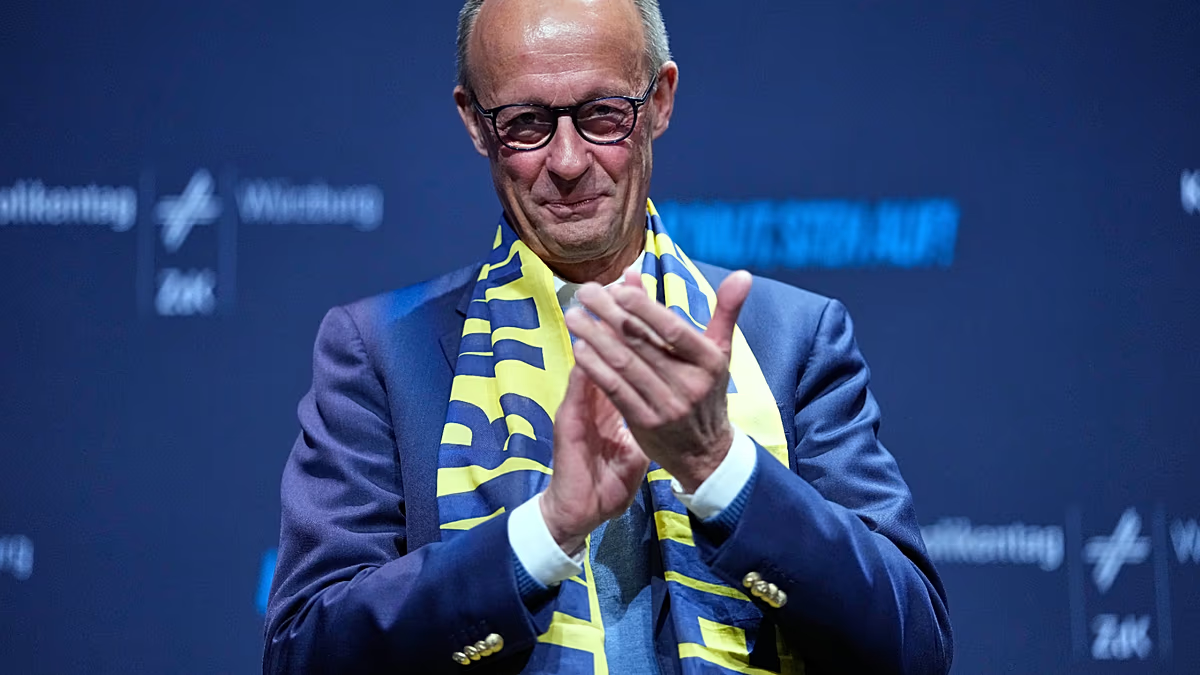


On a May afternoon in 2026, at the German Catholic Convention in Würzburg, Chancellor Friedrich Merz addressed a nation growing weary of political gridlock. Before a hall of over a thousand people, the conservative leader offered a rare and candid self-assessment of his first year governing in a coalition with the Social Democrats. He acknowledged a government bogged down by internal conflict, admitting that while debate is essential to democracy, it must ultimately lead to action. With critical reforms on taxes, labor, pensions, and bureaucracy stalled ahead of the summer recess, Merz conceded that the public sees a coalition marked by “too many arguments and too little being achieved.” This introspection was framed by dismal polling; a recent survey showed only 13% of Germans satisfied with the government’s work, while the Chancellor’s personal approval had plummeted to 16%. It was against this backdrop of dissatisfaction that Merz promised a pivot, vowing to explain his government’s direction with greater clarity and conviction to a skeptical public.
The Chancellor’s attempt to connect with citizens faced immediate disruption during the event, as climate activists interrupted the discussion with heckling and whistles. The incident laid bare the simmering tensions between the establishment and a youth movement demanding more urgent action. After a few minutes of patient silence, the audience rallied, urging the protesters to leave so the dialogue could continue—a moment reflecting a broader public yearning for solutions over spectacle. When order was restored, youth representatives directly challenged Merz, calling for genuine inclusion in political decisions and rejecting stereotypes of laziness. The Chancellor deflected the specific accusation but returned to his core admission: his communication had failed. He pledged to improve, stressing his desire to build public “optimism” and “confidence” in tackling Germany’s challenges, even as the protest highlighted a deep-seated disconnect his words alone could not bridge.
Central to Merz’s message was a call for a national “collective push” to revitalize the German economy and work ethic. He presented a nuanced picture, praising the hard work of many Germans while noting that the country’s average annual and lifetime working hours lag behind other industrialized nations. This framing, intended to motivate, risked being perceived as a critique, demonstrating the very communication pitfalls he sought to overcome. His comments underscored a governing philosophy focused on rallying national effort and productivity to navigate economic stagnation and demographic pressures. However, without concrete policy details or a clear bridge to the concerns of younger generations—who face issues like climate change and housing affordability—this call for collective action risked sounding like a generic appeal for more sacrifice from a public already feeling strained.
The panel took a surprising diplomatic turn when Chancellor Merz voiced pointed criticism of Germany’s most powerful ally, the United States. He stated his “admiration for the country was currently not increasing” and revealed he would no longer advise his own children to study or work there, citing a deteriorating “social climate.” Drawing a contrast, he championed Germany’s model of a social market economy as a preferable alternative to what he implied was America’s “unfettered capitalism.” These remarks, made before a live audience, were a bold and risky gambit, potentially resonating with domestic audiences wary of American influence while risking a severe diplomatic rift. The shadow of recent history loomed large, as past critical comments from Merz had provoked a fierce and personal public rebuke from U.S. President Donald Trump.
In a striking juxtaposition, just hours after his critical remarks in Würzburg, Chancellor Merz took to social media to announce a “good phone call” with President Trump. The post described a coordinated front on urgent global issues: ensuring Iran comes to the negotiating table, reopening the Strait of Hormuz, preventing a nuclear-armed Tehran, and aligning on a peace settlement for Ukraine ahead of a NATO summit. This swift pivot from public criticism to private coordination revealed the delicate, often contradictory, dance of modern diplomacy. It was unclear if Trump was aware of Merz’s convention comments during their call, leaving open the possibility of renewed tensions. The sequence highlighted Merz’s challenging position: articulating a distinct German vision to his citizens while maintaining a functional, necessary partnership with a volatile and sensitive American administration.
The day’s events presented a portrait of a Chancellor at a crossroads. Friedrich Merz openly grappled with his government’s inefficiency, his own declining credibility, and the urgent demand for better communication. His encounters—with protesting youth, questioning citizens, and a formidable foreign ally—illustrated the multifaceted pressures of leadership in a polarized time. The promised “collective push” and the vow for clearer messaging were acknowledgments of these struggles, but they remained promises yet to be realized. As Merz left Würzburg, the fundamental question lingered: Could a leader who acknowledged speaking in ways people did not understand find the right words to unite a fragmented coalition and a weary nation? The path forward would require translating candid reflection into compelling action, both at home and on the world stage.