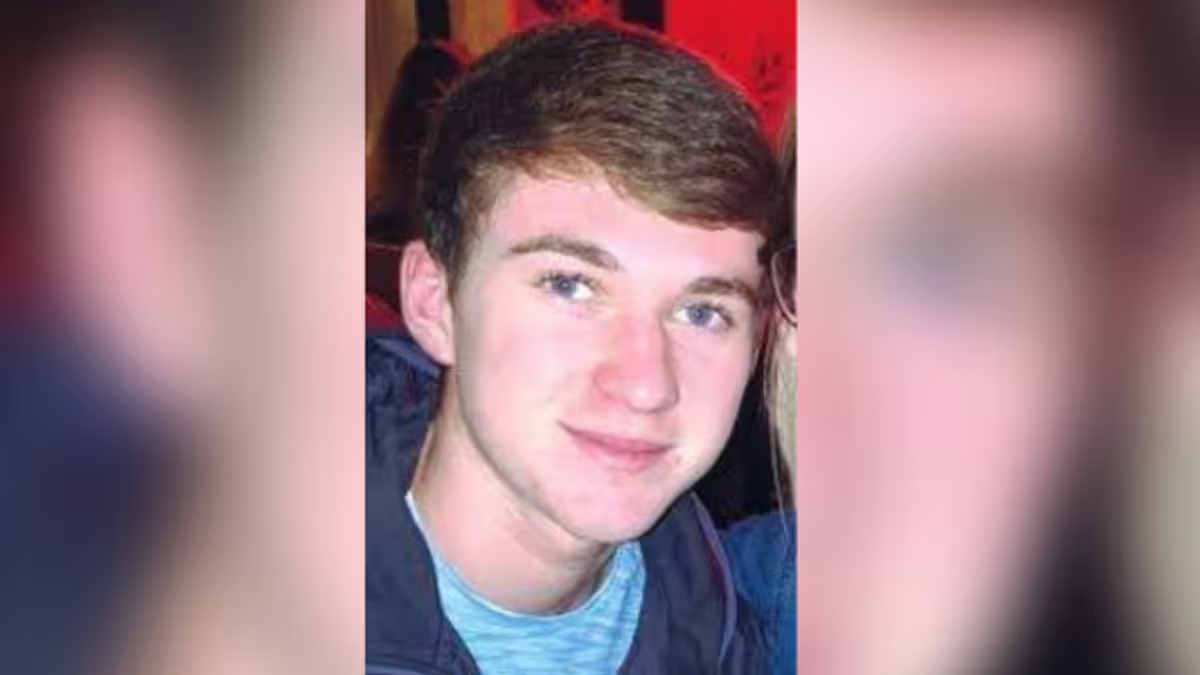



A profound and preventable tragedy unfolded on a quiet December evening in 2024, one that serves as a harrowing reminder of the devastating weight a single, reckless decision can carry. Joe McAldon, a teenager of just 17 years old, had passed his driving test a mere six days prior. Filled with the newfound freedom that a license represents, he collected three friends, including his close companion Max Greenhouse, also 17, for a drive to Clieves Hill in Aughton. This ordinary act of youthful independence would, however, end in catastrophe. Leaving the hill, McAldon drove his Vauxhall Corsa along rural Fir Tree Lane. It was there, shortly after 9pm, that he lost control while travelling at excessive speed. The vehicle careered violently into the stone wall of a farmhouse with a devastating impact, a sound witnesses described as a thunderous bang that shattered the night’s peace, followed by the driver’s screams from within the wreckage.
The immediate aftermath was a scene of chaos and desperate efforts. Emergency services rushed to the location, where paramedics fought to treat the serious injuries sustained by all four teenagers. Despite their frantic work and the best efforts of hospital staff, Max Greenhouse’s injuries proved fatal, and he passed away shortly after arriving at the hospital. The other two passengers, boys aged 16 and 17, survived but were left with serious injuries, their lives irrevocably altered. An ensuing police investigation painted a clear picture of the cause: McAldon had been driving at no less than 57 miles per hour on a road with a 40mph limit. Expert analysis confirmed that the bend where he lost control was entirely negotiable at the legal speed; the fatal crash was a direct result of his dangerous and excessive velocity.
In the wake of the crash, McAldon’s actions compounded the tragedy for those seeking answers and accountability. After being discharged from the hospital, he provided police with a prepared statement claiming he had no memory of the collision and subsequently answered “no comment” to all questions. Now 18, he was charged with causing death by dangerous driving and two counts of causing serious injury by dangerous driving. He later entered guilty pleas to all charges at Preston Crown Court. Returning for sentencing, he was handed a four-year custodial sentence and banned from driving for eight years—a legal consequence that, while significant, pales in comparison to the lifelong sentence of grief he inflicted upon others.
The true measure of this loss is felt not in the courtroom, but in the shattered home of Max Greenhouse. In a heartbreaking tribute, his family gave voice to an unimaginable pain, describing Max as a loving, caring boy who brought warmth and kindness to all who knew him. “He had his whole life ahead of him—his plans, his dreams, his future—all taken away in an instant,” they stated. They spoke of a world torn apart, of an empty space that will forever exist where their son should be, laughing and growing into the man he was meant to become. Their words transcend anger, aiming instead to impart a crucial, painful lesson: “We hope this case serves as a stark reminder of the devastating consequences dangerous driving can have. One reckless decision can destroy lives—not only for those directly involved, but for the families and communities left behind.”
This sentiment was echoed by Detective Sergeant Joe Ghigi of Lancashire Police, who underscored the stark reality of McAldon’s choices. He noted that while McAldon did what many new drivers do—taking friends out after passing his test—he crucially chose to drive dangerously on rural lanes, prioritising thrill over safety. “He was responsible for Max’s death, because of the way he was driving,” DS Ghigi stated plainly. He acknowledged that no sentence could restore Max to his loved ones or undo the trauma suffered by the other injured passengers, but expressed hope that the admission of guilt and the judicial outcome might offer a foundation for them to begin rebuilding their lives. His direct appeal to the public was unequivocal: driving laws exist not to restrict fun, but to save lives, and reckless choices have irreversible, devastating consequences.
Ultimately, this story is a collision of two futures: one abruptly ended, and another irrevocably scarred. Max Greenhouse’s potential, his “chance to live his life,” as his family poignantly said, was stolen forever. Joe McAldon, now beginning a prison term, must live with the fact that his actions killed a friend and grievously injured others, a burden of guilt that will far outlast his sentence. The case stands as a solemn, urgent warning, particularly to new drivers and their peers, about the lethal responsibility that comes with control of a vehicle. It is a plea for mindfulness, for the courage to speak out against dangerous behaviour, and for the understanding that a moment of impulsive speed on a country road can erase countless tomorrows, leaving behind only a legacy of profound and endless sorrow.