

Zara Tindall, celebrating her 45th birthday today, embodies a uniquely modern and enviable position within the British Royal Family. As the daughter of Princess Anne, the hardest-working royal, and a niece to King Charles III, Zara’s life is a fascinating study of privilege, independence, and personal choice. From the moment of her birth in 1981, her mother made a decisive and forward-thinking move by refusing a royal title for her daughter. This conscious decision liberated Zara from the formal constraints of “the Firm,” allowing her to forge a path defined by her own passions and talents. It paved the way for her to become a world-class equestrian, an Olympic medalist, and a professional whose career success is earned, not bestowed. Yet, she remains intimately connected to the heart of the royal family through her close bonds with her uncle, the King, and her cousin, Prince William, regularly appearing at family gatherings from Sandringham Christmas celebrations to the races at Ascot.
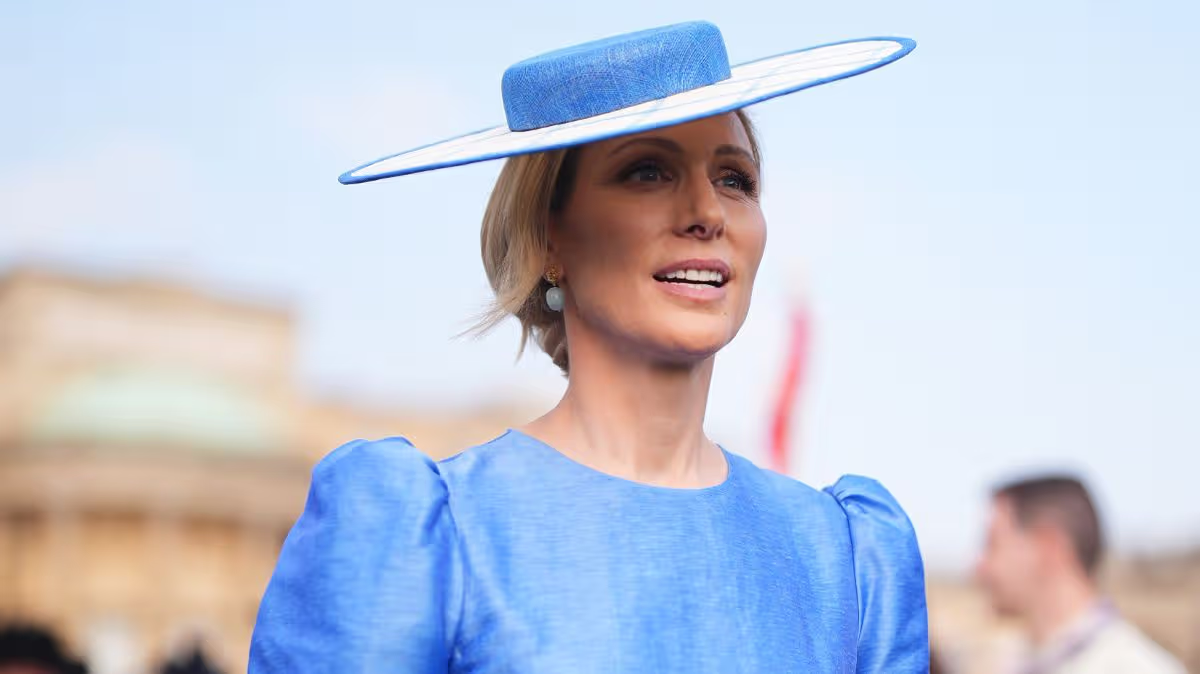
In recent years, a subtle but significant pattern has emerged, suggesting Zara is carving out a new, supportive role within the family’s public duties. For three consecutive years, she has been enlisted by Prince William to assist in hosting the Buckingham Palace garden parties. At last week’s event, dressed elegantly in blue, she stood supportively behind her cousin during the national anthem and then joined him in greeting the crowds. According to royal expert Jennie Bond, her recurring invitation is no accident. Zara, Bond notes, “has nailed it.” She brings a relaxed sense of fun, natural charm, and down-to-earth warmth to these formal occasions, scrubbing up impressively from her usual jodhpurs and boots to become a star participant. Her popularity with the public and her evident ease in the role make her a perfect complement to William, especially as the pool of available working royals has grown smaller.
This balance is the hallmark of Zara’s life. Alongside her husband, Mike Tindall—a former rugby star who is often described as being like the brother William has lost in Harry—she manages a dual existence. On one side, there is the glamour and responsibility of high-profile royal events, where her natural beauty and affable nature shine. On the other, there is her lucrative and fulfilling “civilian” career as an equestrian and a brand ambassador for prestigious names like Rolex. Mike and Zara are reported to be very close to William and Catherine, adding a layer of genuine family camaraderie to their public appearances. Together, they represent a relatable, sporty, and joyful branch of the family, offering a different kind of royal connection that resonates with the public.
Despite her clear aptitude for and increasing presence at royal functions, experts like Jennie Bond believe there is no prospect of Zara ever ditching this balanced life to become a full-time working royal. The question, Bond poses, is “Why would she?” Zara enjoys an extraordinary equilibrium: financial independence through her own work, the freedom to live largely outside the media’s intense scrutiny, a beloved family, and the ability to step into the royal spotlight when called upon without being bound by its daily duties. She is, as Bond states, “forever grateful to her mother” for the initial refusal of a title, which secured this very freedom. The restrictions, protocols, and relentless schedule of a working royal would fundamentally alter the life she has so successfully built.
Therefore, we can expect Zara’s unique role to continue as it is: a supportive, ad-hoc, and highly effective one. She will likely “pop up” annually at garden parties, throw her arms around her uncle at Ascot with uninhibited affection, and be a central figure in private family celebrations. She provides the monarchy with a valuable, charismatic asset who can bolster events without requiring a formal title or position. In an era where the royal family is navigating a smaller core of senior working members, her ability to seamlessly bridge the worlds of public duty and private enterprise is increasingly valuable.
Ultimately, Zara Tindall, at 45, represents a contemporary royal success story. She has leveraged her birthright not for titles or taxpayer-funded roles, but for the opportunity to craft a life of authentic achievement and personal happiness. She enjoys the warmth of family ties without their heaviest obligations, and she serves the institution in a modern, flexible way that complements its needs while preserving her independence. In many ways, her life is a blueprint for a new generation of royals—one defined by choice, talent, and a balanced partnership between public service and private fulfillment. She is a star in her own arena, a beloved family member, and a refreshingly relatable figure who brings a touch of genuine, unstyled fun to the royal stage, all while never compromising the freedom her mother so wisely secured for her.