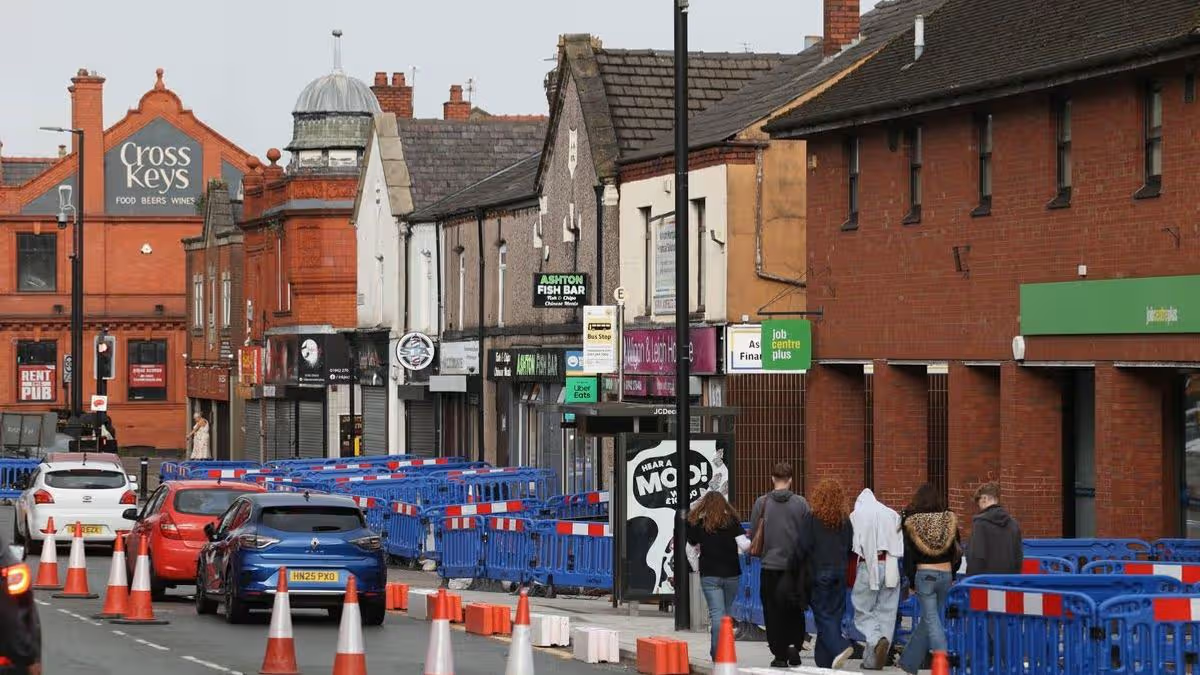



Nestled in the heart of Greater Manchester, the town of Ashton-in-Makerfield is unaccustomed to the glare of the national political spotlight. Yet, on a damp Thursday evening, it found itself thrust to the centre of a potential seismic shift within the Labour Party and British politics at large. The abrupt resignation of the sitting Labour MP, Josh Simons, had created a vacancy, but the ensuing announcement was anything but routine. Andy Burnham, the high-profile Mayor of Greater Manchester, declared his intention to stand for the seat, a move instantly interpreted as far more than a simple return to the backbenches. For residents stepping out into the drizzle, the news was met with a complex mix of hope, skepticism, and wariness, encapsulating the turbulent mood of a nation at a political crossroads. Burnham’s ambition is no secret; this bid is widely seen as the opening gambit in a calculated plan to re-enter Westminster and position himself as a future contender for the Labour leadership, a prospect that has instantly split local opinion and set the political press alight.
The timing of Burnham’s manoeuvre is critical, arriving in the wake of catastrophic local election results for Labour that have left the party reeling. The significant gains made by Reform UK and the Green Party exposed deep vulnerabilities in Labour’s traditional heartlands and triggered a crisis of confidence at the highest levels. With over ninety Labour MPs reportedly demanding the resignation of Prime Minister Sir Keir Starmer, and the high-profile departure of Health Secretary Wes Streeting citing a lack of faith in Starmer’s leadership, the party is embroiled in its most public period of internal strife in years. It is against this backdrop of chaos and uncertainty that Burnham has made his play. His return is not merely that of a regional mayor seeking national influence; it is read by commentators and voters alike as a direct challenge to the current party establishment, a signal that an alternative figure is preparing the ground for a leadership contest that many now see as inevitable.
On the streets of Ashton-in-Makerfield, these high-stakes Westminster dramas collide with the immediate concerns of everyday life. For some, like 80-year-old Ed, Burnham’s candidacy is a welcome intervention. “Excellent,” was his succinct verdict, seeing in Burnham a decisive figure who could galvanise the party and the constituency. His intention to switch his lifelong voting habit to support Labour this time underscores a desperate desire for change and a potent strategy: using a popular local figure to stave off the threat from Reform UK. Ed expressed genuine surprise and some regret at the departure of the well-regarded Josh Simons, noting his proactive local work, which underscores the very personal connection communities feel with their representatives. This sentiment reveals the dual nature of the by-election: it is both a hyper-local event about who will best serve the town and a national proxy war for the soul of the Labour Party.
The surge of support for alternatives like Reform UK is not an abstract political trend here; it is felt in the day-to-day conversations and concerns of residents. Julie Adams pinpointed the issue of immigration as a key factor driving this shift in Ashton, stating the community feels a “massive immigration problem” that the main parties have failed to adequately address. In this context, she views Burnham’s reputation as a “forthright” politician as a potential asset, someone who might “cut through” the perceived political correctness and directly engage with voters’ anxieties. Her perspective highlights a critical challenge for any candidate: they must navigate the treacherous waters between addressing legitimate local concerns and avoiding the divisive rhetoric that often characterises the debate. For her, if Burnham’s candidacy is the precursor to a leadership bid that brings a more direct style to national politics, then the political upheaval is “a good thing.”
However, this optimism is tempered by a palpable sense of fatigue and strategic concern among other constituents. Carl Waugh, 54, voiced a fear shared by many who have endured fourteen years of Conservative government: that Labour’s very public infighting is a self-destructive luxury at a time when unity is paramount. “For Labour to start infighting now is not a good move,” he argued, suggesting the monumental task of reversing years of Tory policy cannot be achieved overnight and is made impossible by a fragmented party. He also astutely pointed out the electoral risk Burnham is taking, surrounded by wards that swung decisively to Reform in the local elections. Burnham’s gamble, in Waugh’s view, is a testament to the allure of the “highest office,” but it is a gamble nonetheless, one that could potentially see a flagship Labour figure defeated by the very protest vote he hopes to quell.
Thus, the quiet streets of this Wigan town have become a microcosm of modern Britain’s political disquiet. The by-election forced by Andy Burnham’s ambition is more than a procedural event; it is a litmus test for the prevailing winds in a nation disillusioned with the status quo. It will measure the appeal of a charismatic, experienced politician against the fierce headwinds of anti-establishment sentiment. It will reveal whether a community prioritises the promise of national influence or rewards consistent local service. And perhaps most significantly, it will serve as the first real-world indicator of whether Andy Burnham’s brand of pragmatic, northern populism can heal Labour’s divides, reclaim lost voters, and convince the public that he is the figure to lead not just a town, but a country searching for a new direction. The outcome in Ashton-in-Makerfield will resonate far beyond its boundaries, potentially marking the first chapter in a dramatic new story for the Labour Party and setting the course for the next general election.