
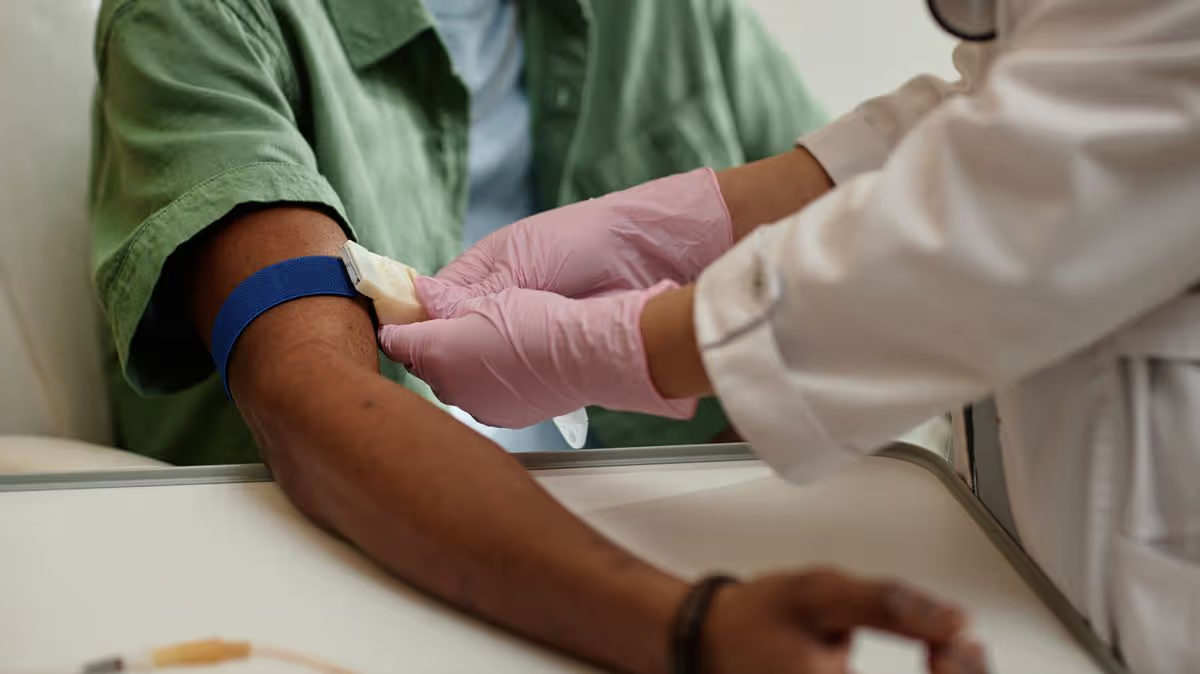



Of all the cancers that affect men, prostate cancer is the most common in the United Kingdom, with over 64,000 diagnoses each year. Yet for decades, the question of how—or even if—to screen the general male population for this disease has been a source of profound medical controversy. Central to this debate is the prostate-specific antigen (PSA) blood test, a simple tool that measures levels of a protein produced by the prostate gland. While intuitively appealing, the PSA test has long been criticized for its imperfections, leading to a cautious, often discouraging, stance from health bodies. However, a major new analysis, a Cochrane review examining nearly 800,000 men across several trials, has introduced a significant shift in the evidence, suggesting that PSA screening can indeed reduce deaths from the disease, albeit with critical and unavoidable caveats.
The review’s core finding is both clear and modest. It concludes that, among 1,000 men not screened, approximately 16 would be expected to die from prostate cancer. Introducing PSA screening, the analysis suggests, could reduce that number by two, saving an estimated 14 men per 1,000 from prostate cancer death. This represents an important change from a prior 2013 Cochrane review, which found no meaningful reduction in mortality. Lead author Dr. Juan Franco describes this as “moderate certainty” evidence that screening saves lives, particularly for men with a sufficient life expectancy. This shift is substantial enough for researchers like senior author Dr. Philipp Dahm to state it now “supports a conversation about PSA screening” for the right patient—one who is well-informed and understands the full implications.
However, this potential benefit is inextricably linked to a well-documented and significant harm: overdiagnosis. The PSA test is notoriously imprecise. It can produce false alarms, flagging elevated levels in men who do not have cancer, while also missing aggressive cancers in men with normal levels. More critically, it detects many slow-growing, indolent tumours that would never have caused symptoms or shortened a man’s life. Dr. Franco notes the overdiagnosis rate may be between 20% and 50%. This means that for every 1,000 men screened, while 1-2 deaths may be prevented, around 30 more men could be diagnosed with prostate cancer, many of whom would be treated for a disease that posed them no real threat.
The consequences of this overdiagnosis are not merely statistical; they are deeply personal and often life-altering. Unnecessary treatment for these harmless tumours can lead to permanent side effects, including urinary incontinence and erectile dysfunction. A diagnosis of cancer itself carries a heavy psychological burden. Thus, the central dilemma of PSA screening is laid bare: it trades a small but real reduction in mortality for a much larger risk of diagnosing and potentially harming men who would have otherwise lived out their lives unaffected by their silent prostate condition. This balance of benefit and harm explains why organizations like the UK National Screening Committee have concluded the test is “likely to cause more harm than good” for the general population.
Given this complex risk-benefit profile, the message from experts is emphatically not a call for universal screening. Instead, it underscores the necessity of personalized, informed decision-making. The conversation between a man and his doctor is paramount. As Dr. Franco stresses, this is “not a blanket endorsement.” Factors like age, family history, overall health, and life expectancy are crucial. A younger man with a long life ahead may have more to gain from early detection of an aggressive cancer, while an older man or one with significant other health conditions may face only the risks of overdiagnosis. The review reinforces that the value of the PSA test depends entirely on the context of the individual sitting across from the physician.
Looking forward, the medical community acknowledges that the future of prostate cancer screening lies not in abandoning the effort, but in evolving beyond the limitations of the PSA test alone. Current research, such as the groundbreaking Transform trial in the UK, is actively exploring more sophisticated strategies. This includes combining PSA with genetic markers, advanced imaging like rapid MRI scans, and other biomarkers to better distinguish between harmless cancers and those that are life-threatening. The goal is a smarter, more precise screening paradigm that maximizes the prevention of death while minimizing the scourge of overdiagnosis. For now, the new review brings nuanced clarity: the PSA test is an imperfect tool that can save lives, but its use must be guided by careful conversation and a clear-eyed understanding of its very real trade-offs.