


Here is a humanized and expanded summary of the content, structured into six paragraphs as requested.
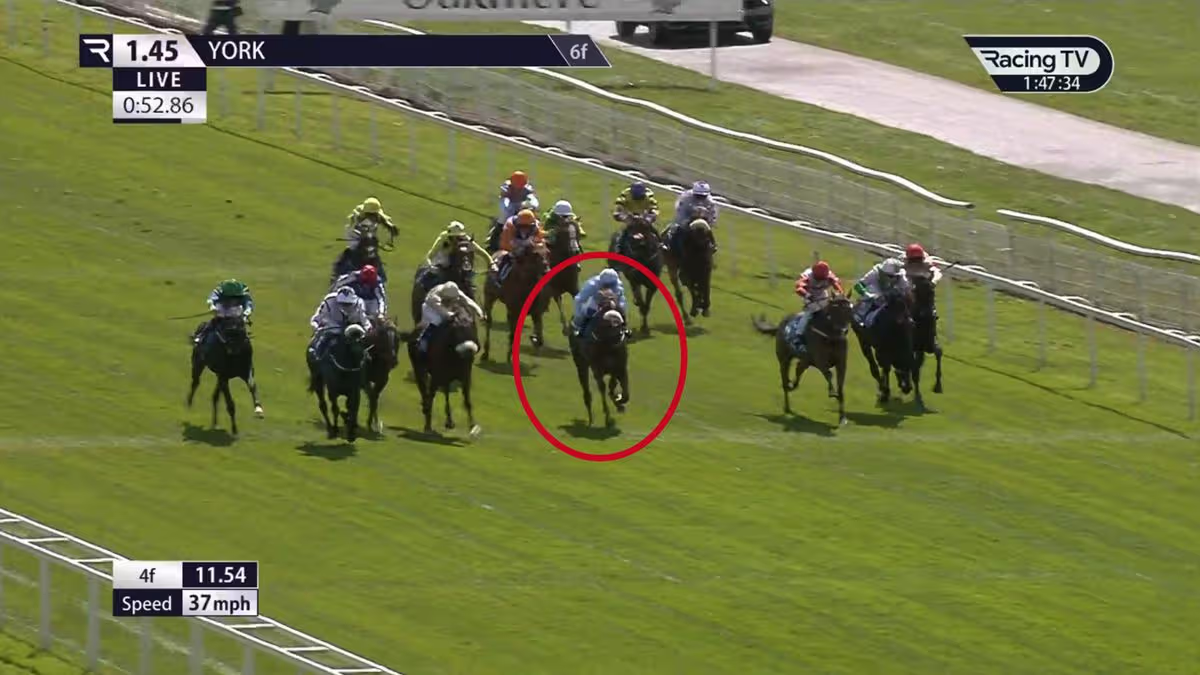
The world of horse racing, a sport built on a delicate partnership between human and animal, was recently confronted with a stark example of that bond being broken. During the opening race at the prestigious York racecourse, jockey Diego Lima, aboard the 50-1 outsider Ranting Duke, committed two clear violations of the sport’s welfare rules. First, in a disturbing act captured on camera, Lima struck his mount on the head with the whip while the horse was calmly loaded into the starting stalls. Then, during the six-furlong contest itself, he proceeded to use his whip excessively, far exceeding the permitted limit. These actions, occurring in quick succession, transformed what should have been a story of a longshot running a brave race into one of controversy and condemnation.
The immediate fallout was severe and swift. The on-course stewards, upon review, acted decisively on the first incident. After being interviewed and shown the footage, Lima was given a two-day suspension for improper riding. The footage itself is jarring: as noted by pundits, Ranting Duke is seen standing quietly, only to be struck on the head with the thick end of the whip. The horse appears confused, shaking its head, before the stalls open. This pre-race strike, deemed completely unacceptable by Racing TV’s Tom Stanley, is not a tactic to encourage a speedy start but a blatant and unnecessary act of poor horsemanship. It violates the fundamental principle that the whip is a corrective tool of last resort, not an instrument for casual provocation.
However, the day’s transgressions did not end there. As the race unfolded, Lima continued to use his whip with alarming frequency. Expert counts from seasoned observers, including former jockey Martin Dwyer and presenter Lydia Hislop, tallied approximately 13 strikes during the race. This is a serious breach, as British Horseracing Authority (BHA) rules strictly limit whip use to a maximum of six times in a Flat race. Ranting Duke, showing tremendous grit, managed to finish a close second, but that placing is now in grave jeopardy. A strike count four or more above the allowed threshold triggers an automatic disqualification, a matter that will be settled not by the on-day stewards but by a dedicated BHA committee.
The racing community’s reaction was one of unified dismay. The commentary team on Racing TV, aghast as the replay rolled, did not mince words. Martin Dwyer, speaking from a jockey’s perspective, called the pre-race striking “a bizarre thing to do,” emphasizing that the horse was perfectly behaved. Tom Stanley stated bluntly that the jockey was “going to get thrown out” for the overuse. Their criticism underscores a broader cultural shift within the sport. While the whip remains a legal piece of equipment for safety and encouragement, its misuse is increasingly viewed as a stain on racing’s reputation, undermining public trust and the ethical covenant between the sport and its equine athletes.
This case now moves to the next stage of official scrutiny. The BHA’s Whip Review Committee is scheduled to examine the race-day footage on the coming Tuesday. Their mandate will be to confirm the strike count and almost certainly impose the mandatory penalty: disqualification of Ranting Duke from second place. This would strip the horse and trainer Diego Dias of the prize money and placing. Furthermore, Lima faces additional sanctions for the whip overuse, separate from his two-day stall ban. The case also sparked a pertinent debate about procedure. Lydia Hislop suggested that for such egregious and clear-cut overuse, disqualification should happen on the day itself, providing immediate justice and clarity for bettors and connections, rather than the current delayed process.
Ultimately, the incident involving Diego Lima and Ranting Duke serves as a sobering case study for modern horse racing. It highlights the effectiveness of vigilant stewards and high-definition filming in identifying wrongdoing, but also exposes the emotional and ethical fault lines within the sport. It reinforces the ongoing challenge for the BHA: to enforce rules that protect horse welfare fiercely and transparently, thereby safeguarding the sport’s social license to operate. The hope is that the consequences for Lima will serve as a potent deterrent, reminding every jockey that their responsibility is to partner with and protect the horse, a duty that must always supersede the desperate pursuit of a winning position.