

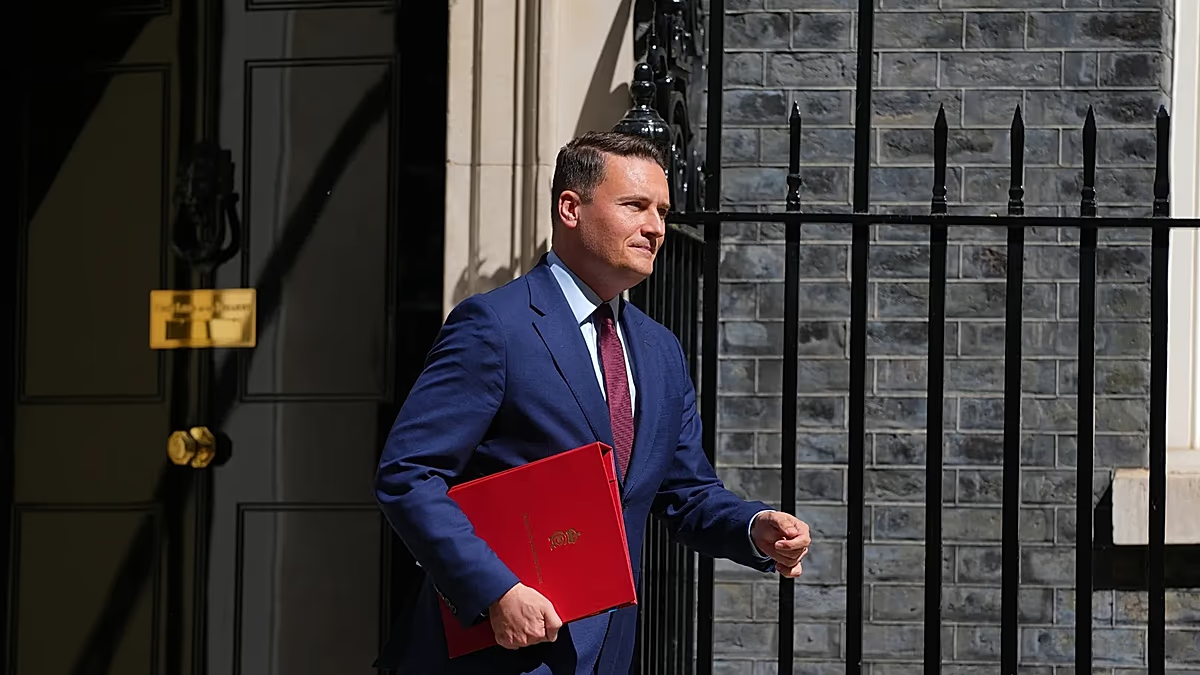
The United Kingdom’s political landscape, just two years into a new government, has been plunged into profound turmoil. In a dramatic move, Health Secretary Wes Streeting resigned from Prime Minister Keir Starmer’s cabinet, marking the first senior departure and a likely precursor to a direct challenge for the party’s leadership. Streeting’s resignation letter, published publicly, framed his exit not as a personal vendetta but as a necessary intervention for a party adrift. He lamented a “vacuum” of vision and a “drift” in direction, asserting his belief that Starmer would not lead Labour into the next general election. More significantly, he called for the coming debate to be a “battle of ideas,” aiming to elevate the discourse above mere factional infighting. This carefully crafted message positioned Streeting as a principled figure seeking to redirect a faltering government, even as it delivered a devastating blow to the Prime Minister’s authority.
Starmer’s premiership, which began with historic promise after ending fourteen years of Conservative rule in 2024, now faces an existential threat following catastrophic results in recent local and regional elections. The electorate delivered a stinging rebuke, with significant gains for both the hard-right Reform UK party and the left-wing Greens, squeezing Labour from all sides. The party lost control of the Welsh Parliament for the first time and failed to recover ground in Scotland, painting a picture of a government failing to connect across the United Kingdom. This electoral drubbing ignited smoldering discontent within the parliamentary party, leading to the resignation of four junior ministers and public calls for Starmer to step down from over eighty Labour MPs. While more than a hundred lawmakers have urged him to stay, the momentum has unmistakably shifted, creating an atmosphere of open rebellion and uncertainty.
The field of potential successors is already taking shape, with Streeting’s resignation seen as his opening gambit. Popular on the party’s right, he offers a vision of disciplined, reformist social democracy. However, his candidacy is deeply unpalatable to the party’s left, which sees its champion in Angela Rayner. The former Deputy Prime Minister, a charismatic left-wing figurehead beloved by grassroots activists, simultaneously cleared a major obstacle from her path. She announced that HM Revenue & Customs had “cleared” her of deliberately avoiding tax in a long-running property scandal, though she acknowledged paying a £40,000 settlement. This exoneration, she stated, allowed her to move forward and focus on serving the country. While insisting she would not be the one to formally trigger a leadership contest, Rayner pointedly called on Starmer to “reflect” on his position and declared her readiness to play “whatever role I can” to deliver change.
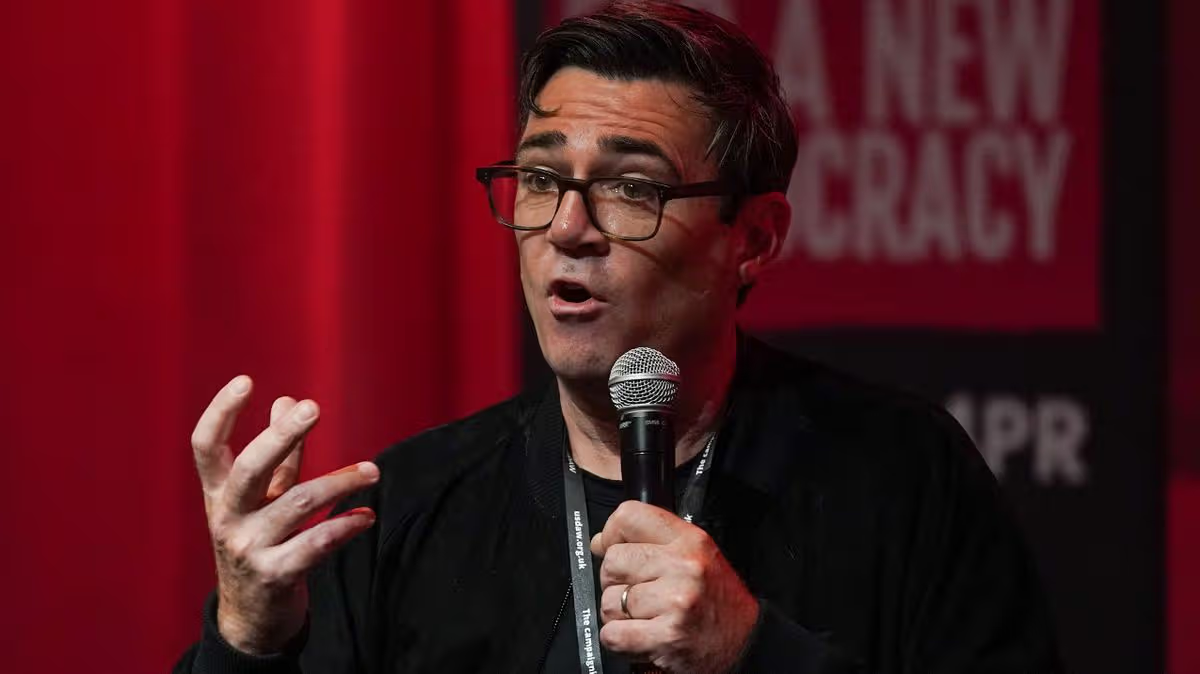
Complicating the succession battle is the figure of Andy Burnham, the popular Mayor of Greater Manchester. Many across the party’s spectrum view him as a unifying figure who could bridge internal divides. However, his current lack of a seat in Westminster’s House of Commons legally blocks him from becoming Prime Minister. His supporters are therefore pushing for any leadership transition to follow a detailed timetable, one that would allow Burnham to engineer a return to Parliament. This adds a layer of strategic complexity to the crisis, as any move against Starmer must now consider not only timing but also the logistical puzzle of enabling a favoured external candidate. The situation underscores a party searching not just for new leadership, but for a candidate with the broadest possible national appeal to reconnect with a disillusioned electorate.
Amidst the frenzied speculation, the constitutional and practical mechanisms for a challenge are coming into focus. Under Labour Party rules, any contender would require the backing of 20% of Labour MPs—currently 81 parliamentarians—to force a leadership election. Starmer, for his part, has vowed to fight any such contest with tenacity. In a defiant statement, he pledged to prove his doubters “wrong” and to redouble efforts to deliver for the public. Key allies have rallied to his side, with Finance Minister Rachel Reeves issuing a stark economic warning against “plunging the country into chaos” with a destabilizing internal battle. This argument frames the leadership crisis as a choice between party management and national stability, appealing to MPs’ sense of responsibility amidst a cost-of-living crisis and fragile economic conditions.
The coming days will determine whether this political earthquake results in a sudden collapse or a protracted reshuffling. What began with Wes Streeting’s resignation letter has escalated into a full-blown struggle for the soul and future of the Labour government. The party is fractured between those who believe steadfastness is needed to regain public trust and those convinced that only a radical change in direction and personnel can avert electoral disaster. With potential challengers like Streeting and Rayner maneuvering, and the spectre of Andy Burnham looming in the background, the United Kingdom is witnessing a rare and volatile moment: a governing party potentially on the brink of overturning its own leader just midway through its term. The outcome will not only decide who resides at 10 Downing Street, but will fundamentally shape the UK’s political trajectory for years to come.