

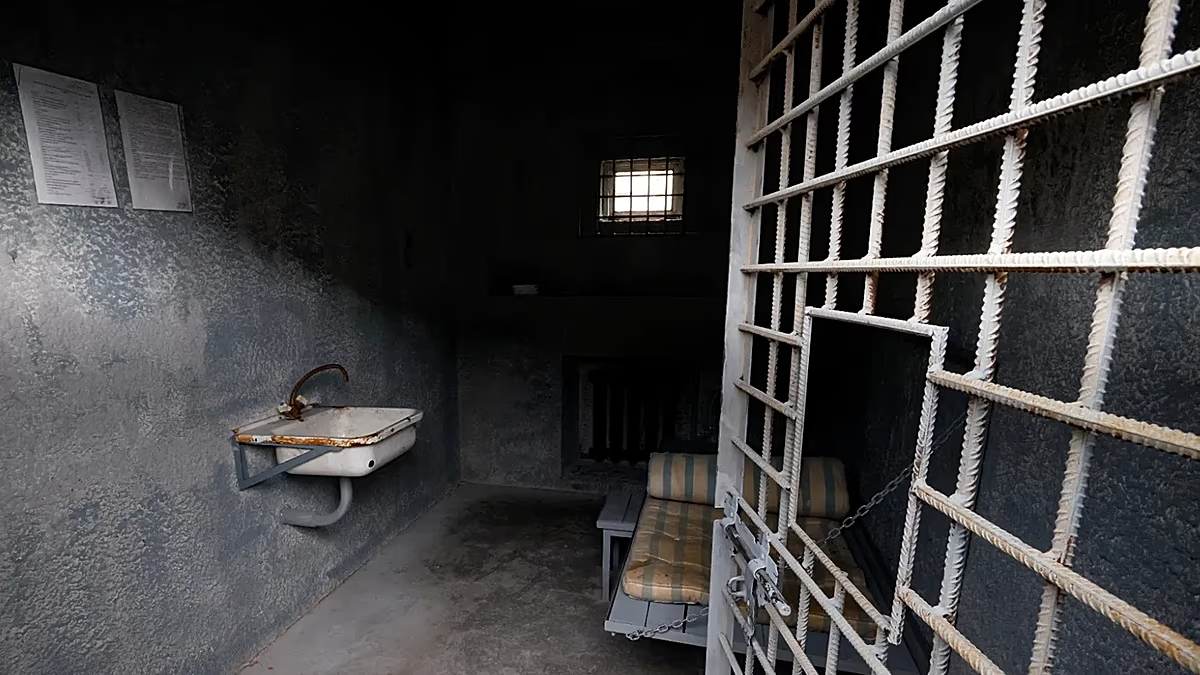
Over the past five years, Russia’s prison population has undergone a dramatic and unprecedented decline, falling from 465,000 inmates at the end of 2021 to approximately 282,000 today—a reduction of nearly forty percent. Arkady Gostev, the head of Russia’s penitentiary service, publicly confirmed this staggering drop, attributing it to a combination of factors. While he noted an increase in suspended sentences and alternative punishments, a significant driver has been the state’s systematic recruitment of convicts for military service in Ukraine. Since the invasion began in 2022, Russia has offered prisoners a stark bargain: enlist in the army, fight on the front lines, and earn the commutation of their sentences upon survival. This policy has effectively transformed the penitentiary system into a reservoir of manpower for the ongoing war.
This practice draws upon a dark historical legacy. Russia’s vast prison network, a direct inheritance from the Soviet-era Gulag labor camp system, has long been one of the largest in the world. For decades, it has relied on compulsory inmate labor, a principle that continues today. Gostev explicitly linked the current decline in prisoners to the military’s recruitment drive, underscoring how the state is leveraging its historical control over convicts for modern wartime objectives. The strategy serves dual purposes: it bolsters military ranks while simultaneously reducing the state’s burden of incarcerating and maintaining a large prison population. However, it also represents a profound moral and legal quandary, exchanging years of judicial sentencing for the perilous duty of combat.
Beyond direct combat roles, the prison system is being mobilized to support the war economy. Gostev reported that thousands of inmates are now deployed to production sites manufacturing goods specifically for the military. In the past year alone, 16,000 additional prisoners were assigned to such work. These prison factories reportedly produced goods worth around 5.5 billion rubles (approximately €64 million) earmarked for what Moscow terms the “special military operation.” The total output from prison sites in 2025 reached 47 billion rubles (about €548 million), though the exact proportion dedicated to military needs remains unclear. This intensified labor exploitation addresses a critical national shortage of workers, exacerbated by hundreds of thousands of men serving at the front or having fled the country to avoid mobilization.
The policy of deploying convicts, however, has created complex repercussions for Russian society. Gostev acknowledged that prisoners returning from the Ukraine front have contributed to an increase in crime and social tension. Individuals who have experienced the trauma and violence of war, and who may have enlisted primarily under the coercive promise of freedom, are re-entering communities without the typical structures of parole or rehabilitation. This presents a significant challenge for social stability and public safety, suggesting that the short-term military solution may be generating long-term societal problems. The state has traded prison management for battlefield manpower, but now faces the task of managing the reintegration of these former soldiers and convicts.
From a demographic and economic perspective, the drastic reduction in prisoners intersects with broader wartime strains. Russia’s workforce is under immense pressure due to the massive mobilization of men for the front and the exodus of others fleeing conscription. The use of prisoners—both as soldiers and as industrial laborers—functions as a stopgap measure to alleviate these shortages. It reflects a broader pattern of the state utilizing all available resources, including its human capital behind bars, to sustain its military campaign and domestic production. This approach highlights the extent to which the war has reshaped internal policies, bending even the penal system toward the singular goal of supporting the conflict.
In summary, the reported decline of over 180,000 prisoners in Russia is not merely a statistical footnote in criminal justice reform. It is a direct consequence of a wartime policy that merges historical practices of penal labor with contemporary military recruitment. The state is emptying its prisons not through rehabilitation or leniency, but through a calculated transfer of inmates to the battlefields and factories of war. While this serves immediate tactical and economic needs, it raises grave ethical questions about the use of human beings as expendable resources and portends ongoing social challenges as these individuals return to civilian life. The prison population figures thus tell a story far broader than incarceration rates; they narrate a chapter of how a nation is mobilizing every layer of its society for a protracted and devastating conflict.