



Of all the domestic nuisances we face, perhaps none feels as quietly personal as the discovery of moth damage in our wardrobes. That favourite cashmere scarf, the wool coat that has seen you through winters, or a cherished silk blouse—all can be silently, steadily destroyed by creatures most of us never see. While many have turned to traditional natural remedies like lavender sachets, cedar blocks, or cloves, believing their strong scents will ward off these pests, recent expert guidance underscores a sobering reality: these aromatic deterrents are often a nostalgic, but ultimately losing, battle. Their scents fade over time, and they do nothing to address an existing infestation. The true key to moth prevention is not rooted in fragrance, but in a fundamental understanding of the moth’s lifecycle and a much simpler, more practical approach to how we care for our clothes.
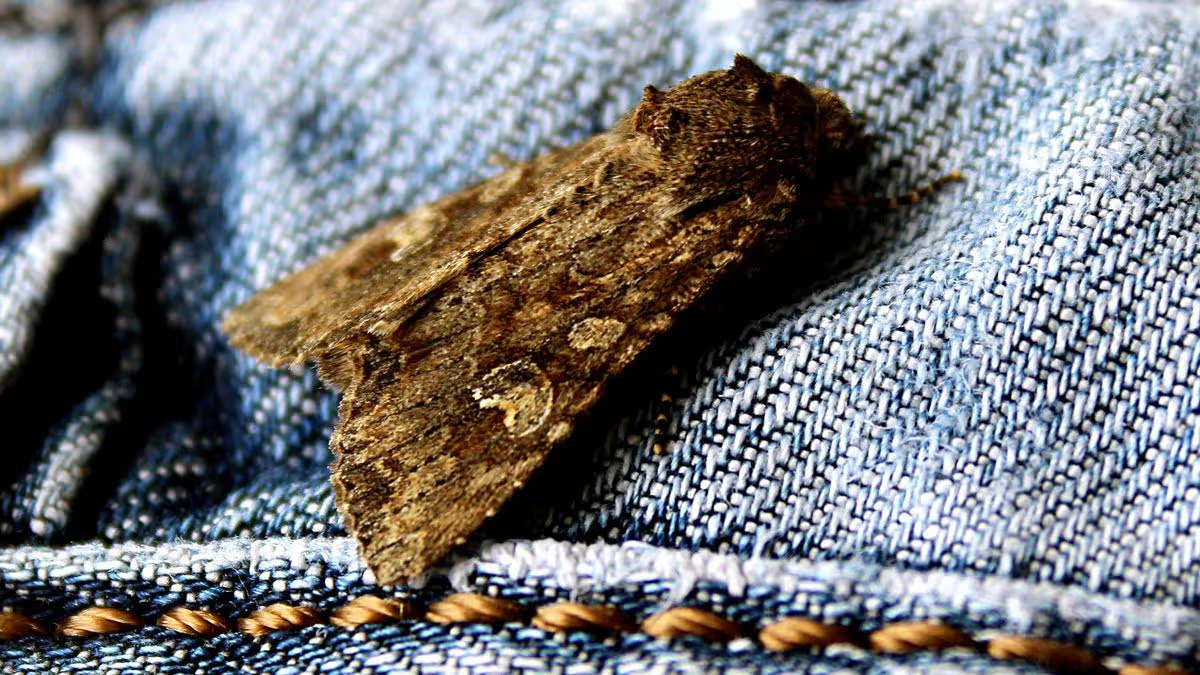
The crucial misunderstanding lies in focusing on the adult moths we occasionally see fluttering in a dim corner. As pest control specialist Adam Juson of Merlin Environmental explains, “By the time you see a moth flying around your wardrobe, they’ve almost certainly already hatched, fed and moved on. The real culprits are the moth larvae.” To grasp this, one can think of the classic children’s book The Very Hungry Caterpillar; it is indeed the larval stage that consumes. After hatching from eggs laid discreetly in your fabrics, these tiny, often invisible larvae need food to grow. Their preferred diet is keratin, a protein found in natural fibres like wool, cashmere, silk, and even fur. This is why synthetic fabrics are generally safe—they lack this nutritional component. However, the larvae are opportunistic; if a garment is soiled with sweat, body oils, or food stains, it becomes a target regardless of its blend, as those residues provide alternative nutrients. The infestation often goes unnoticed until the damage is done, leaving behind the heartbreaking evidence of holes and weakened fabric.
This leads to the first and most vital rule of moth prevention: cleanliness. The greatest risk, as Juson emphasizes, is storing clothes that are not properly clean. “Even light wear leaves enough organic matter to attract them,” he notes. Therefore, the most effective step you can take is to thoroughly wash or dry-clean every item before packing it away for seasonal storage. This simple act removes the very sustenance the larvae seek. It transforms your garment from a potential food source into a mere, unattractive object. This principle is especially critical as we enter peak moth season; in the UK, May marks a significant increase in activity, serving as a timely reminder to audit our wardrobes and storage practices.
Clean garments, however, still need protection from wandering larvae seeking a place to settle. Here, the second pillar of defence comes into play: isolation. The most effective and straightforward tool is not a complex chemical or a fading herb, but a humble, airtight storage container. After cleaning, place your items in sealed plastic bags, vacuum-sealed storage bags, or sturdy boxes with tight lids. This creates a physical barrier that larvae cannot penetrate. It is a budget-friendly, universally accessible solution that outperforms any scented deterrent. The goal is to keep your clothes in a clean, dry environment, avoiding cramming too much into one space, which can trap moisture and create a favourable microclimate for pests.
Combining these two practices—meticulous cleaning before storage and the use of sealed containers—forms a comprehensive and highly effective strategy. It addresses the root of the problem: denying larvae both food and access. While traditional methods like lavender may offer a mild, supplementary psychological comfort, they should not be relied upon as a primary defence. The modern, evidence-based approach is clear and uncomplicated. It empowers anyone to protect their wardrobe without special products or complex routines.
In essence, safeguarding your cherished garments from moth damage boils down to a shift in perspective. Move beyond the folklore of repellents and focus instead on the basic biology of the pest. Understand that the enemy is the hungry, hidden larva, not the flying adult. By ensuring your clothes are impeccably clean and securely sealed away, you create an environment where moths cannot thrive. This proactive, practical method ensures that your favourite woollens and silks will emerge from storage intact, ready to be worn again, free from the silent destruction that once threatened them. It proves that the best solution is often the simplest one: a combination of soap, water, and a good, tight seal.