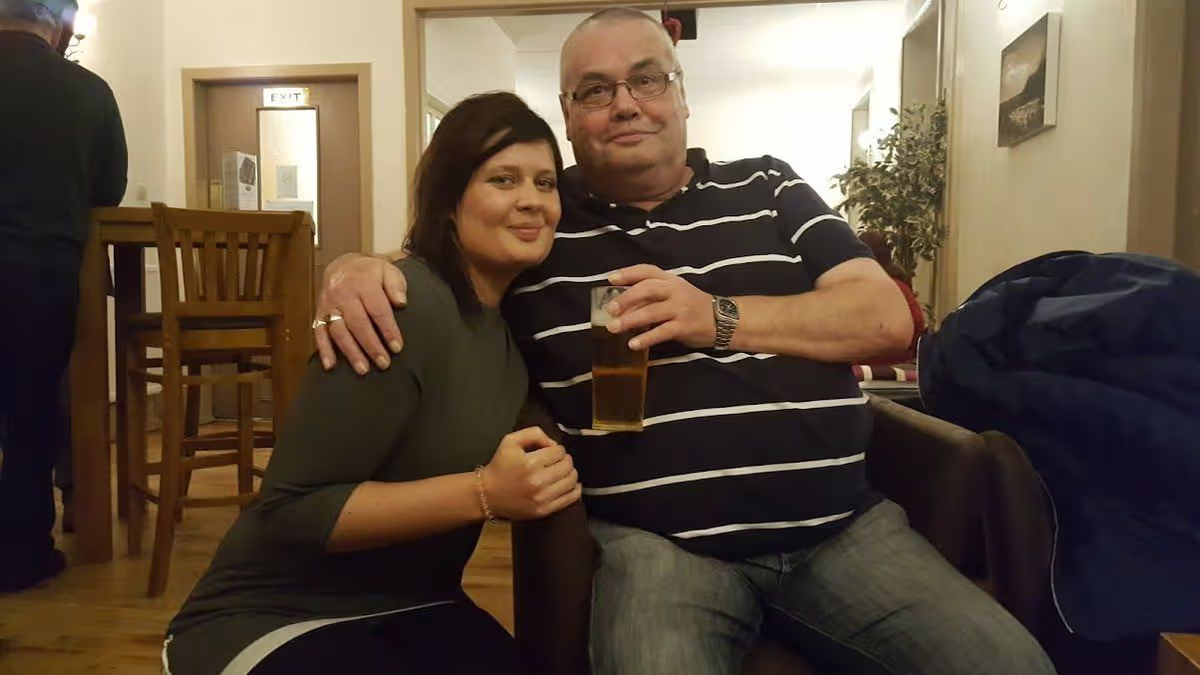



The sudden loss of a beloved parent is a seismic event, a moment that fractures a family’s world and begins the painful, sacred process of farewell. For the family of Kevin Fairfield, a 65-year-old grandfather of seven from Scotland, that process was not just interrupted but profoundly violated, transforming their grief into a protracted nightmare. Kevin, described by his daughter Kali as a doting grandfather who would “always get down on the floor to play with them,” died unexpectedly of a heart attack at his home on July 21, 2024. In their immediate shock and sorrow, his children—Keiron, Kev, and Kali—made the practical, trusting decision that so many bereaved families make: they arranged for his care with the local Co-op Funeral Services in Dunfermline. They specifically requested embalming so they could visit him one last time in a chapel of rest, even delivering his favourite suit for his final journey. This simple, human act of planning a goodbye was the last gift they believed they could give him, placing their faith entirely in the hands of professionals.
That faith was catastrophically misplaced. For twelve agonising days, Kevin’s body lay unattended at the Co-op parlour. The family, awaiting a call to arrange their visit, were instead met with a chilling warning. Nearly two weeks after his passing, they received a phone call advising them against coming to see their father, as “nature had taken its course.” Alarmed and horrified, the family swiftly transferred his care to an independent funeral director, Callum Robertson. What they discovered was a scene of profound neglect that stripped them of their chance for closure. In a formal letter, the new funeral directors stated that “nothing had been done to care for him.” Kevin’s body, still in the clothes he had died in, was severely decomposed. The suit his children had provided remained untouched in its carrier, and the deterioration was so advanced that any possibility of viewing or preparation was impossible. The Co-op’s earlier invitation to “sit with Kevin’s coffin” rang with a cruel irony, as no coffin had even been arranged.
The emotional devastation for Kevin’s family is immeasurable. His daughter Kali expressed a heartbreak felt by anyone who has yearned for a final moment of connection: “I just wanted to hold his hand one last time and say ‘goodbye’ and I couldn’t.” This foundational ritual of mourning was stolen from them, replaced by images of neglect and a deep, haunting sense of guilt. Kali articulated the painful paradox: “We don’t feel like we’ve been able to grieve losing dad because this has overshadowed everything.” Their grief became tangled with anger, bureaucratic battles, and a desperate search for answers. Compounding their distress was the discovery of sloppy administration, including conflicting timelines from the Co-op and even an incorrect record of Kevin’s height—small errors that spoke to a larger carelessness. “You put all your trust in these people,” Kali said, “it’s the last thing you can do for someone, and they’ve messed it up.”
The family’s quest for accountability led to a protracted exchange through solicitors. While the Co-op eventually offered a five-figure settlement, which the family accepted in May 2025, they stress that their fight was never about financial compensation. “We would have walked away with nothing if we’d have got answers,” Kali insisted. Their core demand was for understanding, transparency, and systemic change to prevent other families from enduring similar trauma. Keiron, Kevin’s son, echoed this sentiment, stating that an apology alone is insufficient without “real accountability and change.” The family’s anguish is amplified by the fear that their case is not an isolated incident, with Kali noting she has since heard of similar stories from years past. This transforms a personal tragedy into a pressing public concern about oversight and standards within the funeral industry.
In response to the ordeal, a Co-op Funeralcare spokesperson offered an apology, acknowledging a “procedural error” and that their high standards were not met. They stated confidence that Mr. Fairfield was “treated with the utmost dignity and respect,” a claim that stands in stark, painful contrast to the independent funeral director’s findings of extreme decomposition and a complete lack of care. The Co-op added that internal actions were taken to prevent a recurrence and that a detailed timeline was provided to the family. For Kevin’s children, however, these assurances feel hollow against the irreversible reality of their loss. They plan to use part of the settlement to honour their father’s memory by taking his ashes to Holland, a place he loved and visited annually since childhood—a bittersweet journey born from a ruined farewell.
Ultimately, the story of Kevin Fairfield is a harrowing lesson in the sacred responsibility borne by those who care for the deceased. It underscores that funeral care is not a mere logistical service, but a crucial pillar of compassionate society, handling the rawest moments of human vulnerability. When that trust is broken, the damage is profound and permanent. Kevin’s family was robbed of the simple, essential comfort of a dignified goodbye, a closure that is a right, not a privilege. As Kali solemnly concluded, “Failure to care for a body properly should be a crime.” Their hope, forged in their own painful experience, is that by sharing their story, they might spur the rigorous changes needed to ensure no other family is left with only guilt, unanswered questions, and the haunting thought of a loved one left alone.