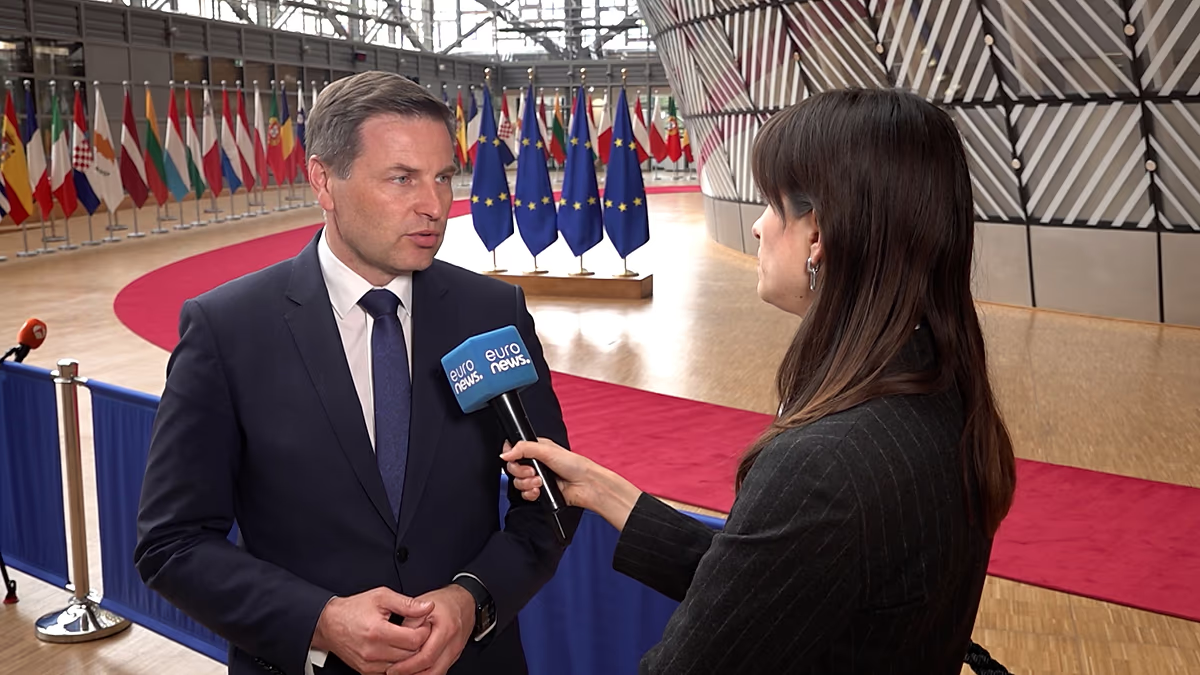
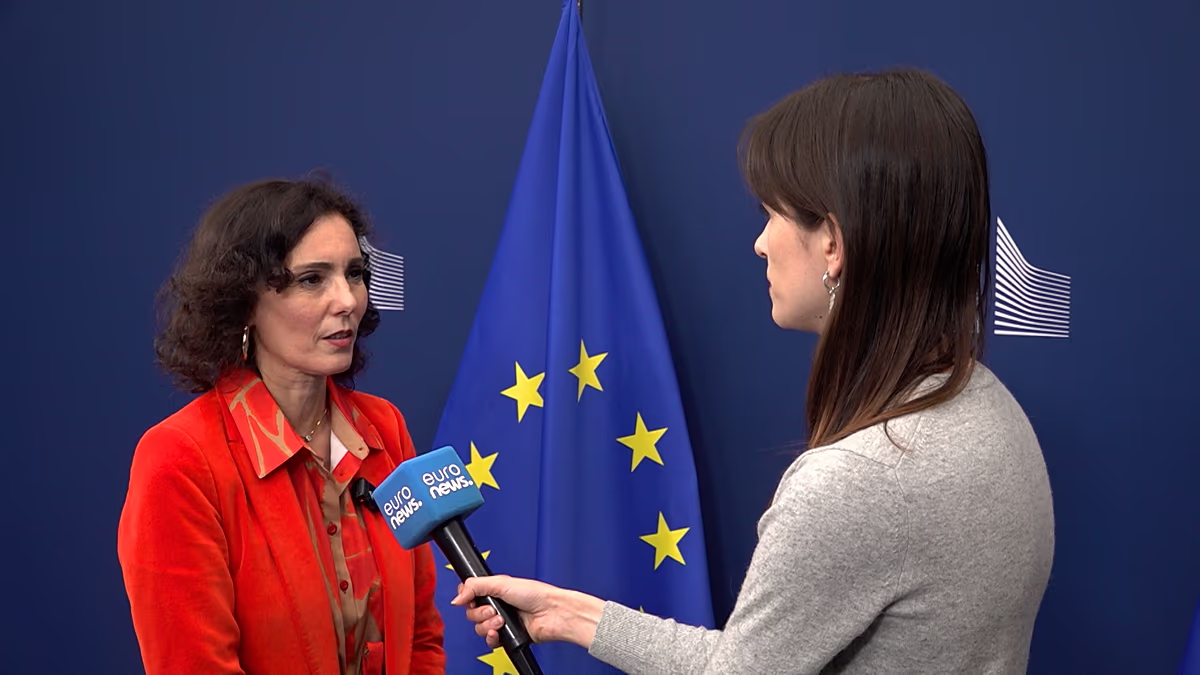


In a powerful and unequivocal statement, the European Union’s equality chief, Hadja Lahbib, has condemned the practice of so-called ‘conversion therapy’ as nothing less than torture. Speaking to Euronews, Lahbib did not mince words, linking these discredited practices directly to profound human suffering, including severe depression and suicide. Her declaration, “and that’s why we need really to react and to combat these practices,” frames the issue as one of urgent human rights and safety, moving beyond debate to a moral imperative. This stance comes at a critical juncture, as the European Commission responds to a significant grassroots demand for action, highlighting the growing consensus among citizens that such practices have no place in a modern, compassionate society.
This public outcry materialized in the form of a European Citizens’ Initiative, a formal petition tool, which garnered over one million signatures from people across the bloc demanding a comprehensive, EU-wide ban. The sheer scale of this initiative demonstrates the depth of public concern and the desire for a unified legal stance to protect LGBTQ+ individuals, particularly vulnerable youth, from harm. However, the European Commission’s response, while acknowledging the issue, stopped short of this demand. Instead of proposing binding legislation, the executive body announced it would issue a non-binding recommendation next year, focusing on raising awareness, supporting victims, and bolstering medical and psychological resources.
When questioned on why the Commission did not pursue a stronger, legislative path, Commissioner Lahbib pointed to a fundamental political and legal hurdle: a lack of unanimity among the EU’s 27 member states. She referenced Article 19 of the EU treaties, which requires unanimous agreement from all national governments to enact laws specifically combating discrimination based on sexual orientation. This high bar for collective action has, in this case, resulted in a compromise. Despite this, Lahbib sought to project firm resolve, stating, “The European Commission is sending a very clear message without ambiguity to every member state in this union: ban conversion practices now.” She underscored that primary responsibility lies at the national level, effectively placing the onus on individual capitals to act where the bloc as a whole currently cannot.
The landscape across Europe is already shifting, providing a blueprint for action. Currently, eight member states—Belgium, Cyprus, France, Germany, Greece, Malta, Spain, and Portugal—have implemented their own national bans. These laws, while varying in their specifics regarding penalties and prison sentences, send a unified message that attempting to change a person’s sexual orientation or gender identity is ethically wrong and psychologically destructive. Lahbib explicitly praised these nations, noting, “They have shown it can be done.” Their success stories are meant to serve as both inspiration and proof of concept, dismantling the argument that such bans are unworkable and demonstrating a growing normative standard within the Union.
Nevertheless, the Commission’s reliance on a recommendation rather than a directive reveals the tension between a clear moral position and the realities of EU politics. A recommendation carries political weight and guidance but lacks the legal enforceability of a directive or regulation. This approach essentially attempts to catalyze change from the ground up and through peer pressure, hoping that continued advocacy, shared best practices, and the moral force of the Commission’s condemnation will push the remaining nineteen member states to adopt bans. The strategy banks on building momentum, isolating those countries that continue to permit these practices, and gradually creating a de facto ban through widespread national adoption.
The interview with Commissioner Lahbib ultimately frames a pivotal moment for LGBTQ+ rights in Europe. It captures a powerful institutional condemnation of conversion practices as torture, a validation of widespread public demand for change, and a pragmatic, if incremental, pathway forward in the face of political fragmentation. The clear call to action is now directed squarely at national governments. The coming years will test whether moral suasion and building momentum can achieve what binding EU law currently cannot: the eradication, in every corner of the Union, of practices that undermine the very dignity and identity of individuals, protecting future generations from proven harm.