




Paragraph 1: A City Under Siege
In a stark escalation of its war against Ukraine, Russia launched a relentless barrage of drones and missiles against the capital city of Kyiv in the early hours of Thursday, May 14, 2026. This nighttime assault came mere hours after an unprecedented and massive daytime attack the previous day, marking a disturbing shift in tactics. The attacks transformed parts of Kyiv from peaceful neighborhoods into scenes of devastation, killing at least one person and injuring sixteen others. The head of Kyiv’s military administration, Tymur Tkachenko, urgently warned citizens via Telegram to remain in shelters as the threat lingered over the city.
Paragraph 2: Scenes of Destruction and Rescue
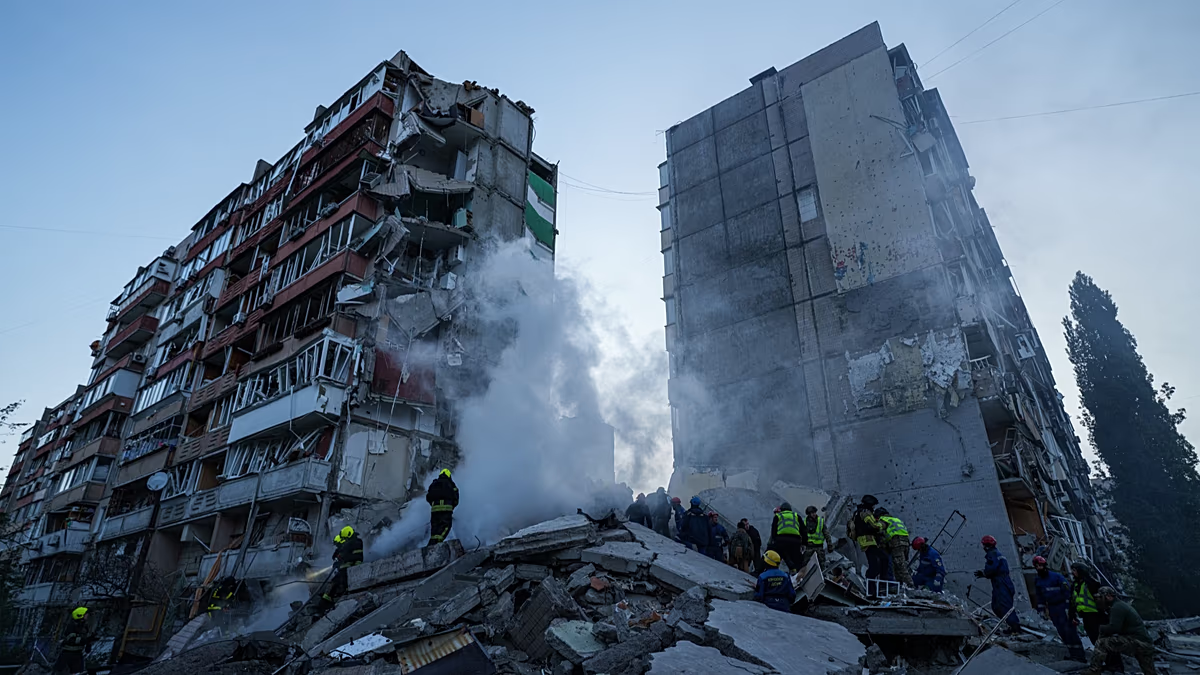
The airstrikes were not confined to a single point but targeted several districts across Kyiv, inflicting damage on the very fabric of civilian life. Residential buildings, the heart of any community, were struck and damaged. In the Darnytsia district, a residential building partially collapsed, trapping people beneath the rubble in a terrifying ordeal. Kyiv Mayor Vitali Klitschko reported that a desperate search and rescue operation was underway, with Ukraine’s Emergency Service successfully pulling at least ten individuals from the wreckage. Meanwhile, in other districts, the fallout from the attacks continued to wreak havoc; fallen drone debris ignited a fire on the roof of a five-story apartment block in the Dniprovskyi district, and in Obolonskyi, debris struck a twelve-story building, sparking another blaze.
Paragraph 3: A Pattern of Expanded Targeting
The Thursday morning attack was, tragically, not an isolated event but part of a coordinated and expanded assault strategy. Just the day before, Moscow had launched a shocking daytime aerial attack involving over 800 drones, which killed at least six people across Ukraine. President Volodymyr Zelenskyy stated that these drones were launched “in waves,” with a deliberate and chilling purpose: targeting regions closest to the borders of NATO countries. According to Ukrainian officials, this meant that western regions of Ukraine, along with the rest of the country, were hit. This geographical expansion appears designed to test Western resolve and spread terror deeper into Ukraine’s territory.
Paragraph 4: A Calculated Shift in Tactics
This new pattern represents a significant and calculated change in Russian military tactics. Until recently, Russia had primarily carried out its mass drone and missile strikes under the cover of darkness, during the night. However, around March and April of 2026, Moscow deliberately switched to incorporating major daytime assaults alongside its nighttime attacks. This is not a random alteration but a strategic one. As analyzed by the US-based Institute for the Study of War, this new tactic of combining a heavy nighttime strike with an equally heavy daytime assault is likely intended to overwhelm Ukrainian air defenses, exhaust emergency services, and ultimately increase damage and casualties among the civilian population.
Paragraph 5: The Human Cost Beyond Kyiv
While the focus on Kyiv captures global attention, the human cost of these attacks extends far beyond the capital’s boundaries. The earlier Wednesday daytime strike, with its hundreds of drones, wrought devastation in other regions, claiming lives and destroying infrastructure. The targeting of western areas, as highlighted by Zelenskyy, brings the war’s violence to regions that had perhaps hoped for relative safety. Rescue services across the nation were stretched to their limits, responding to fires, collapses, and debris scattered across residential areas, business centers, and even a three-story parking lot as reported by Klitschko. Each location named is not just a coordinate on a map; it is a community, a workplace, a home.
Paragraph 6: The Enduring Resilience and the Mounting Threat
In the face of this dual-phase, day-and-night bombardment, the resilience of Kyiv’s and Ukraine’s citizens is once again tested. From the rescue workers digging through rubble in Darnytsia to firefighters battling blazes on apartment roofs, the response is a testament to their determination. Yet, the new Russian tactic poses a grave and mounting threat. It seeks to erode that resilience by creating a state of perpetual alert, denying any sense of safety whether at noon or midnight. The objective seems clear: to demoralize the population and inflict maximum harm on civilian infrastructure, a brutal strategy that underscores the ongoing and evolving cruelty of this conflict. The attacks of May 2026 are a grim reminder that the war continues to adapt, and its primary victims remain the ordinary people of Ukraine.