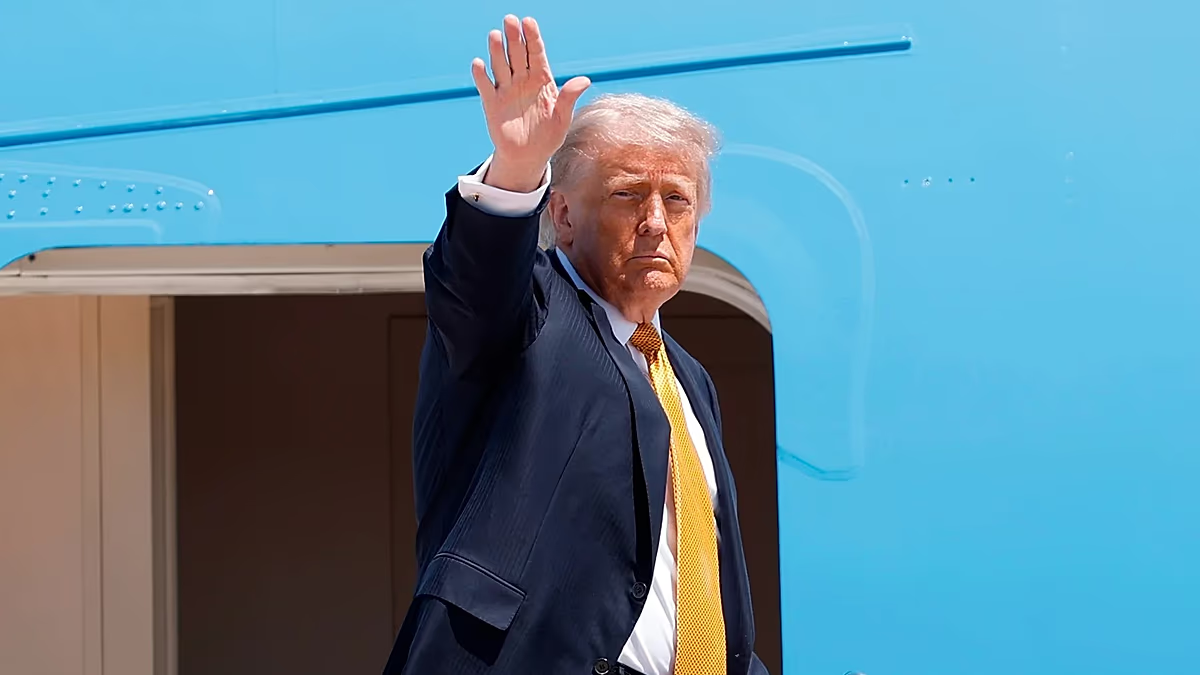
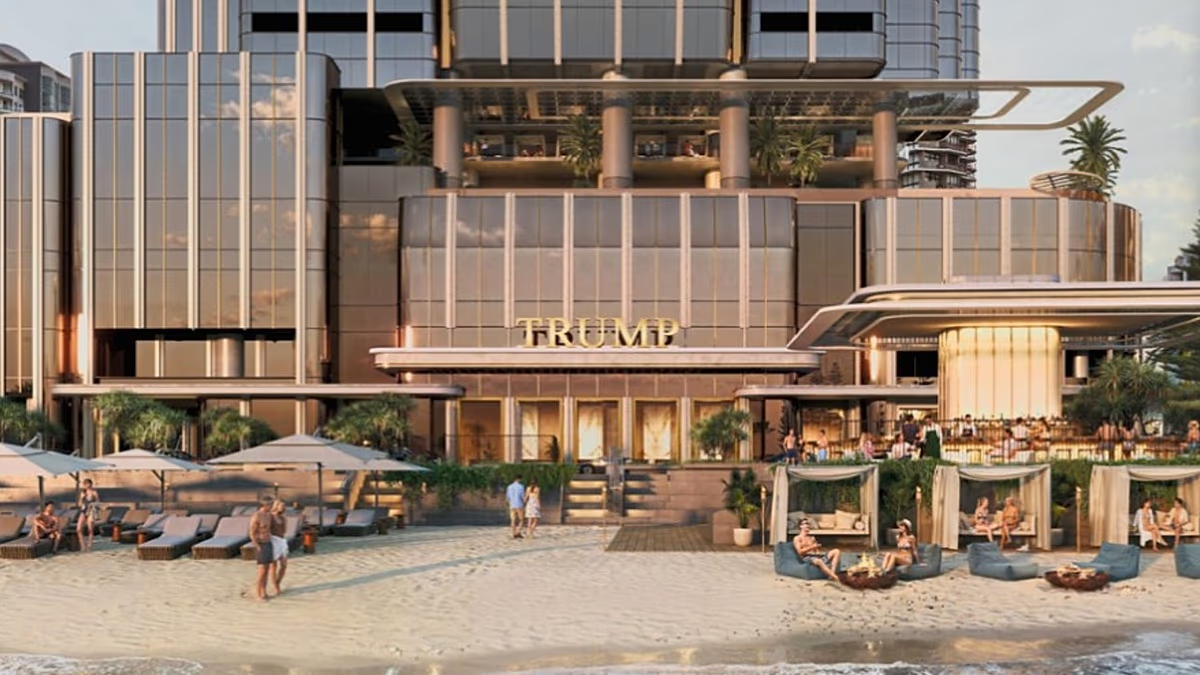



In a significant and telling reversal of plans, a proposed $1.1 billion luxury skyscraper bearing the Trump name on Australia’s famed Gold Coast has been officially canceled. The project, which was announced with great fanfare in February, promised a 91-storey tower of hotel rooms and apartments, ambitiously touted by the Trump Organization as a development that would “redefine beachfront sophistication.” However, the vision of a glittering Trump-branded pinnacle on the Queensland skyline has now been shelved indefinitely. The decision underscores a powerful shift in global market perceptions, illustrating how a brand’s political associations can fundamentally alter its commercial viability thousands of miles away.
The core reason for the project’s demise, as stated by the Australian developer involved, is strikingly direct. David Young, the chief executive of Altus Property Group, explained that the Trump brand had become “toxic to Australians.” This frank assessment points to a broader cultural and political sentiment that has permeated the public consciousness. Young emphasized that the decision was a matter of “pure business,” driven by the pragmatic recognition that attaching the Trump name to the luxury development would likely hinder its success in the local market. Interestingly, Young expressed personal sympathy for the Trump family, noting a 19-year relationship and calling the brand’s tarnished reputation “grossly unfair,” but he ultimately could not ignore commercial realities.
The cancellation process involved conflicting narratives from the two parties. Initially, a report in the Australian Financial Review suggested the Trump Organization had withdrawn from the licensing deal. A spokesperson for the company stated that while they were excited about the project, it was “dependent on our licensing partner meeting certain obligations,” which, they claimed, were not fulfilled. However, David Young’s subsequent public statements positioned the decision firmly with his company, Altus, attributing it to the brand’s toxicity. This divergence highlights the delicate and often face-saving mechanics behind such high-profile corporate divorces, where each side seeks to frame the narrative to protect its own interests and public image.
This business decision did not occur in a vacuum; it was powerfully influenced by substantial public opposition within Australia. An online petition titled “Stop the Trump Tower,” directed at the Gold Coast City Council, amassed over 124,000 signatures. The petition explicitly criticized U.S. President Donald Trump’s “contempt for democratic norms,” demonstrating how international political opinions can mobilize into tangible local action. This grassroots movement provided a clear signal to developers and investors that the project would face sustained public resistance, making the path to approval and eventual profitability much steeper and more fraught with reputational risk.
The scrapping of the Gold Coast tower is more than just a failed real estate deal; it is a potent case study in the intersection of geopolitics, brand management, and consumer sentiment in the globalized economy. The Trump brand, once synonymous in certain circles with opulence and success, now carries a heavy political baggage that can overshadow its luxury connotations in many international markets. For developers like Altus, a brand partner must not only signify quality but also align with, or at least not aggressively contradict, the values and perceptions of the local customer base. When a brand becomes a lightning rod for controversy, its economic utility diminishes, regardless of the personal relationships between executives.
Looking forward, David Young confirmed that the ambition to develop the prime Gold Coast site remains alive, but now with a crucial caveat: it will proceed under a different, presumably less contentious, high-end brand. He noted he had already been in discussions with other luxury operators, recognizing that the fundamental appeal of a landmark oceanfront tower persists, even if the originally intended nameplate does not. The episode serves as a stark reminder that in today’s world, a brand is not just a marker of quality but a vessel for meaning, values, and association. For the Trump Organization, the Australian project’s collapse is a clear indicator of the enduring global impact of political polarization on commerce, proving that in the court of public opinion and market forces, perception can be the most decisive factor of all.