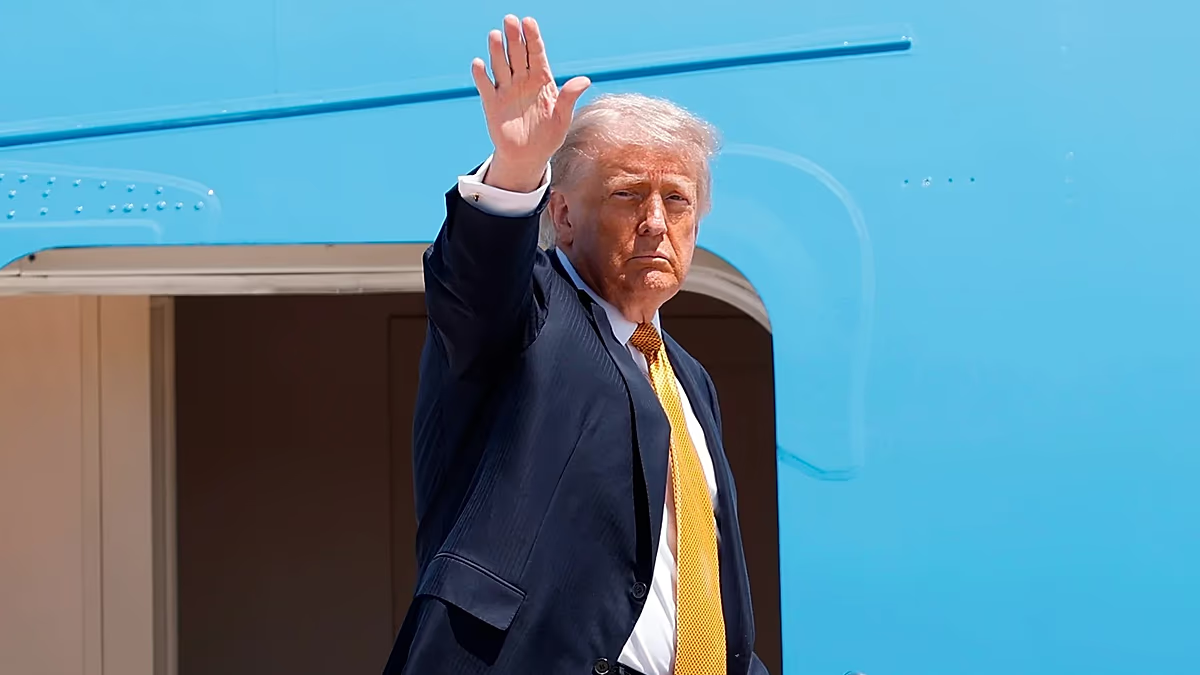


President Donald Trump departed for Beijing on Wednesday, framing his high-stakes summit with Chinese leader Xi Jinping as a mission to unlock China’s vast market for America’s corporate titans. In a social media post brimming with characteristic optimism, Trump stated he would ask the “Leader of extraordinary distinction” to “‘open up’ China” so that “brilliant people can work their magic.” This focus on commerce was embodied by the notable corporate delegation accompanying him, including tech luminaries like NVIDIA’s Jensen Huang and Tesla’s Elon Musk, who joined the President on Air Force One, alongside Apple’s Tim Cook, who would meet them in China. This first visit by a U.S. president in nearly a decade was heavily weighted with economic ambition, aiming to build on a one-year truce in the tariff war reached in late 2023. Yet, from the outset, it was clear that these business aspirations would have to navigate the complex and often rocky terrain of geopolitics, including frictions over Taiwan and the ongoing conflict in Iran.
While trade topped the agenda, pressing global security concerns were unavoidable. As he left the White House, Trump anticipated a “long talk” with Xi regarding Iran, a nation that sells most of its U.S.-sanctioned oil to China. However, he simultaneously downplayed expectations for Chinese assistance, remarking that Xi had been “relatively good” on the issue and suggesting the U.S. did not necessarily need Beijing’s help. This contrasted with visible Chinese diplomatic impatience for a resolution, as evidenced by its foreign minister urging Pakistan to help mediate between Tehran and Washington just a day before the summit. This dynamic highlighted the summit’s delicate balancing act: pursuing deep economic cooperation while managing acute disagreements on foreign policy, where strategic interests often diverge.
The agenda for the talks was exceptionally broad, reflecting the full spectrum of both collaboration and competition defining U.S.-China relations. The packed itinerary, featuring a state banquet and high-level meetings, was set to cover issues from the control of rare earth minerals and rivalry in artificial intelligence to the raucous trade relationship itself. A significant and potentially contentious departure from past U.S. policy was Trump’s announcement that he would discuss American arms sales to Taiwan with Xi, moving away from historic U.S. practice of not consulting Beijing on such support to the self-governing island democracy claimed by China. This move promised to test the diplomatic waters and would be closely scrutinized by allies across Asia.
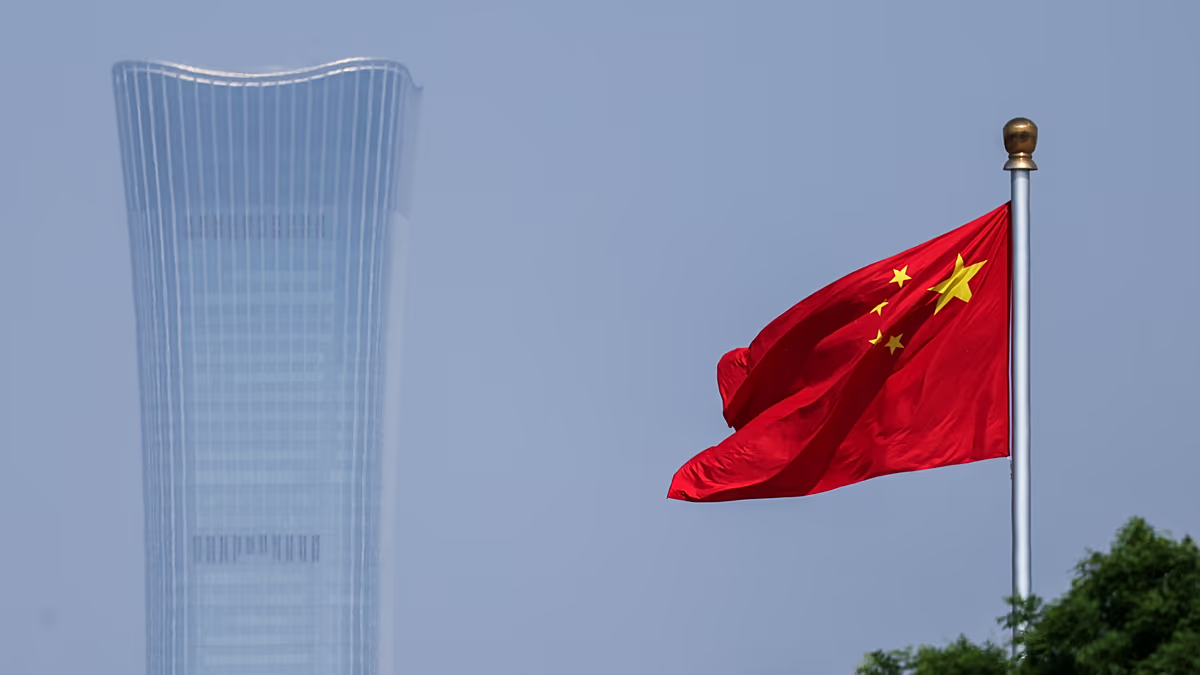
On the ground in Beijing, the significance of the moment was palpable. The tense buildup to the superpower summit manifested in heightened security, with police monitoring major intersections and conducting ID checks on the metro—a clear sign of the visit’s importance to the host nation. Ordinary citizens recognized the weight of the event, with one young woman traveling from Nanjing telling AFP that it was “definitely a big deal.” She expressed cautious hope that “some progress will certainly be made,” leading to “lasting peace” despite recent global instability. This public sentiment underscored the widespread understanding that the outcomes of this meeting would resonate far beyond the meeting halls, impacting global economic and political stability.
Throughout the preparations, President Trump consistently leaned on his professed strong personal rapport with Xi Jinping as a stabilizing force. He cited this “very good relationship” as a key reason he believed China would not invade Taiwan, suggesting that personal diplomacy could override structural tensions. This personal dynamic was a cornerstone of his approach, aiming to foster a cooperative atmosphere where deals could be struck. However, the context for both leaders had shifted dramatically since Trump’s last visit in 2017. Beijing had grown more confident and assertive on the world stage, while Trump faced domestic political challenges and the burden of an ongoing foreign war. Simultaneously, China confronted its own economic headwinds, including sluggish consumption and a property sector crisis, potentially making it more receptive to discussions on trade and market access.
Thus, the summit arrived at a pivotal juncture for both nations. It presented a critical opportunity to solidify a fragile trade truce and open new avenues for commercial exchange, driven by the powerful cohort of CEOs in attendance. Yet, it also risked exposing fundamental rifts on Taiwan, technology, and global security. The world watched to see whether the leaders’ personal chemistry and mutual economic needs could successfully compartmentalize and manage these deep-seated strategic rivalries. The outcome would signal whether the two giants could craft a precarious but functional modus vivendi or if their competition would further define the international order.