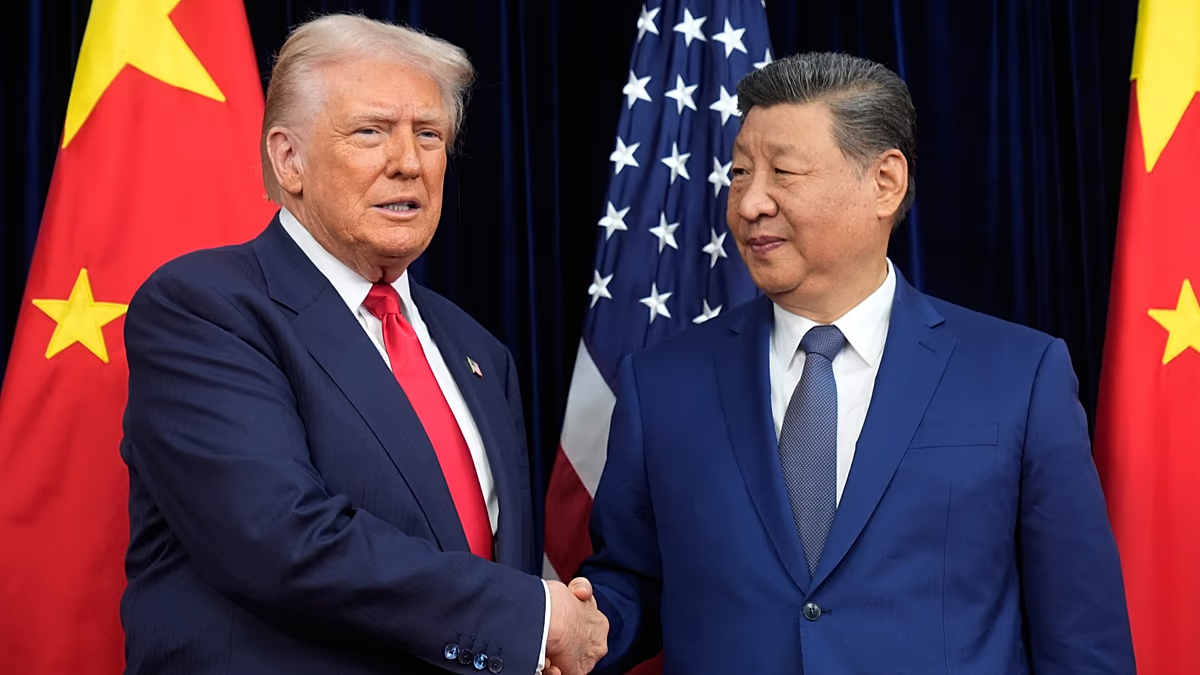


The delicate ceasefire between the United States and Iran is under severe strain, threatening to unravel just weeks after it began. The immediate catalyst is a harsh diplomatic rejection. US President Donald Trump has dismissed Iran’s latest peace proposal as “completely unacceptable,” a move that has provoked a dangerous and calculated response from Tehran. Iranian parliamentarians, led by Ebrahim Rezaei, issued a stark public warning: if the US resumes military strikes, Iran’s parliament will discuss enriching uranium to 90%—the purity considered weapons-grade. This is not an idle threat but a deliberate escalation, signaling that Iran’s nuclear program remains its ultimate bargaining chip. Further raising the stakes, Parliament Speaker Mohammad Bagher Ghalibaf presented an ultimatum, stating Washington has “no alternative” but to accept Iran’s rights as outlined in its 14-point plan. This posturing occurs amidst reports that Trump, describing the ceasefire as on “massive life support,” has already met with his national security team to discuss the possibility of renewed strikes, highlighting how quickly the tentative peace could collapse.
At the heart of this crisis lies the unresolved and deeply contentious issue of Iran’s nuclear capabilities. Iran currently holds an estimated 400 kilograms of uranium enriched to 60%, a level just a technical step away from the 90% required for a weapon. The United States views this stockpile as an intolerable threat. President Trump has unequivocally stated that Iran will not be allowed to obtain a nuclear weapon “under any circumstances,” with the US demanding that Iran either ship its enriched uranium out of the country or halt all enrichment activities for two decades. For its part, Iran insists its right to enrich uranium is non-negotiable, a matter of national sovereignty, though it suggests the specific level of enrichment could be discussed. The chasm between these positions is vast. Adding a grave technical dimension, US envoy Steve Witkoff revealed that Iranian negotiators privately acknowledged holding enough 60%-enriched material—roughly 460 kilograms—to potentially produce around eleven nuclear warheads if further enriched, a process they suggested could take mere weeks.
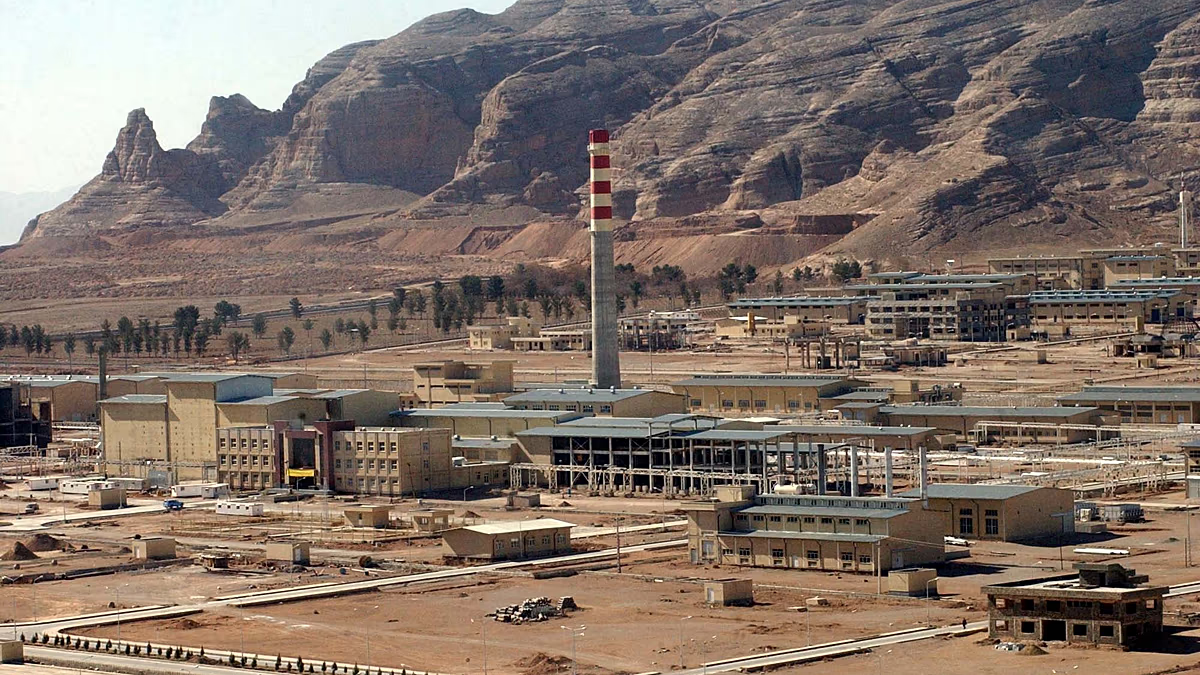
This standoff is steeped in the bitter history of broken agreements and mutual distrust, primarily stemming from the collapse of the 2015 nuclear deal, the Joint Comprehensive Plan of Action (JCPOA). That accord had strictly limited Iran to enriching uranium only to 3.67% and capped its stockpile. However, President Trump’s decision to withdraw the US from the deal in 2018 triggered a series of escalations. Iran gradually abandoned the JCPOA’s restrictions, first increasing enrichment to 20% and then pushing beyond 60%, drawing repeated warnings from international inspectors. The recent military conflict, which began with US and Israeli strikes in February, further complicated the picture. While Trump claimed Iran’s nuclear facilities had been “obliterated,” subsequent satellite imagery showed no visible new damage to key sites like the fortified Natanz complex, leaving the true state of the program shrouded in uncertainty and conflicting claims.
The human dimension of this geopolitical struggle is felt acutely in Israel, which finds itself on the front line of this shadow war. Israeli media reports that some citizens have received chilling, anonymous text messages, purportedly from Iran, warning they would “see the sun in the night skies”—a phrase widely interpreted as a metaphor for the blinding flash of missile or drone strikes. This psychological warfare amplifies the tangible fear of attack. Israeli Prime Minister Benjamin Netanyahu has framed the conflict in existential terms, insisting the war cannot be considered over until Iran’s nuclear capabilities are completely eliminated. When asked how to remove the uranium stockpiles, Netanyahu emphasized they would need to be physically seized on the ground, a statement underscoring the profound skepticism in Jerusalem about any diplomatic solution and hinting at the potential for future unilateral military action.
The path to the current precarious ceasefire was itself arduous. It took effect on April 8th following 39 days of sustained strikes, mediated not by a traditional global power but by Pakistan. However, subsequent talks in Islamabad failed to produce a lasting agreement. The process has been marred by accusations of bad faith; Trump claims Iranian officials verbally agreed to remove enriched uranium from a damaged site, but that this critical commitment was missing from their formal written proposal. This cycle of negotiation and recrimination has left the truce in a state of fragile limbo. President Trump extended it without a fixed deadline, but the absence of a concrete diplomatic framework and the exchange of ultimatums mean every passing day increases the risk of a miscalculation or an incident that could shatter the peace entirely.
We now stand at a critical inflection point. The international community watches as two nations, locked in a cycle of threat and counter-threat, navigate the narrow ledge between a tense peace and a renewed, potentially catastrophic war. Iran’s threat to sprint for a nuclear weapon is a high-stakes gambit aimed at forcing concessions, while the US and Israel maintain that such a capability is a red line that cannot be crossed. The mediation efforts, so far unsuccessful, highlight the difficulty of finding a neutral broker trusted by both sides. The coming days will test whether diplomacy can forge a solution that addresses core security concerns—Iran’s desire for sovereignty and guarantees against attack, and the international community’s imperative to prevent nuclear proliferation—or whether the region will spiral back into a conflict with unimaginable consequences for global stability. The hope for peace endures, but it is growing increasingly faint under the weight of escalating rhetoric and unresolved, fundamental distrust.